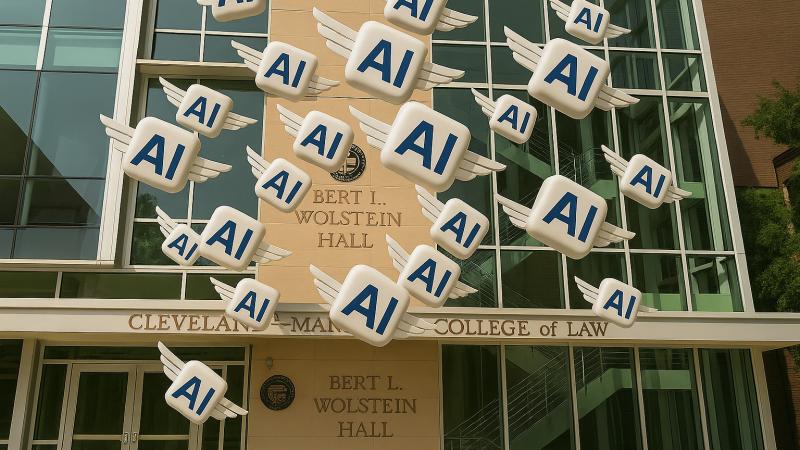
CSU College of Law introduces “Fundamentals of Prompt Engineering for Lawyers”
Cleveland State University’s College of Law has launched a new artificial intelligence training program, “Fundamentals of Prompt Engineering for Lawyers,” aimed at preparing law students for the rapidly evolving realities of modern legal practice, where AI tools are becoming increasingly common.
The online certificate program, developed in partnership with experiential legal training platform AltaClaro, introduces students to the fundamentals of prompt engineering and the responsible use of AI in legal work.
Designed as a short, accessible course, the training combines online instructional materials students do in their own time with a live session led by a practicing attorney experienced in AI-assisted legal practice.
“We wanted to find a solution that we can provide to all students to give them a baseline, and that's what the AltaClaro program does,” said Brian Ray, co-interim dean of CSU’s College of Law. “It's just one piece of a broader strategy.”
Ray added that part of the challenge has been helping students feel confident using AI tools appropriately within academic guidelines.
“After the orientation where we explained it to the first group, several students emailed me and thanked me for giving them access to this,” Ray said. “Because one of the issues we're seeing is students are a little afraid to use it.”
The American Bar Association has guidelines for AI use. But with students remaining cautious about using AI, particularly around what is permitted for coursework, CSU's law school is working to clarify how the tools can support learning while upholding academic integrity. This has prompted ongoing education for both students and faculty on responsible, transparent use in academic settings.
“What we emphasize to students is you can use it to prepare and help yourself understand the concepts,” Ray said. “There's an education that we're undergoing on both sides, with faculty beginning to understand more about how these tools could be used appropriately, to allow students to learn themselves the subject matter.”
The certificate program is optional and is open to all CSU|LAW students and will be offered three times during the academic year. The first session began in January, with additional sessions planned for spring break and early summer. More than 130 students enrolled during the program’s initial rollout.
The course takes about 4-6 hours to complete. Upon completion, students receive an AltaClaro-issued certificate that can be listed on professional profiles, highlighting training in prompt engineering and AI-supported legal workflows.
“The first group has finished and we plan to offer it again around spring break,” Ray said. “It’s a very compact, very accessible training program”
Moving forward, CSU College of Law plans to expand its approach to artificial intelligence training as the technology continues to shape the legal profession. Ray and other faculty members are exploring how the training could be more deeply embedded into the curriculum, whether through required coursework, orientation programs or other training milestones before graduation.
“This is our first step, first piece of the strategy,” Ray said. “Our objective is to be able to tell all legal employers that our students, our graduates, come out trained and competent to use these tools effectively and responsibly.”
Recent News
"Best of" The Cleveland Stater spring 2026 #2
 This edition of "Best Of" The Stater features student artists and filmmakers, international student-athletes fostering a supportive community, and a podcast highlighting voices in POC communities.
Kent State honors fashion icon, Fern Mallis shows what CSU could have

When fashion icon Fern Mallis is inducted into Kent State University’s School of Fashion Hall of Fame this May, students there won’t just be reading a
The Cleveland 'Sex and the City' spring itinerary
 Of course Cleveland is the new Manhattan! You've just landed in the city. You've got 12 hours to take it in. This is the perfect itinerary for you.
CSU student films to show at this year’s CIFF
 Film and media arts students Elliot Lanzer and Malakee McGuire will see their student-produced works on the silver screen at this year's Cleveland International Film Festival, the 50th anniversary of the renowned regional showcase.
Lacrosse falls to LIU in overtime heartbreaker at NEC semifinals
 It was the Vikings first appearance at the NEC tournament and bookended the 2026 season for the Green and White, who put up a 6-8 record overall.
CSU women’s tennis secures share of HLTennis regular season title after Oakland win
 The Vikings ended their regular season with a 4-3 win at Oakland, claiming a share of the Horizon League Regular Season Championship.
Cleveland Magazine staff share industry insights with CSU students
Cleveland State University students got an inside look at the evolving media landscape when staff members from Cleveland Magazine<
The Stater Scoop - Women's History Month
In this Women's History Month edition of The Stater Scoop, Cleveland Stater staff members Nicole, Kirsten and Morgan discussed how their identities as women have impacted their lives.
Rising student demand and the CSU Counseling Center
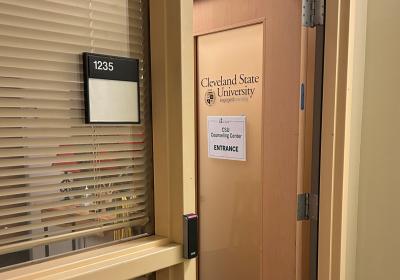 As mental health needs grow on campus, CSU officials outline how students are prioritized and connected to care.
Northeast Ohio’s drag scene is losing its own talent

A few years ago, a weekend in Northeast Ohio meant juggling drag shows across Lakewood, Cleveland and Akron.
CSU lacrosse defeats Wagner 10-9
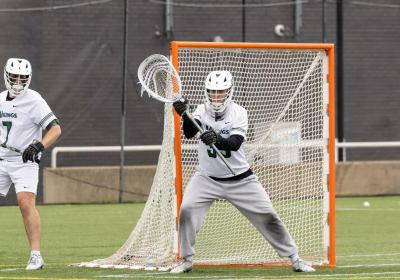 Cleveland State (5-5, 3-1) used the second half to come from behind and secure a win against visiting Wagner (4-6, 2-2) Saturday afternoon.
CSU women's tennis drop close match to Milwaukee 4-3
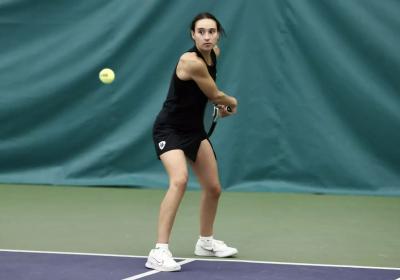 The Vikings took the early lead Saturday, but the host Panthers rallied late to secure a narrow victory.
CSU women's basketball falls to Arkansas State in WNIT Great 8
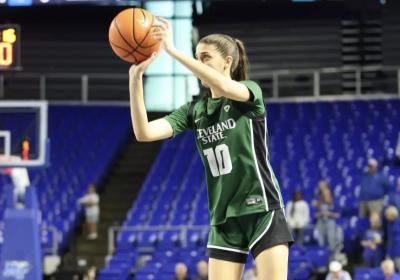
The Cleveland State University women's basketball team had its 2025-26 season come to a close Monday, March 30, as they dropped a 71-53 contest at Arkansas State in the WNIT Great 8.
One wall, one challenge
 Looking up at the climbing wall for the first time, I suddenly understood why rock climbing is as much about your mind as it is about your body.
CSU hosts Special Olympics basketball event for local students
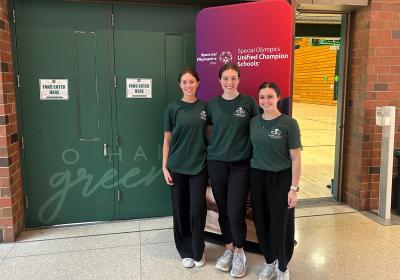 Volunteers and athletes connected through inclusive activities, building skills, confidence and community ahead of future events in Cleveland.
CSU Faculty Senate reviews budget model, technology overhaul
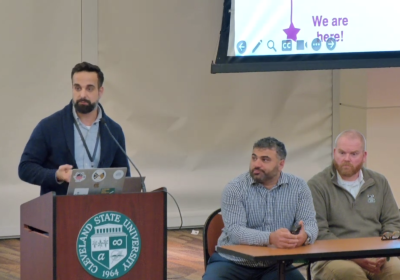
Cleveland State University received updates on a new budget model, technology initiatives and upcoming state requirements during the March 18 Faculty Senate meeting.
CSU senior to host benefit show at Treelawn Social Club
 “This concert has become a way for all of us to come together for one night and carry on the music in their honor,” said Anna Skalicki, a senior CSU studio art major.
SU men’s basketball drops regular-season finale to Robert Morris
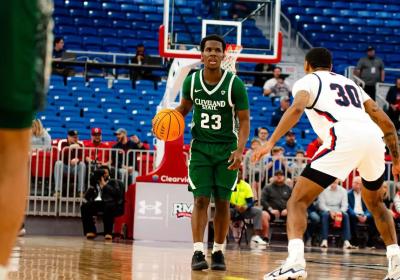
Cleveland State men's basketball (10-21, 6-14) closed out the regular season with a loss at Robert Morris (21-10, 13-7) 83-64 on Saturday, Feb. 28.
CSU graduate student’s research offers hope for blood disorder patients
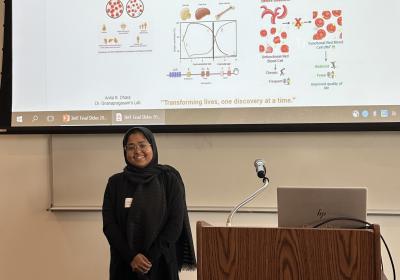 Ph.D. candidate Anita Dhara studies how molecules in red blood cells could help patients with sickle cell anemia and beta thalassemia breathe easier and reduce painful symptoms.
CSU tennis hosts Youngstown Friday after narrow IU Indy loss
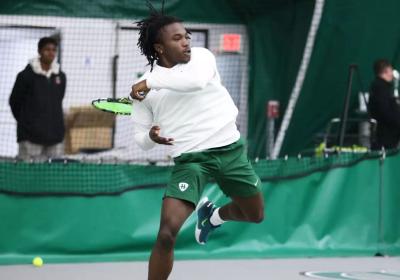 The Vikings fell just short in Horizon League play, dropping a touch match to IU Indy 4-3. Next up, CSU hosts Youngstown State Friday.
"Best Of" The Cleveland Stater spring 2026 #1
 This edition of the “Best of” the Stater features a beloved Cleveland entertainer, Black History Month, parking problems at CSU, a student written and directed play, and whether LinkedIn matters for students.
CSU plans new gallery to expand student opportunities

Cleveland State University is moving forward with plans to open the Galleries at 13th Street.
Vikings finish 8th at Horizon League championship meet

The Cleveland State University indoor track and field team closed out the 2026 Horizon League Championship on Sunday, placing eighth overall after two days of competition at Youngstown State.
Students for a Just Society launches at CSU
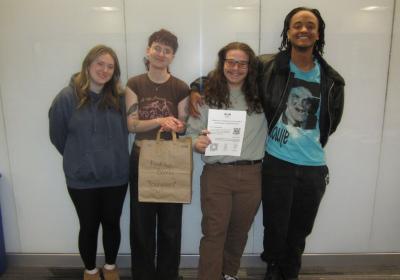 The new student organization aims to build student-led organizing, foster political education, and connect Cleveland State students with regional activism efforts.
Commentary: Student rights and campus safety in the age of ICE
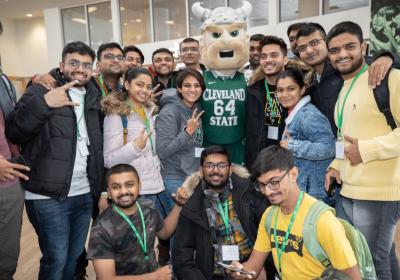 CSU students need clear information about their rights and safety as immigration enforcement in Ohio and nationwide raises concern, particularly for international and migrant students.
Don't miss the the student-run CSU Chamber Collective
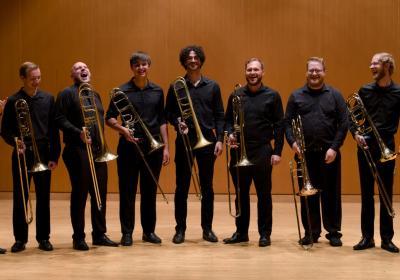 The concert March 6 in Drinko Recital Hall will showcase student initiative, creativity and collaboration across the School of Music.
The Stater Scoop - Episode 2
For the second episode of The Stater Scoop, we're celebrating Black History Month with CSU’s Black Student Union!
Building belonging: How one student athlete created a space for many
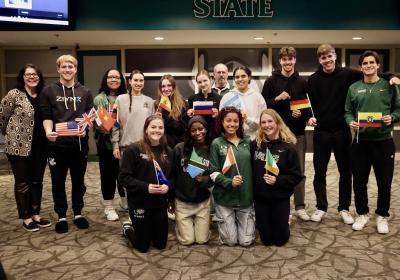 After navigating taxes, visas and internship barriers as an international student from Ireland, Ellie Mickibbin founded a dedicated support system to help future student-athletes adjust and succeed.
CSU faculty discuss emeritus policy, Workday, facilities at Senate meeting
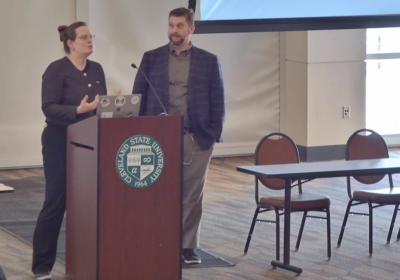
Cleveland State University faculty reviewed proposed changes to emeritus and retirement policies, received updates on the university’s Workday transition and heard extensive reports on campus facilities during the Feb.
The Stater Scoop - Episode 1
We’re excited to announce a new podcast from The Cleveland Stater – The Stater Scoop! Each episode, we’ll welcome different guests from around campus to talk with members of our newsroom.
Seiter wins 1-m springboard title at at Horizon League Championship
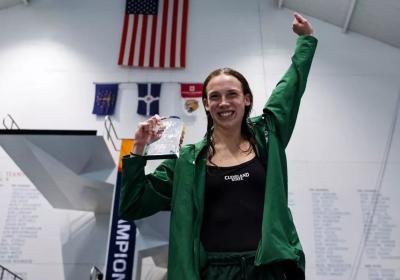 Sophomore Ellie Seiter captured Cleveland State’s only Horizon League title of the meet, winning the 1-meter diving event with a score of 294.35.
CSU men’s swimming finishes 5th at Horizon League meet

The Cleveland State University men’s swimming and diving team placed fifth at the 2026 Horizon League Swimming and Diving Championship, totaling 391 points when the four-day meet concluded Saturday.
CSU grad builds a brand and career in music marketing
 Alexis Figlar graduates from Cleveland State in 2023. Since then, she's turned internship connections, a self-made portfolio and a personal art business into a growing career in Cleveland’s music industry.
Greek letters signify Black excellence at CSU
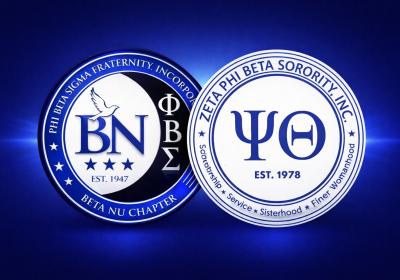 Sorority Zeta Phi Beta and fraternity Phi Beta Sigma are two organizations at Cleveland State which embody the achievements of Black students, highlighting the excellence that Black History Month honors every year.
CSU graduate student aims to improve Lake Erie's water quality
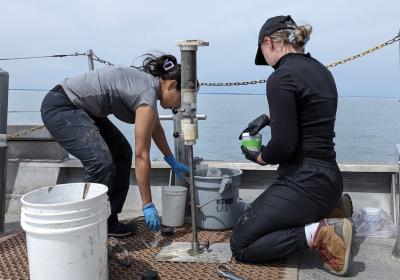 Anshula Dhiman is studying the causes of algae blooms. Her research explores how nutrients in lake sediments drive harmful summer blooms which impact water quality.
Student play “Journey West” debuts at playwright's festival
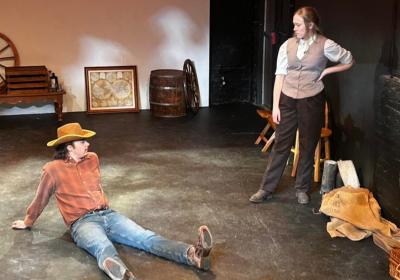 “‘Journey West’ is a nonconventional Western, it’s pseudodisguised as a Western,” said writer Michael Anderson. “It’s not what you would typically expect."
CSU women’s basketball earns 57-52 victory at Robert Morris
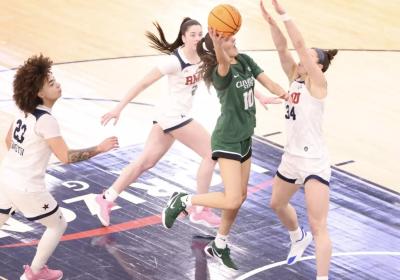 The Vikings picked up their 20th win of the season, with highlights from Colbi Maples and Izabella Zingaro.
Nearly 100 employers connect with students at CSU Career Fair
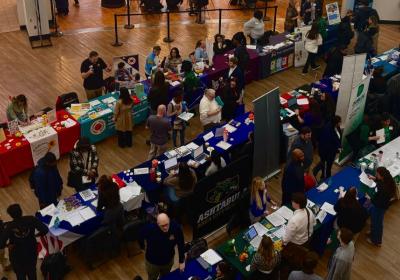 More than 900 students registered to attend the fair, networking with dozens of Cleveland and regional businesses and institutions, which are offering internships and employment opportunities from casual work to full-time jobs.
Paying the price: when street parking stops making cents
 The City of Cleveland’s decision to hike parking rates across the city, and around campus is turning a once-affordable alternative for CSU students into yet another financial burden.
Cleveland State men's tennis earns 4-3 victory at Ball State
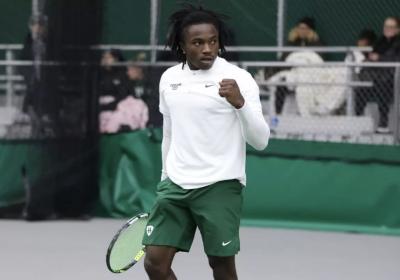
The Cleveland State men's tennis team was back in action Saturday, battling to a thrilling 4-3 victory at Ball State in Muncie, Indiana.
Commentary: Has social media broken Cupid’s arrow?
 College has always been about getting your degree. Possibly getting the Disney fairytale ending and finding your forever partner was also on the curriculum for many. But what does Gen Z want from the day?
Immigrant embraces the America that has embraced her
 Beloved Cleveland entertainer Bella Sin shares how living undocumented impacted their survival, self-identity, and quest for belonging in America. “Queer nightlife gave me a place to be fully myself, loved and accepted."
CSU track & field shines at Jud Logan Invitational
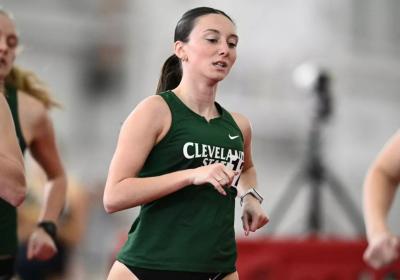
Cleveland State University track and field put together a strong showing at the fifth Jud Logan Light Giver Open, hosted by Ashland University in Ashland, Ohio, Feb. 6.
CSU women’s tennis falls 4-3 to Temple
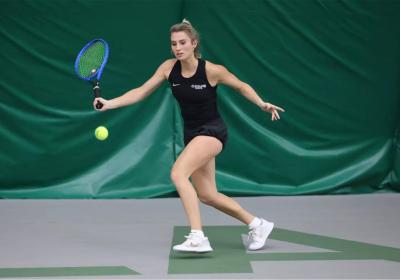
The Cleveland State women’s tennis team on Sunday finished its Morgantown, West Virginia road swing with a narrow 4-3 loss against Philadelphia's Temple University.
Does LinkedIn really matter for college students?

Students might not seriously consider LinkedIn until their final year of college, when graduation suddenly feels close and the pressure to find a job becomes real.
Residence Life hosts trivia night at Viking Marketplace
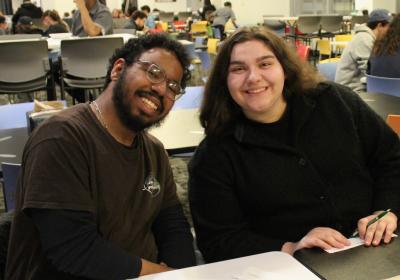 “It gets a lot of different students together, encourages them to talk to people they wouldn't otherwise talk to and just have a good time,” said Kaleb Roberts, a sophomore resident assistant.
CSU College of Law introduces “Fundamentals of Prompt Engineering for Lawyers”
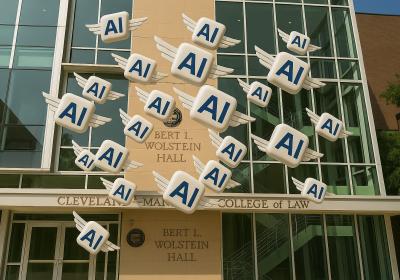 Co-Interim Dean, Brian Ray, explains the new specialized AI-focused training course as Cleveland State moves to integrate artificial intelligence into its teaching.
CSU students walk out to protest ICE
 The students joined the nationwide strike Friday against the Immigration and Customs Enforcement agency, following confrontations in several major cities in recent months, and the killing of two U.S. citizens in Minneapolis.
CSU faculty urged to prioritize SB1 compliance, enrollment strategies as spring semester begins
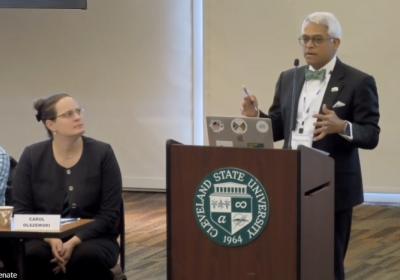 Cleveland State University faculty were encouraged to prioritize course accessibility, student retention and strategic enrollment efforts during the first Faculty Senate meeting of the spring 2026 semester, held Jan. 21.
Student speak up on CSU socials about university weather alerts
 “We take feedback into account for sure, but the decisions that we make keep the safety of our campus community foremost, in terms of our people being able to get to campus safely,” said Nigamanth Sridhar, Ph.D., CSU executive vice president and provost.
Former WCSB general manager says lawsuit signals a wider fight for college radio
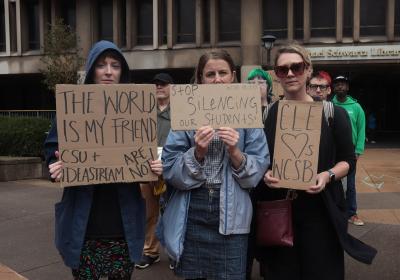 Alison Bomgardner spoke after she, WCSB and Friends of XCSB were named as the plaintiffs in a lawsuit filed Monday suing Cleveland State University for handing its student and community-run radio station to Ideastream Public Media.
Snow puts a dampener on first week back for CSU
 By KIRSTEN KIMBLER – posted January 16, 2026 Cleveland State University canceled all classes and closed business offices Thursday due to extreme weather conditions.
"Best Of" The Cleveland Stater fall 2025 #3
 This edition of the “Best of” the Stater features an interview with CSU President Laura Bloomberg, Ph.D., Thanksgiving festivities at CSU, underground student fashion in Cleveland, an Umoja event, and the hapless Cleveland Browns.
Why WCSB matters to me
 During my second semester at Cleveland State University, in February of 2025, I took the leap into college radio. It changed my life – then the station was taken over.