Northeast Ohio’s drag scene is losing its own talent
A few years ago, a weekend in Northeast Ohio meant juggling drag shows across Lakewood, Cleveland and Akron. Now, many performers are crossing state lines and heading to places like Pittsburgh – not for adventure, but because they feel the local scene is no longer sustainable.
I'm one of them. My stage name is Ariyah Fuego.
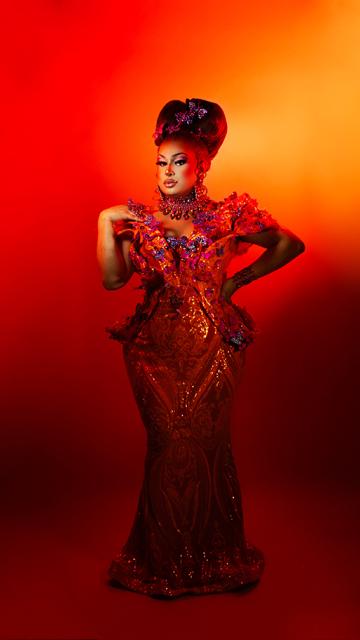
I used to measure my success by how many shows I could do in one week. Three to four bookings, several outfit changes and a couple of anxiety attacks later was the best kind of weekend.
Now, a “good weekend” is finding at least one gig that pays more than the $200 wig on my head and two drink tickets.
That shift is not just personal. It is the reality of a shrinking drag scene across Northeast Ohio where we are underpaid, undervalued and increasingly unwelcome in the very spaces meant to celebrate us.
After winning a local drag competition in 2022 with a guaranteed $1,000 cash prize, crown and full prize package promising free costumes, jewelry and future bookings, I found out winning wasn’t enough.
I learned the hard way right after I thought I had made it.
It was my first real introduction to the life and a harsh wake-up call. In this scene, even when I did everything by the book, I learned that I could still have the rug pulled from under me by the very community that claimed to support me.
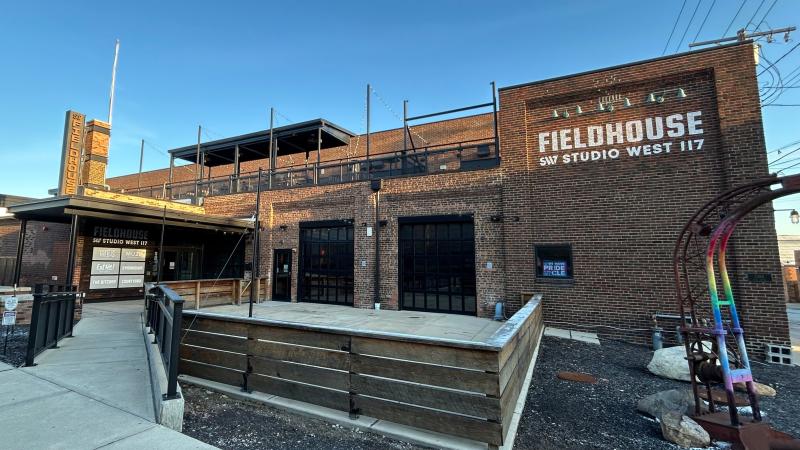
Eventually, I was cast at Studio West 117 in the earliest stages of the multi-million dollar project's construction. This was another failed promise from the community to transform queer nightlife in Cleveland.
Studio West 117 was the brainchild of Daniel Budish and Betsy Figgie, pitched as an ambitious LGBTQ+ hub straddling Cleveland and Lakewood. It was a multi-use campus with a restaurant, rooftop bar, gymnasium, and a promised revival of the nearby Phantasy Theater, all meant to anchor a new creative corridor on the city’s west side.
The venue, nestled behind the intersection of W. 117 and Detroit Ave., was meant to transform the area. It was supposed to be my hub; my safe space and career-launching dream. Instead, it became a masterclass in why our scene is struggling.
Here is the part people outside of drag do not understand. Drag is hard work. It's labor. Expensive labor.
Costumes can run hundreds to thousands of dollars. Makeup alone costs $200 to $500 if you want to look like you actually belong under stage lights and not creeping under a street lamp. Add shoes and travel, and suddenly my “fun side hustle” felt like a financial liability.
And the pay?
Let’s just say if drag queens were paid in exposure, we would all own property by now.
Low booking fees and a heavy reliance on tips have made it nearly impossible for performers to sustain themselves locally. Many now travel out of state multiple times a month because other cities offer consistent work and better pay.
That is not ambition. That's an exit strategy. Even when larger opportunities like Studio West came along, they exposed deeper issues.
Apparently, I was cast to help bring Latina representation to the venue, alongside my drag mother Onya Nurve, who went on to win Rupaul’s Drag Race. Cleveland clearly knows how to produce talent.
Now, keeping it? That’s a different story. From the beginning, Studio West felt divided. Performers not included in the cast felt shut out, and, honestly, I understood why. What was marketed as a community hub quickly turned into a closed circle.
Inside that circle, things were not all they were cracked up to be.
We rehearsed constantly under high expectations with limited resources. I was fairly new to the scene but critiqued like a seasoned professional while still figuring things out in real time. At one point, I was referred to as a rookie, which was true. It wasn’t exactly the confidence booster I needed when I was already questioning my value in the room, surrounded by experienced entertainers.
Then there were moments that went beyond disorganization. At one point, we had our own Rupaul’s Drag Race set in our dressing rooms, just without cameras.
At another point, my Latin show, Noche De Fuego, had its music cut mid-event by the boss so his friends could watch Drag Race. I heard my show referred to as “whatever it’s called,” as the entertainment managers didn’t speak Spanish.
For a space built on inclusion, it was often exclusionary, especially for performers who already faced barriers getting booked.
That kind of environment does not build a scene, it pushes people out of it. Meanwhile, the physical spaces that once supported drag are disappearing.
Studio West closed in December 2025, beset by mounting debt and internal struggles.
When venues like that collapse, the impact goes beyond one business. Drag loses stages. Performers lose income. And communities lose gathering spaces.
Queer nightlife does not survive without infrastructure.
Hovering over all of this is today's broader political climate that has made drag more controversial than ever. National debates around drag performances and legislation have made venues more cautious and performers more selective about where they step out.
So now, the Northeast Ohio drag scene finds itself in a strange position -- full of talent, full of history, and somehow still falling apart.
If irony could inspire, the collapse of Studio West 117 would be its poster child.
We have proof of what talent the Cleveland region produces. We have performers who can compete and win on national stages. We have audiences who show up when given the chance.
What we do not have is a system that supports the people making it all happen. Because trust me, passion does not pay the bills.
Right now, the message to local drag performers is painfully clear: If you want to grow, you have to go.
Recent News
Northeast Ohio’s drag scene is losing its own talent
A few years ago, a weekend in Northeast Ohio meant juggling drag shows across Lakewood, Cleveland and Akron.
Paying the price: when street parking stops making cents
 The City of Cleveland’s decision to hike parking rates across the city, and around campus is turning a once-affordable alternative for CSU students into yet another financial burden.