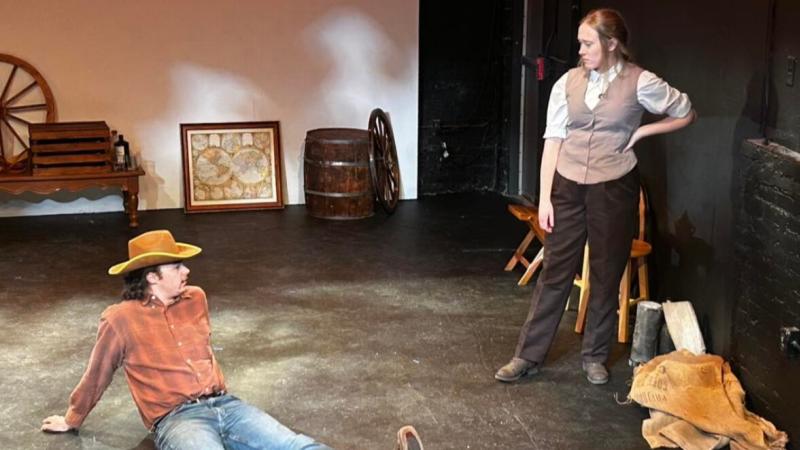
Student play “Journey West” debuts at playwright's festival
The stage wakes up under the weight of heat so heavy it almost feels tangible. Floridians Cecilia and Randall wait beneath the unforgiving Louisiana sun, their eyes fixed on tracks that may never move them forward.
When the bellow of a train cuts through the thick air, their “Journey West” rumbles to life.
Written by Cleveland State student Michael Anderson, “Journey West” started in July 2024 as a few scenes about cowboy characters. Nearly a year and a half later, those early ideas reached the stage for the first time on Feb. 6, when the play premiered at the Convergence Continuum Playwright’s Festival at the Liminis Theatre in Cleveland's Tremont district.
“Journey West”
Set across the southern United States between 1898-99, “Journey West” follows a group of characters as they navigate both the physical ruggedness of the terrain and the emotional complexities of one another.
“‘Journey West’ is a nonconventional Western, it’s pseudodisguised as a Western,” said Anderson, a senior CSU English and political science double major. “It’s not what you would typically expect."
Rather than centering on the bandit lifestyle or “the macho man,” Anderson explored themes rarely seen in the genre, such as “platonic friendships and nonplatonic friendships and how each of those looks and how they are interpreted.”
These themes are driven mainly through dialogue. The first act is conversation focused, with characters revealing themselves through verbal interactions rather than physical ones.
In doing so, “Journey West” also pushes back against traditional Western gender dynamics, portraying femininity as determination and persistence rather than submission.
“The women in the show are really the characters that facilitate the action and change in the play,” said Dana Sumpter, director of “Journey West” and senior CSU theatre and dance major.
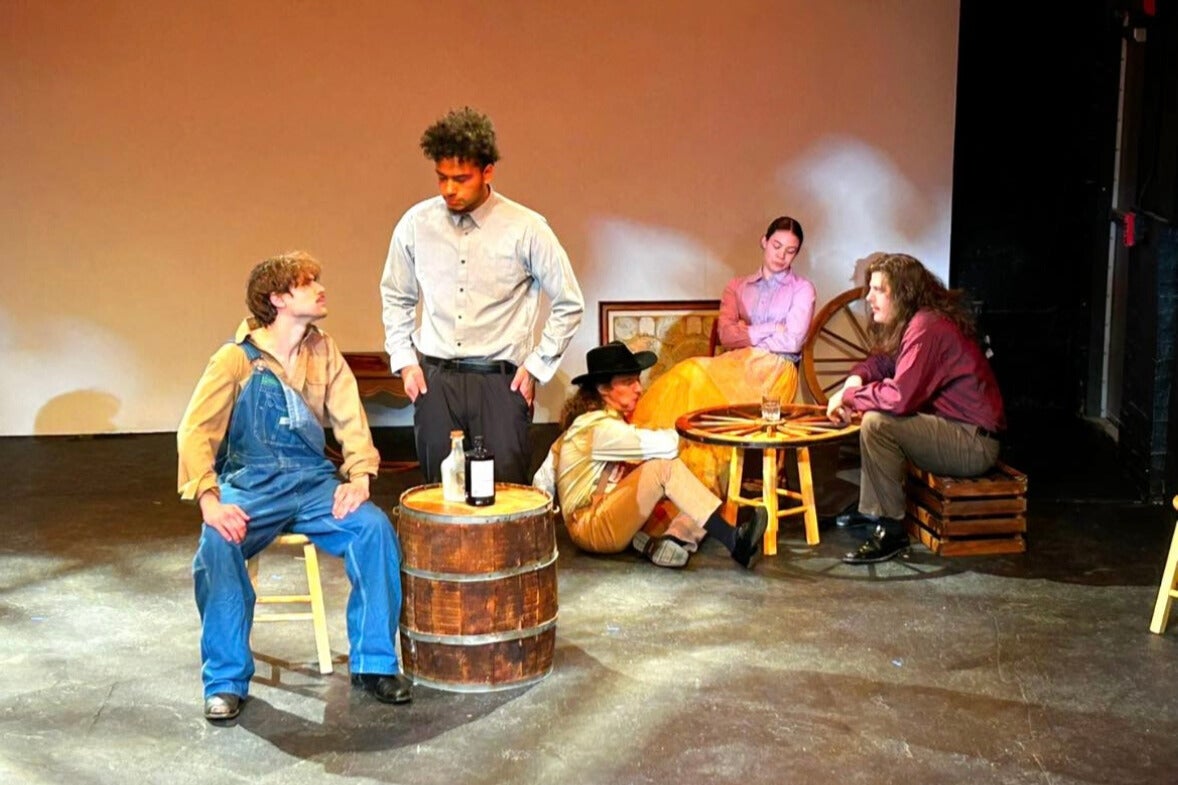
Manchester (left, played by Brayden Kuebler) and a bartender (right, played by Alfie Woodall) having a conversation in the saloon. (credit: Eva Wachala)
The Development
The script’s long road to production started in Anderson’s Introduction to Playwriting Workshop, where he was encouraged to continue working on “Journey West” during an independent study with Michael Geither, a CSU English professor, in the spring 2025 semester.
“I was approached by (Geither) and asked to complete the play through an independent study,” Anderson said.
Sumpter joined the project during her Principles of Directing class, after being approached by Toby Vera Bercovici, professor and director of performance in CSU’s Department of Theatre and Dance, who had been in communication with Geither about the play.
“About halfway through my class I was asked to do staged reading for Mike’s independent study,” Sumpter said. “I said ‘Heck yeah, let’s do it,’ and I’ve been attached to the work since then.”
At the time of the staged reading in May 2025, “Journey West” was unfinished. Anderson completed what he described as “a lot of quick and deep edits,” including the final ending, two months before the festival.
Then, in December 2025, with the help of Geither, “Journey West” was accepted into the Convergence Continuum Playwright's Festival and set to run Feb. 6-7, 2026.
This gave the duo only five weeks to cast, rehearse and prepare the entire play – production started almost immediately.
The Creative Growth and Challenges
Throughout the hurried timeline, both Anderson and Sumpter encountered challenges that pushed them to grow while simultaneously discovering who they are as creatives.
For Anderson, the biggest hurdle was learning to let go.
“Length is the biggest issue,” he said. “The challenge is getting over my attachment to some of the fluff.”
Even after cutting 25 pages, the play’s runtime still stretches between three and three and a half hours.
For Sumpter, who was directing a full-length production for the first time, the challenge was building a shared vision among a cast she was still getting to know.
“Getting everyone on the same page of what we wanted was challenging,” Sumpter said. “Making sure everyone knows what's going on, and when you don’t know actors personally, it's hard to know what to communicate and how to communicate to them.”
To overcome this hurdle, Sumpter leaned into what she knows best. As a self-described text-focused director, she centered her directorial debut on building relationships between the characters – both onstage and behind the scenes.
“I am the kind of creative person that is very text work focused,” she said. “I was really into, ‘What do the characters want, and how do they interact with each other?’”
One of her favorite methods of directing is what she calls “relationship dances,” a technique designed to move actors into the emotional core of their roles. Working in pairs or small groups, actors stay in character while improvising the beginning, middle and end of their characters’ relationships.
This method allows for actors to learn each other’s boundaries and acting styles organically, and gets things flowing without the surface-level introductions.
“It’s moving through the timeline of what (character's) relationships are,” Sumpter explained. “A lot of the movement from the dances we carried through to play. It’s a physical language that we built. It’s just a really valuable way to learn about their characters.”
Developing these strong relationships helped support the cast and crew to fully produce “Journey West” in such a short amount of time – a culmination of nearly two years of work and a testament to the evolving creative identities of the students who brought it to life.
The Future of “Journey West”
While its debut weekend has passed, “Journey West” is far from finished. The show is slated to continue its run this summer at the Borderlight Festival, scheduled for July 2026.
Held in Cleveland’s Playhouse Square District, Borderlight Festival is a large-scale, multi-day performing arts event that invites artists from all around the world. The festival showcases original works ranging from full-length plays to extended monologues and dance performances, offering space for stories that often fall outside traditional theatre programming.
“It’s a place for shared lived experiences; it’s a good experience for students to create their own art,” Sumpter said. “Borderlight shows art that would not otherwise have a platform.”
For “Journey West,” the festival is the next stop in its journey that continues to evolve, showcasing the unconventional Western across new stages and into a wider creative community.
Recent News
Midterms: Meet the candidates for federal and Ohio state office

Ohio voters are heading to the polls on Nov. 3 to elect candidates in the 2026 midterm elections. Major races include the U.S. Senate and governor.
“Best of” The Cleveland Stater fall 2026 #1
 In this edition of “Best of” The Cleveland Stater, we examine Flock cameras, CSU’s new meal-swipe system, the opening of the Glick Recovery Campus, CSU’s Around the World in 80 Minutes event, and the main water break that temporarily affected some campus operations.
Midterms: Senate candidate Greg Levy addresses CSU students
 Ahead of the Nov. 3 midterms, Ohio senate candidate Greg Levy spoke to CSU students about the possibility of real change for the good of the community.
CSU volleyball drops two matches at Milwaukee
 Volleyball struggled in its weekend series against Milwaukee, losing in straight sets on Friday, and dropping a five-set thriller on Saturday.
Women’s soccer shuts out Detroit Mercy 1-0
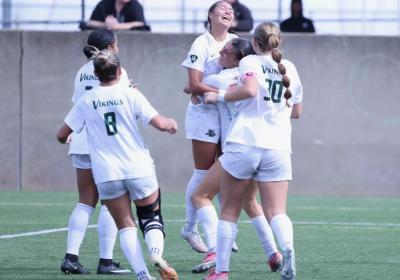
Cleveland State women’s soccer defeated Detroit Mercy 1-0 on Saturday, earning its third Horizon League win of the season.
CSU men's club hockey win home opener 13-7
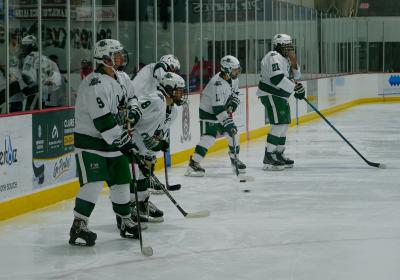 The CSU Vikings men’s club hockey team on Saturday won its home opener against the Robert Morris Colonials.
CSU PRSSA dine-to-donate fundraiser at The Fruit Stand
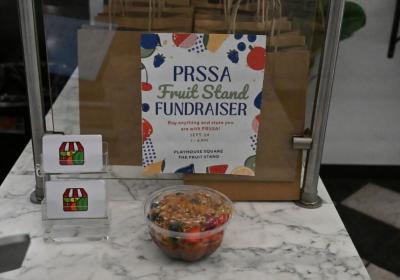
By KARINA TORRES – posted October 7, 2026
CSU PRSSA hosted a one-day fundraiser at The Fruit Stand to raise money for PRSSA's future events.
Six runners finish with a season best at the Joe Piane Invite
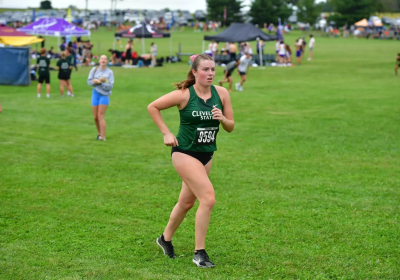 The Vikings had a good outing at the event in South Bend, Indiana, with six athletes running season best times.
Is Carson Hocevar too aggressive for his own good?
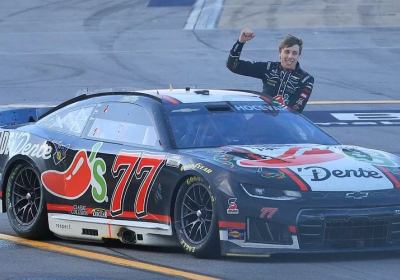 Carson Hocevar celebrates after his first career win, at Talladega Superspeedway on April 26, 2026.
XCSB holds flea market fundraiser
 XCSB, Cleveland’s new alternative media station and successor to CSU's shuttered WCSB hosted a flea market fundraiser at the Beachland Ballroom and Tavern to raise money so the station can continue to serve the community.
More than a major: Finding your voice in communications
 For students studying journalism, public relations and communications, there is more than one way to find their voice and build a career.
Men’s tennis falls short at the Horizon League Individual Championships
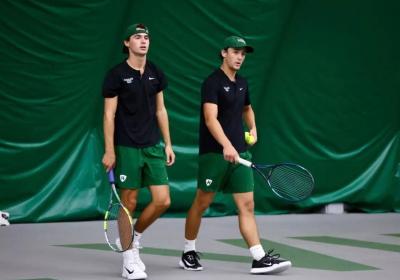 Members of Cleveland State men’s tennis advanced to the semifinals and finals, but missed out on the win.
CSU Volleyball falls to Purdue Fort Wayne to open 2026 Horizon League play
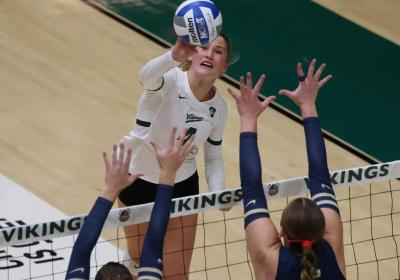 Cleveland State finished the Horizon League Play Opener 0-2 this past weekend, losing both its matches on the road to Purdue Fort Wayne.
The Jagged Little Pill, a musical for all who live and learn
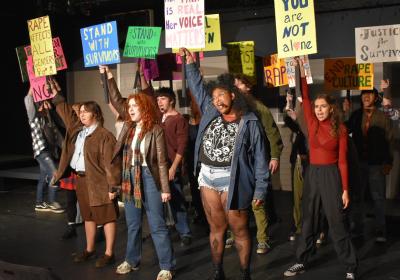 Alanais Morissette's Broadway musical made its regional debut at the Broadview Heights Spotlights community theater on Sept. 18, 2026, playing to a sold-out audience.
Women's tennis opens fall 2026 at the Betsy Kuhle Invite
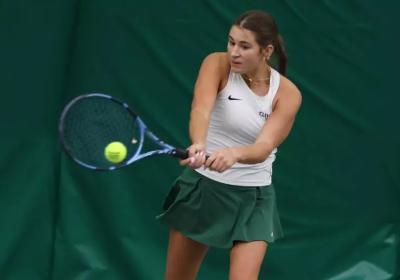 Cleveland State women's tennis began their season at the Betsy Kuhle Invite with two days of solid performances from the team.
Women’s Soccer opens league play with a win against Oakland
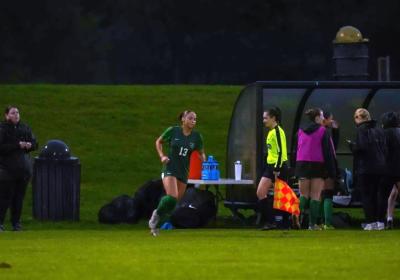 Sophomore Ryleigh Alcala was named the Under Armour #HLWSOC Offensive Player of the Week after scoring both goals in CSU's 2-0 victory over the Golden Grizzlies.
CSU students spend 80 minutes going around the world
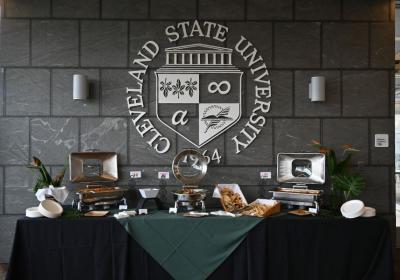
By KARINA TORRES - September 24, 2026
The Center for Campus Engagement hosted the cultural event for students to attend and try food from various countries while enjoying live music.
CSU reopens Student Center, Berkman Hall following water break
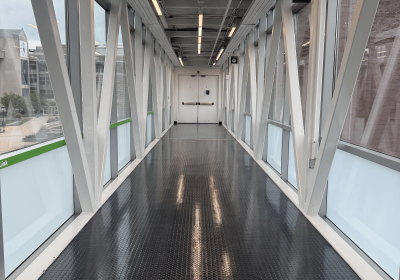
By ALEXANDER GIAMPIETRO - posted September 25, 2026
Cleveland State University on Wednesday reopened the Student Center, the hub of campus life, after a Cleveland City main water break on Monday caused flooding on part of campus Monday, and forced the closure of the SC and Berkman Hall Tuesday.
The life of a CSU ball shagger
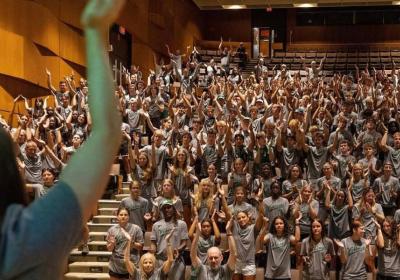 Two Cleveland State student-athletes share what it’s like to work the sidelines, chase down balls and get a different view of CSU athletics.
Guardians fans react to the 2026 season and look ahead to the postseason
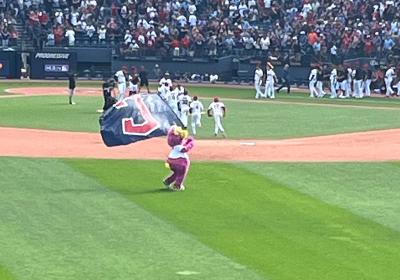 Guardians fans talk about how key additions to the lineup can help the team make a run in the postseason.
Flock cameras remain in Cleveland and near campus despite community pushback
 Across the city of Cleveland, Flock cameras are watching intersections. However, the Cleveland City Council is reconsidering the program following pressure on social media and from the community.
CSU and regional partners host 3rd annual College Fest
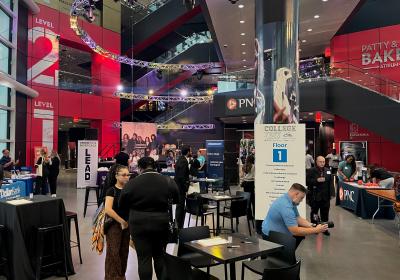
More than 900 students from 30 different regional institutions networked with around 80 employers at the 3rd annual College Fest, held at the Rock and Roll Hall of Fame, Sept. 9, 2026.
CSU men’s soccer shuts out Detroit Mercy 2-0
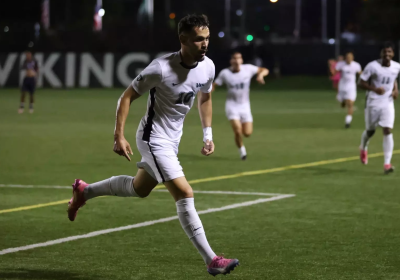 Djorde Petrovic (10) scored both goals in the home game Saturday, Cleveland State's first Horizon League win of the year and second clean sheet of the season.
For the love of fashion: with Aimon Ali
 Fashion Talks Foundation founder Aimon Ali joined The Stater Scoop to discuss the inner workings of the fashion industry with host Alexis Stradford.
Browns fans sound off on Deshaun Watson at quarterback
 Fans are not happy with the decision of Browns management to name the controversial Watson to the starting position.
Faculty Senate discusses key issues for the fall semester
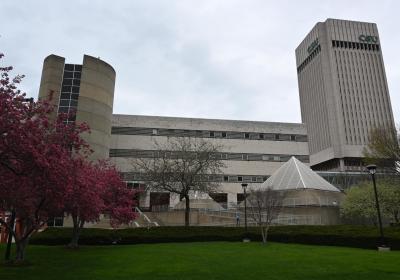 Better cross-campus communication was a key theme at the first Senate meeting of the year for the fall 2026 semester.
The president's interview, spring 2026
 CSU President Laura Bloomberg, Ph.D., addressed the cost of balancing Cleveland State's budget, ongoing litigation with WCSB, housing concerns and AI implementation at the school in an interview with The Stater at the end of the spring 2026 semester.

Cleveland State cross country opens 2026 Season
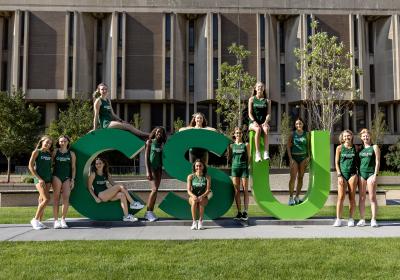 The Vikings kicked off the season with a sixth-place team finish, out of 15 colleges competing and 123 athletes.