CSU graduate student’s research offers hope for blood disorder patients
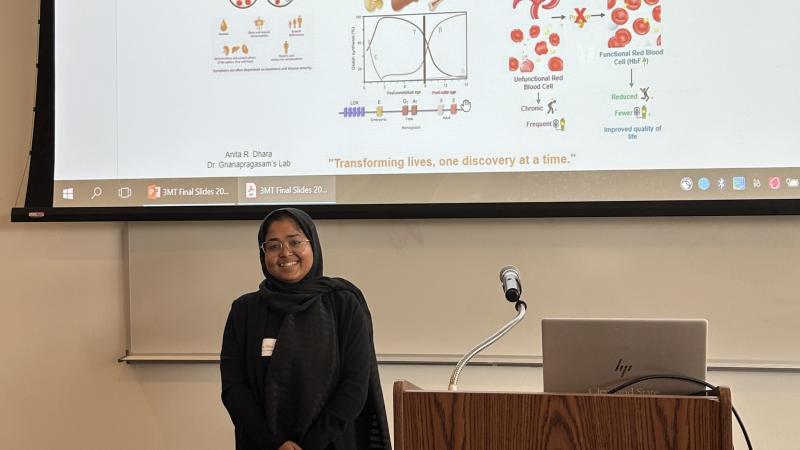
Anita Dhara, a Ph.D. candidate at Cleveland State University, is studying a way to help people with sickle cell anemia and beta thalassemia, two blood disorders that make it hard for red blood cells to carry oxygen.
Dhara, an international student from India who came to CSU in 2019, is in the Regulatory Biology program and works as a research assistant. Her thesis, “Norad Long Noncoding RNA, a Decoy for Pumilio RNA-Binding Proteins, Elevates Fetal Hemoglobin Levels,” examines how certain molecules in red blood cells control the production of hemoglobin – the protein that carries oxygen in the blood.
Her research focuses on a protein called Pumilio, which normally helps switch the body from producing fetal hemoglobin – the kind babies have before birth – to adult hemoglobin. By studying how Norad RNA interacts with Pumilio, Dhara hopes to turn fetal hemoglobin back on in adults, which could help relieve the pain and reduce the need for frequent blood transfusions in patients with these disorders.
“Our lab is trying to figure out how we can use Pumilio homolog 1 (PH1) protein to upregulate gamma-globin expression,” Dhara said. “So then it can be used therapeutically for sickle cell anemia and beta thalassemia research.”
The research could have a significant impact for patients who currently rely on painful treatments and frequent blood transfusions to manage their conditions. Sickle cell anemia and beta thalassemia can make daily life extremely difficult, as patients often experience chronic pain, fatigue and serious complications due to defective adult hemoglobin.
“One of my friends, her sister, has this sickle cell anemia and I have seen the struggle she goes through every other day,” Dhara said. “Every week you have to go to the hospital, you have to do the blood transfusion, because the red blood cells in your body are unable to perform their actual normal, regular function.”
Fetal hemoglobin, which is normally only present in newborns, carries oxygen more efficiently and can help compensate for these defects. By finding a way to reactivate it in adults, Dhara’s work could provide a safer, less invasive alternative to expensive gene therapies currently used to treat these disorders.
For Dhara, the research is also personal. As an international student from India and the first in her family to pursue a Ph.D., she said her passion comes from a fascination with discovering how the body works at a molecular level and a desire to make research directly beneficial to patients.
“The experiment might fail and I will get frustrated, and we get upset when it's not happening the way it should be,” Dhara said. “But that is what I love. The struggle that we have and the end result always fascinates me a lot – I'm very much passionate about it.”
For Dhara, the appeal of research isn’t just in discovering how things work at the molecular level, it’s in knowing that her findings could one day improve people’s lives. Even as she navigates experiments that sometimes fail and celebrates surprising results, she keeps her focus on the bigger picture: helping patients who struggle with blood disorders.
“Whatever the research I do, I hope it can help in real life to the patients who are going through these diseases,” Dhara said. “If I can contribute in any way – that is my main goal.”
Recent News
CSU students spend 80 minutes going around the world
By KARINA TORRES - September 24, 2026
The Center for Campus Engagement hosted the cultural event for students to attend and try food from various countries while enjoying live music.
CSU PRSSA dine-to-donate fundraiser at The Fruit Stand

By KARINA TORRES – posted October 7, 2026
CSU PRSSA hosted a one-day fundraiser at The Fruit Stand to raise money for PRSSA's future events.
More than a major: Finding your voice in communications
 For students studying journalism, public relations and communications, there is more than one way to find their voice and build a career.
CSU and regional partners host 3rd annual College Fest
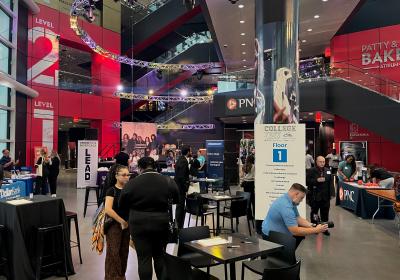
More than 900 students from 30 different regional institutions networked with around 80 employers at the 3rd annual College Fest, held at the Rock and Roll Hall of Fame, Sept. 9, 2026.