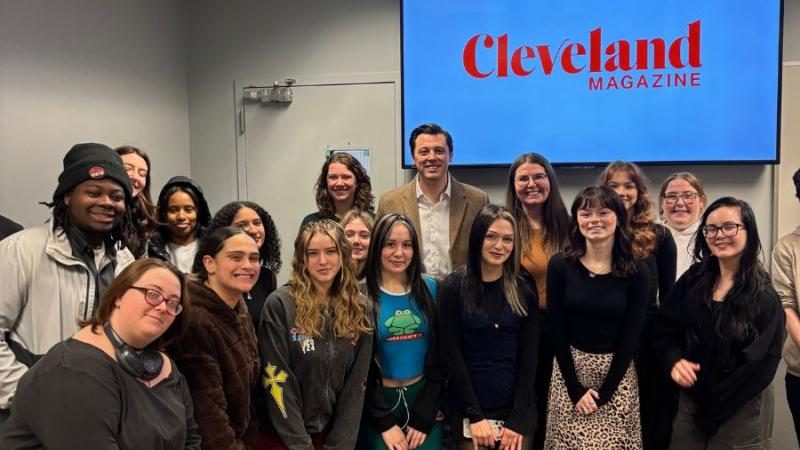
Cleveland Magazine staff share industry insights with CSU students
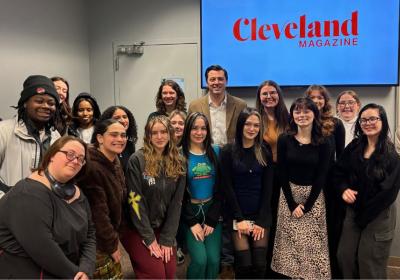
Cleveland State University students got an inside look at the evolving media landscape when staff members from Cleveland Magazine visited a Society of Professional Journalists meeting on March 5.
The panel featured editor Dillon Stewart, senior editor Annie Nickoloff and assistant art director Abigail Archer. They spoke with students about what it takes to succeed in today’s journalism industry, from building clips and landing internships to adapting across digital platforms.
CSU’s chapter of the National Association of Black Journalists co-hosted the lunchtime event, which drew students interested in reporting, design and media production.
Speakers emphasized a central theme: Journalism is no longer confined to a single format, it's now multimedia, and students must be prepared to work across multiple platforms.
Stewart, who leads the magazine’s editorial vision, told students that gaining early, hands-on experience is one of the most important steps toward breaking into the field.
“I highly suggest getting involved with student-run publications,” Stewart said. “That’s how I got my internship, and that’s how you build clips.”
He encouraged students to think broadly about what qualifies as a writing sample. While traditional published work is valuable, Stewart said less formal pieces, including blogs, class assignments or personal projects, can sometimes better reflect a writer’s voice and creativity.
“Sometimes those unfiltered pieces show more of who you are as a writer,” he said.
Stewart’s own career path reflects the importance of persistence and adaptability. He began as an intern at Cleveland Magazine in 2014, writing short blurbs and contributing to smaller sections before moving on to a trade publication. Over time, he built experience across different styles of writing and platforms, eventually returning to the magazine in a leadership role.
That range, he said, is now an expectation rather than a bonus.
“We’re looking for someone who can write a great story, report it and tell it across multiple platforms,” Stewart said. “It’s not just print anymore, it’s newsletters, social media, digital and beyond.”
Nickoloff expanded on that idea, highlighting the contrast between her previous work in daily journalism and her current role in long-form magazine writing.
Before joining Cleveland Magazine, Nickoloff worked at Cleveland.com, where speed and volume defined the job.
“Every day you’re writing, sometimes multiple stories,” she said. “You’re constantly reporting, turning things around quickly and keeping up with the news cycle.”
In contrast, magazine writing allows for a slower, more deliberate approach.
“With a feature story, you might spend months reporting, interviewing and shaping the narrative,” she said. “It’s a completely different mindset.”
Nickoloff said both experiences are valuable and, increasingly, necessary. Journalists today are often expected to move between breaking news and long-form storytelling seamlessly.
“You can’t just do one thing anymore,” she said. “Being adaptable makes you stronger.”
She also emphasized that storytelling changes depending on where the audience is engaging with it. A single story may need to be reshaped for print, web and social media, each with a different tone, structure and level of detail.
“You can tell the same story in different ways,” Nickoloff said. “What works in a magazine might not work on Instagram or in a newsletter.”
Archer offered a complementary perspective, focusing on the visual and creative side of the publication process. As assistant art director, she is responsible for shaping the magazine’s aesthetic identity, from designing page layouts to coordinating photo shoots and producing digital content.
Her work often begins with a concept, but she said the process is highly collaborative and rarely linear.
“We want everything to feel like us,” Archer said. “Even if there’s variety, there has to be consistency in how it represents the magazine and the community.”
Archer explained that cover shoots, in particular, require flexibility. While teams may start with a clear vision, the final image often emerges through experimentation and collaboration on set.
“It’s very collective,” she said. “Sometimes the shot you planned isn’t the one that works best, and you have to adjust in the moment.”
In addition to print design, Archer’s role includes hiring photographers and illustrators, editing video and contributing to the magazine’s social media presence, a reflection of how design roles have expanded in recent years.
“You kind of have to do a little bit of everything,” she said. “Video, social, design – it’s all connected now.”
She encouraged students, especially those interested in creative roles, to begin building a wide range of skills early in their college careers.
“Gaining as much experience as possible now will help you later,” Archer said.
Across all three speakers, the message was clear: the journalism industry is competitive, but it is also evolving in ways that create new opportunities for those willing to adapt.
“The jobs are fewer than they’ve ever been,” Stewart said. “But the opportunities are more diverse than they’ve ever been.”
For the students, the panel offered both a realistic assessment of the field and practical advice for navigating it, emphasizing experience, flexibility and a willingness to take on new challenges.
As the media landscape continues to shift, the speakers said success will depend not just on strong reporting or design skills, but on the ability to evolve alongside the industry itself.
Recent News
CSU and regional partners host 3rd annual College Fest
More than 900 students from 30 different regional institutions networked with around 80 employers at the 3rd annual College Fest, held at the Rock and Roll Hall of Fame, Sept. 9, 2026.

Rhode Tower library gets a facelift after flood
 While access to the library remains temporarily restricted, multiple resources are still available to students as the semester winds down. The library thanks FAST and its own employees who worked so hard to restore the library to full functionality, which is expect by the start of the fall semester.
The Stater Scoop - Women's History Month
In this Women's History Month edition of The Stater Scoop, Cleveland Stater staff members Nicole, Kirsten and Morgan discussed how their identities as women have impacted their lives.
The Stater Scoop - Episode 1
We’re excited to announce a new podcast from The Cleveland Stater – The Stater Scoop! Each episode, we’ll welcome different guests from around campus to talk with members of our newsroom.
Cleveland’s best-kept cultural secret returns to the stage at CSU
 Cleveland State in April hosted for the 48th time the nation’s largest Carnatic music festival, one of the biggest gatherings of its kind in the world.
The Stater Scoop - FUBU: For us, by us
Built on the spirit of “For Us, By Us,” a phrase rooted in culture and legacy, this episode opens by honoring Queen Latifah’s powerful track 1993 anthem “U.N.I.T.Y.” Host Alexis Stradford welcomes reporters Aria Ruiz, Alonzo Anderson and Derek Williams to the podcast studio for a thoughtful conv
Don't miss the the student-run CSU Chamber Collective
 The concert March 6 in Drinko Recital Hall will showcase student initiative, creativity and collaboration across the School of Music.
CSU grad builds a brand and career in music marketing
 Alexis Figlar graduates from Cleveland State in 2023. Since then, she's turned internship connections, a self-made portfolio and a personal art business into a growing career in Cleveland’s music industry.
CSU graduate leads civic growth for Cleveland’s Latine community
 Cleveland State alumna Selina Pagan has transformed the volunteer-led Young Latino Network into a growing nonprofit while advancing civic engagement, cultural education and leadership opportunities for Latine residents.
Safety inside an urban university under scrutiny
 CSU’s open Student Center exposes contradictions between accessibility and security as students and the public share space on a downtown campus.
When the tennis gets petty, the petty turn pro
What do tennis players and their coaches make of the histrionics we see on court these days?
I’m graduating, now what?
Cleveland State University students preparing to graduate gathered at the Student Center Innerlink April 14-16 for the "I'm Graduating, Now What?” event, hosted by Career Development and Exploration, to gain career guidance, resources and connections for life a
Kent State honors fashion icon, Fern Mallis shows what CSU could have
When fashion icon Fern Mallis is inducted into Kent State University’s School of Fashion Hall of Fame this May, students there won’t just be reading a
CSU students give the dining hall mixed reviews
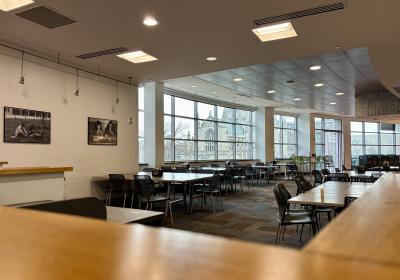 With the updates to the dining experience at Cleveland State over the past couple of years, especially the revamp of the dining hall, The Stater thought it was time for a restaurant review – and not everybody is happy.
CSU student films to show at this year’s CIFF
 Film and media arts students Elliot Lanzer and Malakee McGuire will see their student-produced works on the silver screen at this year's Cleveland International Film Festival, the 50th anniversary of the renowned regional showcase.
Cleveland Magazine staff share industry insights with CSU students
Cleveland State University students got an inside look at the evolving media landscape when staff members from Cleveland Magazine<
CSU hosts Special Olympics basketball event for local students
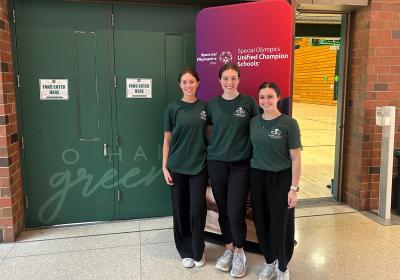 Volunteers and athletes connected through inclusive activities, building skills, confidence and community ahead of future events in Cleveland.
Rising student demand and the CSU Counseling Center
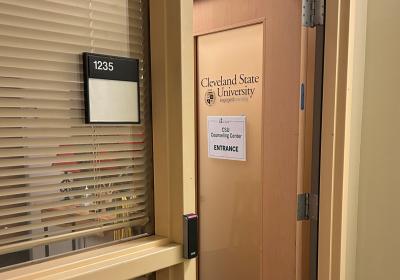 As mental health needs grow on campus, CSU officials outline how students are prioritized and connected to care.
CSU senior to host benefit show at Treelawn Social Club
 “This concert has become a way for all of us to come together for one night and carry on the music in their honor,” said Anna Skalicki, a senior CSU studio art major.
CSU graduate student’s research offers hope for blood disorder patients
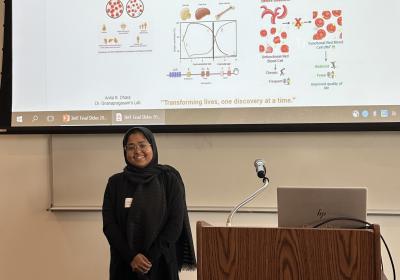 Ph.D. candidate Anita Dhara studies how molecules in red blood cells could help patients with sickle cell anemia and beta thalassemia breathe easier and reduce painful symptoms.
Students for a Just Society launches at CSU
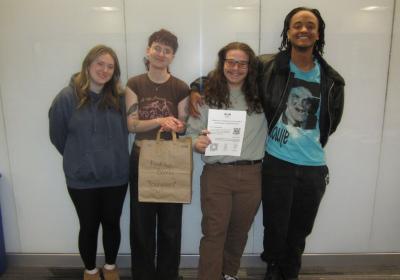 The new student organization aims to build student-led organizing, foster political education, and connect Cleveland State students with regional activism efforts.
Commentary: Student rights and campus safety in the age of ICE
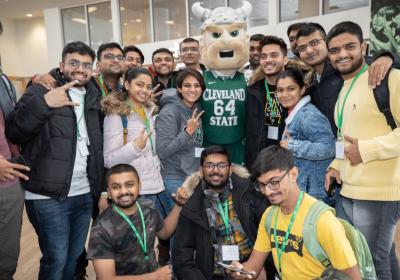 CSU students need clear information about their rights and safety as immigration enforcement in Ohio and nationwide raises concern, particularly for international and migrant students.
Building belonging: How one student athlete created a space for many
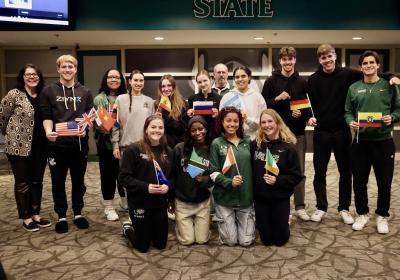 After navigating taxes, visas and internship barriers as an international student from Ireland, Ellie Mickibbin founded a dedicated support system to help future student-athletes adjust and succeed.
Greek letters signify Black excellence at CSU
 Sorority Zeta Phi Beta and fraternity Phi Beta Sigma are two organizations at Cleveland State which embody the achievements of Black students, highlighting the excellence that Black History Month honors every year.
Immigrant embraces the America that has embraced her
 Beloved Cleveland entertainer Bella Sin shares how living undocumented impacted their survival, self-identity, and quest for belonging in America. “Queer nightlife gave me a place to be fully myself, loved and accepted."