Commentary: Student rights and campus safety in the age of ICE
At-risk Cleveland State University students face a growing climate of uncertainty as immigration enforcement actions increase locally and nationwide.
For one student from abroad, whose name has been withheld, the uncertainty surrounding immigration enforcement has reshaped their daily life at Cleveland State. They said recent visa revocations affecting CSU and other Ohio students made the threat feel immediate.
“No, I do not feel safe,” the student said. “A couple of students had their school visas revoked and had to return to their countries. That was very real to see.”
The student added that their concerns had only been elevated by an email CSU sent to the community Feb. 11, telling them that ICE presence on public campus property could not be prevented. As a result, the student now avoids events on campus, and is avoiding in-person classes wherever possible.
“I do not feel fully comfortable moving around campus without worry,” the student said, adding that clearer communication from the university should have come earlier.
This student relies primarily on community organizations for updates, as they feel campus support is inconsistent, outside of TRIO services and a select few professors.
“Universities should be spaces of protection and opportunity,” the student said.
The Trump administration's lack of concern for rights
From its response to the pro-Palestine movements on campuses in 2024, to local ICE raids and arrests and the killing of protesters in Minneapolis in 2025, the Trump administration has signaled its lack of concern for the security of citizens and non-citizens alike, including students of immigrant and international status.
In Northeast Ohio, the rise of federal immigration enforcement has drawn community scrutiny. Over 100 people gathered Jan. 26 in Cleveland Heights to mark one year since ICE detained six immigrant employees of local restaurant Cilantro Taqueria. Community members told media they had come to stand with their immigrant neighbors. Attendees memorialized the names of 39 people killed by ICE or who have died in immigration custody. In 2025, at least 32 people died in ICE custody, the deadliest year for the agency in more than two decades.
In response to the Cleveland Heights' vigil, the Cleveland Division of Police released a public statement downplaying reports of ICE sightings, but suggesting it would not enforce federal immigration laws.
The issue of ICE presence extends across Ohio. In December 2025, ICE’s “Operation Buckeye” resulted in the arrest of 214 people in Columbus, many of whom were from Latino and African communities. Immigration enforcement has also sparked national outrage, especially following two recent fatal shootings in Minnesota of U.S. citizens Renee Good and Alex Pretti.
These incidents have intensified protests over ICE tactics and the violation of civil liberties. This increasing awareness is also evident in local schools. On Jan. 22, students from several Cleveland high schools protested federal immigration enforcement on their campuses.
CSU's response to the targeting of students
The Stater reported in September 2025 that CSU’s projected 41% drop of international student enrollments for fall 2025 was in part linked to fears about US immigration, xenophobia and student visa uncertainties.
In February 2025, the Trump administration and U.S. Department of Homeland Security rescinded protections for sensitive areas such as college campuses. “Criminals will no longer be able to hide in America’s schools and churches to avoid arrest,” said Benjamine Huffman, acting DHS secretary.
In December 2025, CSU President Laura Bloomberg, Ph.D., said “We need to be prudent.”
“We have to aggressively recruit students," she said, "but at the same time, we have to be pretty clear-eyed about the fact that we serve the students who are here."
Dr. Bloomberg added that it was no surprise to her that international students might find other countries more appealing at this time.
While some students describe fear and uncertainty, CSU officials point to policies they have implemented about how the university deals with immigration enforcement.
Cleveland State outlined a formal protocol in February 2025, detailing how to respond to ICE on campus. While law enforcement may enter public areas of campus, the policy notes that ICE cannot access non-public places such as residence halls, locked laboratories, or staff offices without proper legal authority.
“Law enforcement may not enter non-public places without an appropriate warrant or permission from a CSU employee—accordingly do not grant such permission without authorization by the Office of General Counsel,” the policy reads.**
How to deal with an ICE encounter
The Immigrant Defense Project has the the following checklist for dealing with ICE:
Know Your Rights:
- You have the right to remain silent when questioned by ICE or law enforcement.
- ICE generally needs a judicial warrant signed by a judge to enter private property without consent.
- You have the right to an attorney before answering questions or signing anything.
- You can refuse a search if there is no valid warrant.
If You Encounter ICE:
- Stay calm, do not resist, do not run or provide false information.
- Clearly state, “I am exercising my right to remain silent.”
- Ask, “Am I free to leave?” if stopped in public.
At Cleveland State, students deserve a secure campus. Advocates are calling for campus spaces where international and immigrant students can feel supported and informed. Examples of actions they believe could help are informational sessions, forums, and collaborative discussions aimed at explaining legal protections and building community.
The administration, faculty, student organizers and legal aid providers can play a role in improving student security by developing accessible resources such as “Know Your Rights” guides or multilingual materials. Such tools could help guide at-risk students in any encounter with immigration authorities. Ongoing dialogue is necessary to help shape how CSU addresses student safety and support on campus while current federal policies persist.
** CSU's ICE policy:
Recent News
Students for a Just Society launches at CSU
 The new student organization aims to build student-led organizing, foster political education, and connect Cleveland State students with regional activism efforts.
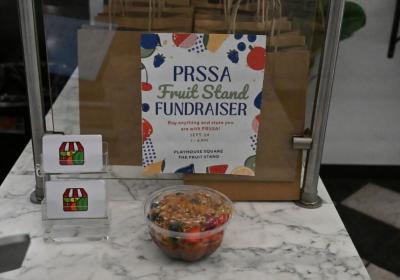
CSU PRSSA dine-to-donate fundraiser at The Fruit Stand
By KARINA TORRES – posted October 7, 2026
CSU PRSSA hosted a one-day fundraiser at The Fruit Stand to raise money for PRSSA's future events.
More than a major: Finding your voice in communications
 For students studying journalism, public relations and communications, there is more than one way to find their voice and build a career.
CSU and regional partners host 3rd annual College Fest
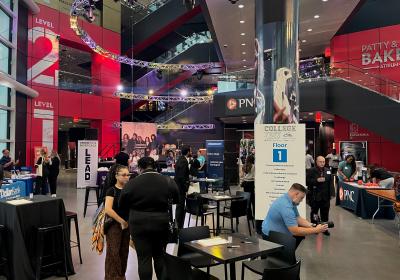
More than 900 students from 30 different regional institutions networked with around 80 employers at the 3rd annual College Fest, held at the Rock and Roll Hall of Fame, Sept. 9, 2026.

Rhode Tower library gets a facelift after flood
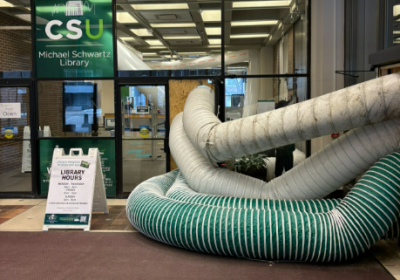 While access to the library remains temporarily restricted, multiple resources are still available to students as the semester winds down. The library thanks FAST and its own employees who worked so hard to restore the library to full functionality, which is expect by the start of the fall semester.
The Stater Scoop - Women's History Month
In this Women's History Month edition of The Stater Scoop, Cleveland Stater staff members Nicole, Kirsten and Morgan discussed how their identities as women have impacted their lives.
The Stater Scoop - Episode 1
We’re excited to announce a new podcast from The Cleveland Stater – The Stater Scoop! Each episode, we’ll welcome different guests from around campus to talk with members of our newsroom.
Cleveland’s best-kept cultural secret returns to the stage at CSU
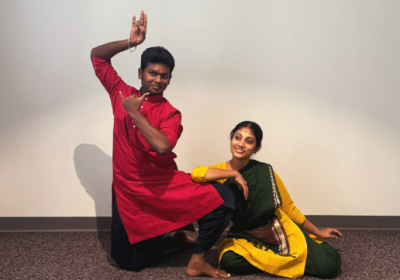 Cleveland State in April hosted for the 48th time the nation’s largest Carnatic music festival, one of the biggest gatherings of its kind in the world.
The Stater Scoop - FUBU: For us, by us
Built on the spirit of “For Us, By Us,” a phrase rooted in culture and legacy, this episode opens by honoring Queen Latifah’s powerful track 1993 anthem “U.N.I.T.Y.” Host Alexis Stradford welcomes reporters Aria Ruiz, Alonzo Anderson and Derek Williams to the podcast studio for a thoughtful conv
Don't miss the the student-run CSU Chamber Collective
 The concert March 6 in Drinko Recital Hall will showcase student initiative, creativity and collaboration across the School of Music.
CSU grad builds a brand and career in music marketing
 Alexis Figlar graduates from Cleveland State in 2023. Since then, she's turned internship connections, a self-made portfolio and a personal art business into a growing career in Cleveland’s music industry.
CSU graduate leads civic growth for Cleveland’s Latine community
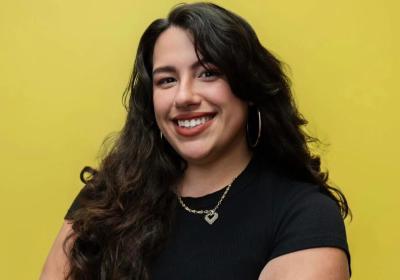 Cleveland State alumna Selina Pagan has transformed the volunteer-led Young Latino Network into a growing nonprofit while advancing civic engagement, cultural education and leadership opportunities for Latine residents.
Safety inside an urban university under scrutiny
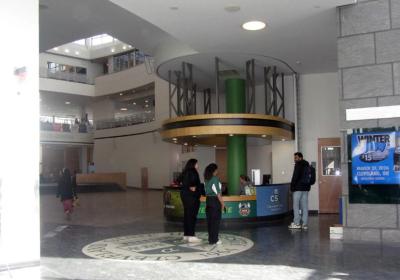 CSU’s open Student Center exposes contradictions between accessibility and security as students and the public share space on a downtown campus.
When the tennis gets petty, the petty turn pro

What do tennis players and their coaches make of the histrionics we see on court these days?
I’m graduating, now what?
Cleveland State University students preparing to graduate gathered at the Student Center Innerlink April 14-16 for the "I'm Graduating, Now What?” event, hosted by Career Development and Exploration, to gain career guidance, resources and connections for life a
Kent State honors fashion icon, Fern Mallis shows what CSU could have

When fashion icon Fern Mallis is inducted into Kent State University’s School of Fashion Hall of Fame this May, students there won’t just be reading a
CSU students give the dining hall mixed reviews
 With the updates to the dining experience at Cleveland State over the past couple of years, especially the revamp of the dining hall, The Stater thought it was time for a restaurant review – and not everybody is happy.
CSU student films to show at this year’s CIFF
 Film and media arts students Elliot Lanzer and Malakee McGuire will see their student-produced works on the silver screen at this year's Cleveland International Film Festival, the 50th anniversary of the renowned regional showcase.
Cleveland Magazine staff share industry insights with CSU students
Cleveland State University students got an inside look at the evolving media landscape when staff members from Cleveland Magazine<
CSU hosts Special Olympics basketball event for local students
 Volunteers and athletes connected through inclusive activities, building skills, confidence and community ahead of future events in Cleveland.
Rising student demand and the CSU Counseling Center
 As mental health needs grow on campus, CSU officials outline how students are prioritized and connected to care.
CSU senior to host benefit show at Treelawn Social Club
 “This concert has become a way for all of us to come together for one night and carry on the music in their honor,” said Anna Skalicki, a senior CSU studio art major.
CSU graduate student’s research offers hope for blood disorder patients
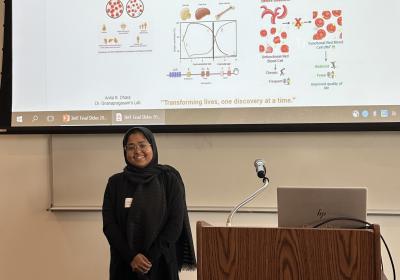 Ph.D. candidate Anita Dhara studies how molecules in red blood cells could help patients with sickle cell anemia and beta thalassemia breathe easier and reduce painful symptoms.
Commentary: Student rights and campus safety in the age of ICE
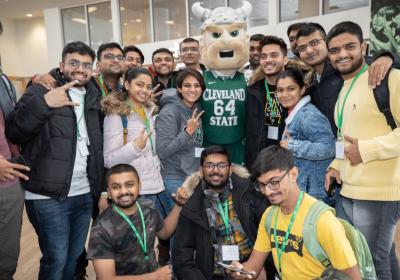 CSU students need clear information about their rights and safety as immigration enforcement in Ohio and nationwide raises concern, particularly for international and migrant students.
Building belonging: How one student athlete created a space for many
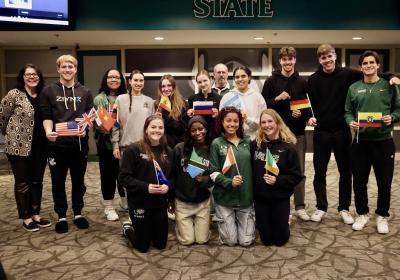 After navigating taxes, visas and internship barriers as an international student from Ireland, Ellie Mickibbin founded a dedicated support system to help future student-athletes adjust and succeed.
Greek letters signify Black excellence at CSU
 Sorority Zeta Phi Beta and fraternity Phi Beta Sigma are two organizations at Cleveland State which embody the achievements of Black students, highlighting the excellence that Black History Month honors every year.
Immigrant embraces the America that has embraced her
 Beloved Cleveland entertainer Bella Sin shares how living undocumented impacted their survival, self-identity, and quest for belonging in America. “Queer nightlife gave me a place to be fully myself, loved and accepted."