Rising student demand and the CSU Counseling Center
When Elena Santiago** walked into a campus office during a severe anxiety attack her freshman year, she did not know exactly where she was going, only that she needed help.
“I just walked in,” said Santiago, 23, a senior at Cleveland State University. “Talking to someone who in some way gets me and is like me makes me feel safe and comfortable.”
CSU's Counseling Center serves a student population of roughly 14,000, as evidence nationwide shows a growing need for such services on campuses.
A March 2026 report from The Hill highlights that depression and suicidal ideation among college students remain persistently high despite expanded campus resources. And a John Hopkins University analysis of more than 560,000 students found that suicidal ideation has risen 154 percent since 2007, alongside high increases in restlessness and difficulty concentrating.
Experts say that while most colleges now offer mental health services, demand continues to outpace capacity, with students reporting significantly higher rates of anxiety and depression than the general adult population.
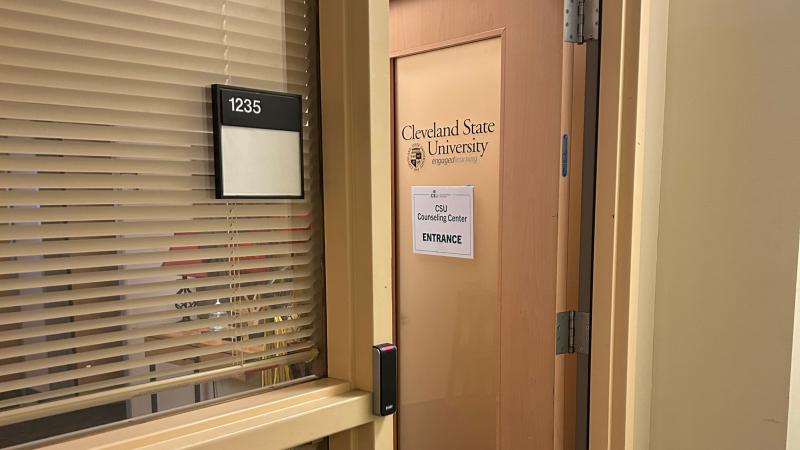
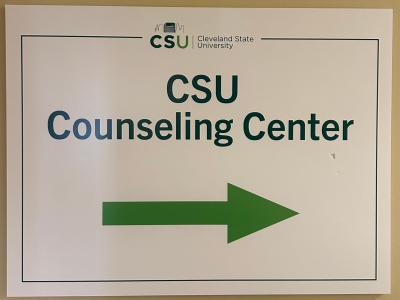
Cleveland State's Counseling Center is on the 12th floor of Rhodes Tower in RT 1235. Its services include short-term individual therapy, group therapy, psychiatric consultation, case management, crisis intervention and outreach programming. Services are free to students, except for a small fee for psychiatric care.
Brittany Sommers, director of the Counseling Center, said the office employs 25 on-campus clinicians, including psychologists, counselors, psychiatrists, a social worker and graduate trainees.
“Typically, all students are seen quickly through our office,” Sommers said. “We do not currently or typically have a waitlist.” During peak periods, such as midterms and finals, the center prioritizes students based on clinical need.
“If we do triage, we do so based on clinical assessment of safety risks and functioning level,” Sommers said.
Students in urgent distress may attend walk-in appointments from 1 to 3 p.m. Monday through Friday. Outside these hours, students who call (216)-687-2277 are connected to a phone counselor 24 hours a day. The center also directs students to the 988 Suicide & Crisis Lifeline.
Students begin services by completing a 25-minute phone screening to determine appropriate care, which may include the individual and group therapy services, campus resources or referral to an off-campus provider.
This academic year, the on-campus clinical staff is composed entirely of women. Sommers said the center received three requests for male counselors and connected those students to male clinicians through its virtual therapy partner, UWill. Male clinicians are expected to join the on-campus staff in September.
Santiago said having the option to choose a counselor based on gender or identity is important.
“I think it’s extremely important and could be beneficial if there is an option to choose,” Santiago said. “Luckily I was paired up with a woman, so it wasn’t an issue.” She believes additional staff would help when asked whether 25 clinicians are enough to serve a student body of 14,000.
“I feel like there could be more staff,” Santiago said. “Honestly, the more the merrier.”
Sommers said students with specific clinician, scheduling or treatment preferences may be referred to trusted providers in the Cleveland area if the center cannot meet their needs.
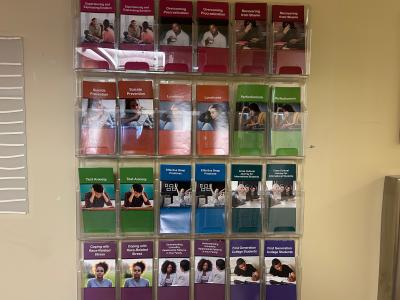
The Counseling Center promotes its services through social media, orientation sessions, tabling events, signage, brochures and a mental health syllabus statement approved by the CSU Faculty Senate in 2022. Sommers described the approach as intentionally redundant to increase visibility. Faculty and residence life staff also receive training on how to refer students.
The center also offers Question, Persuade, Refer (QPR), suicide prevention training open to faculty and staff. Under the university’s Suicide Prevention and Crisis Response Protocol, employees are instructed to stay with students expressing suicidal intent and contact the Counseling Center or campus police immediately.
Sommers said trusted faculty members can play a key role in encouraging students to seek help.
According to Sommers, one operational challenge is decreased engagement in group therapy. Current offerings include “Wise Minds,” focused on coping skills. “Viking Recovery” is for students seeking to reduce substance use.
“Group therapy is a very effective form of treatment for common concerns including anxiety, depression, and loneliness,” she said.
University officials said they will continue assessing student demand, staffing needs and outreach effectiveness heading into the next academic year. Students can schedule a screening by calling (216)-687-2277 or visiting csuohio.edu/counseling.
** Editor's note: Elena Santiago is not the interviewee's real name, which has been changed to protect their identity.
Recent News
More than a major: Finding your voice in communications
 For students studying journalism, public relations and communications, there is more than one way to find their voice and build a career.
“Best of” The Cleveland Stater fall 2026 #1
 In this edition of “Best of” The Cleveland Stater, we examine Flock cameras, CSU’s new meal-swipe system, the opening of the Glick Recovery Campus, CSU’s Around the World in 80 Minutes event, and the main water break that temporarily affected some campus operations.
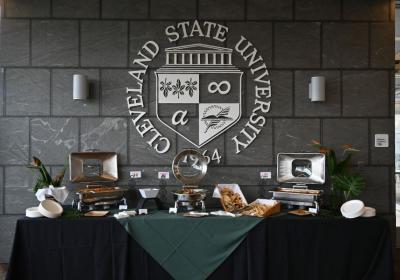
CSU students spend 80 minutes going around the world
By KARINA TORRES - September 24, 2026
The Center for Campus Engagement hosted the cultural event for students to attend and try food from various countries while enjoying live music.
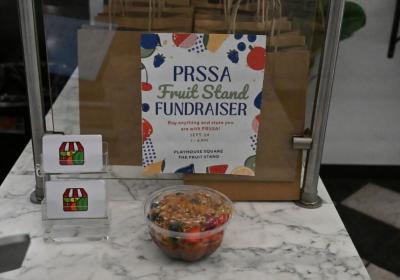
CSU PRSSA dine-to-donate fundraiser at The Fruit Stand
By KARINA TORRES – posted October 7, 2026
CSU PRSSA hosted a one-day fundraiser at The Fruit Stand to raise money for PRSSA's future events.
CSU and regional partners host 3rd annual College Fest
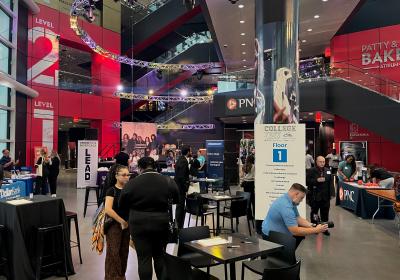
More than 900 students from 30 different regional institutions networked with around 80 employers at the 3rd annual College Fest, held at the Rock and Roll Hall of Fame, Sept. 9, 2026.