Bloomberg addresses WCSB shutdown, funding woes, loss of international students and a tough semester as president
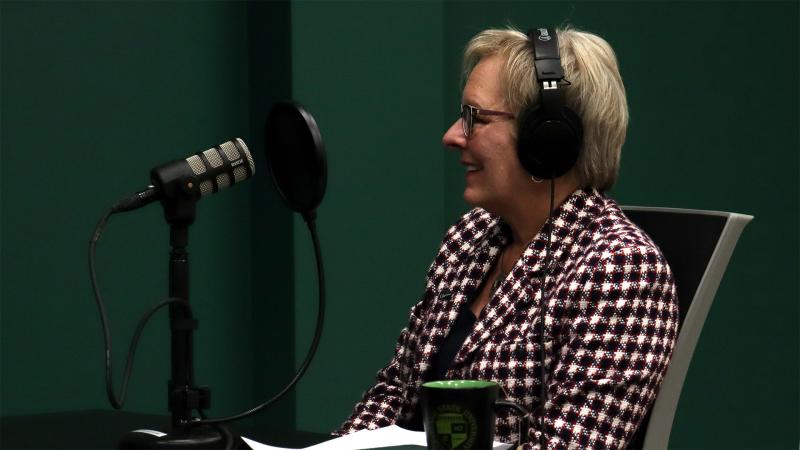
CSU President Laura Bloomberg, Ph.D., sat down with The Cleveland Stater Editor-in-Chief Jane Matousek on Tuesday, Dec. 2, to discuss the condition of Cleveland State University.
In a brightly-lit conference room overlooking the slush-covered university early in the evening, Dr. Bloomberg sipped tea from a CSU mug, and talked about the ups and downs of the fall semester.
WCSB
Just two months earlier, the university rattled the student body and the Cleveland area with an abrupt announcement – CSU was shutting down the almost 50-year-old college radio station WCSB, and handing control of content to Ideastream Public Media in a strategic partnership. The result: another jazz radio station, and disgruntled students and listeners across the region.
“I was not surprised that there would be students involved with the radio station who were really upset,” Bloomberg said. “I was not surprised by that, and I can imagine that lands wrong with people."
“Here's a couple of the things that did surprise me,” Bloomberg continued. “A large number of people who spoke out had never listened to it. I would say, ‘Well, what's your favorite program? What are you going to miss the most?’ and they'll say, ‘Well, I never listened to it. I didn't even know there was a radio station, but I'm mad now.’ That surprised me.”
Following the announcement, Bloomberg was faced with student protests on campus, comments on social media, questions from students and even city council members sharing their frustration during council meetings. The pushback in some cases was not civil.
“It surprised me some of the pretty vicious feedback,” Bloomberg said. “I mean, hard feedback is hard feedback. Things that you have to turn over to the FBI because they're so threatening, that's unfortunate.”
While the abrupt disappearance of WCSB from the air waves jarred listeners, how the announcement was made to staff was equally jarring. During an 11-minute Zoom call with radio station student faculty on Friday, Oct. 3, a campus-wide email was released simultaneously, leaving little time for reaction.
When asked with hindsight whether the shutdown could have been handled more judiciously, Bloomberg held firm.
“It's just that my answer is not going to be satisfactory,” Bloomberg said. “And it's 'no, I wouldn't have done it differently.' Although I was surprised by, like I say, some of the pushback. I wouldn't do it differently unless we weren't going to do it at all. If we're going to make the decision, I wouldn't do it differently. And I stand by the decision.”
“Let's just acknowledge, there's a lot of people who would have made a different decision,” Bloomberg said. “There's a lot of people – mad at me, mad at me and the board of trustees."
"I could go on at length about what I'm charged to do in this time in higher education, and a massive part of our strategic plan is building new kinds of strategic partnerships, with places like MetroHealth and the Cleveland Clinic and IdeaStream and Playhouse Square," Bloomberg said. "I could make that case, but I also just want to acknowledge there are people who will never agree with that decision. But if the decision is to do it, then I do stand by the approach.”
Another aspect of the closure that upset community members were the CSU police officers who appeared at the station shortly after the president’s Zoom call with the station’s student staff.
“First of all, we did not know that students had access to it (the station),” Bloomberg said. The students gained access after contacting the CSU Police Department that same morning when they arrived to host their regularly scheduled programming to find their keycards were not working.
“When we knew that students had been granted access to it – so there was CSU equipment and material being removed from the radio station. I pause because I don't want to point fingers or lay blame, no harm, no foul,” Bloomberg said. “We're not calling this theft, but we are saying you can't remove, even when you're extremely upset, you cannot remove things that do not belong to you from a space.”
“And so, that was a part of it, just to monitor what was happening in that space,” Bloomberg said. “There's a lot of valuable equipment there. There are beautiful archives of albums that will be cataloged, that will stay here forever, that will be honored and treasured, but they do not belong to individual students.”
Students who were at the station on the day of the shutdown remain adamant that no university-owned equipment was in danger of being taken.
After the abrupt hand-off of the station, other organizations within CSU that act as the voice of the student body worried – could The Vindicator or The Cauldron be handed off under the umbrella term of strategic partnerships? Bloomberg quieted those concerns, noting that WCSB had something of value that other media organizations don’t.
“The situation with WCSB is unique, I would argue is unique, in that there's something that clearly is of value,” Bloomberg said. “I acknowledge it was of value to the students. Far more value, and that's the FM signal.”
“The ability, the value of a free press and a free media outlet for students should never be taken away,” Bloomberg continued. “Now, I could go on at length about all of the data around how many college students actually access FM radio, but the response from people who disagree with me would be to say, ‘yes, but an FM radio signal is a valuable commodity because it's limited.’”
In discussions since with the students previously involved with WCSB, Bloomberg has suggested other forms of technology to continue the station’s 49-year legacy, such as podcasts.
“That is not the case with The Vindicator, The Cauldron, but I don't want to leave out other media outlets,” Bloomberg added. “We talk about those, but for instance – I always love this example – our esports team broadcasts a show every single night. Every single night. They've got a great following, and so I would say that to people who were upset about WCSB, and they'd say, ‘Well, we don't care about that.’"
"Well, hundreds of other people do care about that, and those students have figured out a way to find a voice with technologies that are readily available to them and are readily available to all students," Bloomberg countered. "There is no stopping the forward progress of that kind of technology that's different than an FM signal.”
Loss of international students and the impact on revenue
Following the rhetoric and action by the Trump administration restricting student visas, ICE and police raids on campuses and the detention of students across the country in the past year, the international student enrollment at CSU suffered a steep drop of 41% in fall according to Crain’s Cleveland Business. The drop could cost $11.5 million in revenue.
Bloomberg also saw cyclical factors at play.
“Over recent years, we've had a burgeoning of international students. Those international students go through the program and then they graduate in large numbers, smaller numbers come in," Bloomberge said. "So that was a big part of the massive change that we had, and then just the sheer numbers are just so much smaller.”
When it comes to enrollment, Bloomberg said she thinks there are multiple factors at play.
“I do believe that it is still a dream of many international students to come to the United States, but I think you can't ignore the fact that there are other countries that are also appealing and perhaps at this time, more appealing,” Bloomberg said. “For instance, I would say we have a large number of students from India. Australia is looking far more welcoming right now, and in many ways is. It's easier to get there, get into the country. So those are factors that are really beyond our control.”
“So your question about how do we navigate that is 'carefully,'” Bloomberg said. “We need to be prudent. We have to aggressively recruit students, but at the same time, we have to be pretty clear-eyed about the fact that we serve the students who are here. Which means if we're a smaller campus, if we have more students online, we invest in areas that are most relevant to the students who are here, even as we continue to recruit.”
Bloomberg noted that the number of different countries she sees represented when she meets the incoming international student class each year was surprising this fall, and a good sign for the future.
“I thought it was going to be about five,” Bloomberg said “I would have guessed five or six countries. 23 countries were represented. It would have been much larger in an earlier time when we had more students. But I was heartened by that, because that's 23 countries that now have a relationship with CSU, and I think we can be building on that.”
Student Safety, I.C.E.
Throughout the past year, the U.S. Immigration and Customs Enforcement (ICE) has by its own count arrested more than half a million “immigration violators,” working in many cases with local authorities "to identify and arrest aliens who may present threats to national security or public safety, or who otherwise undermine the integrity of U.S. immigration laws.”
Scooped up in the ICE dragnet have been more than 170 U.S. citizens detained and held by ICE as of October, according to ProPublica. Many Americans who are not white fear being detained by ICE simply because of their skin color, or "how they look," as a U.S. Border Patrol Official put it to WBEZ Chicago.
Given that Cleveland is a predominantly Democratic and Black city with a big first, second, third, fourth generation immigrant population, and given CSU's commitment to serving that community in all its diversity, despite attempts by the Trump administration and Ohio legislature to dirty the word, what is Cleveland State doing to prioritize student safety and mitigate fear surrounding ICE?
President Bloomberg started by addressing the plight of international students.
“So you're talking about student safety of international students who may feel vulnerable, and my heart goes out to them,” Bloomberg said. “So a couple of things, first of all, our CISP (Center for International Services and Programs) office has issued messages to all of our international students, and they have rights."
"If they are here in this country with a visa that allows them to be here and they are complying with those visa parameters, they have rights," Bloomberg emphasized. "We can't completely protect anybody from being approached by federal officers, but they do have constitutional rights that we would support them in upholding.”
Bloomberg explained that if federal agents, including ICE, come to campus, the administration has issued guidance to employees, faculty and staff. First, staff must be respectful. They do not have the right to deny “somebody something,” but rather have the right or obligation to ask who they are and what their purpose is.
“No faculty or staff member should be providing information,” Bloomberg said. “That's not their job. Their job is to escort any federal agent to our Office of General Counsel. So that means we don't all have to remember a gazillion different rules or don't do this, do that."
"Just say my job is to walk you to the Office of General Counsel," Bloomberg added. "All of our legal issues go first through our Office of General Counsel and then they will handle it.”
“I think it's also just the honest thing to say – I can't guarantee everybody's safety,” Bloomberg said. “You can't. We can't. We can do our best to support each other and to create the safest environment possible, but that is not a guarantee of safety.”
Funding Issues within Student Organizations
Throughout the fall 2025 semester, student organizations had difficulty accessing organization funds, stipends, scholarships and more due to an apparent lack of organization, communication and transparency of the Division of Student Belonging and Success, according to its critics. Some students still have yet to receive their designated organizations budget funds, event funds and stipends.
“I am aware that there were problems and they're kind of multifold,” Bloomberg said. “A lot of it, though, is – and this is another hard thing to hear because people have said, ‘Well, it never used to be this way.’ When you look at the way things were done, it was, in many ways, like the Wild West of financial management.”
"The fact that it (the previous system) worked smoothly for students is problematic if we are so woefully out of compliance that we can't account for how we are spending vast swaths of the taxpayer's dollars," Bloomberg added. "And so we needed to bring it into compliance.”
When it comes to student organization funding, organizations have an agency account funded by the general fee each student pays within their tuition and any budget requests from the Student Government Association. In addition, organizations have their own accounts for money they have raised through fundraising, in short, their own money. Both accounts were difficult to access throughout the fall semester.
Bloomberg explained that Student Belong and Success, which has taken over administration of student organization funding, did its homework and said this is how "every other public university in the state does it."
“There is a sense of loss because there's a greater sense of bureaucracy when we do that,” Bloomberg said, adding that some students who were really upset felt, "‘Well, this is just not fair.'"
The president said the new process was in part a culture shift, but acknowledged that problems with internal communications at CSU had contributed to the frustrations student organizations experienced this semester.
“There has been a disconnect with how communication is traveling between Student Belonging and Success and our finance, who's actually cutting the checks or putting money into people's accounts, and then understanding the difference between an organization's account, your own foundation funds, and money that you've raised,” Bloomberg said. “That has been confusing. I am very much hoping, I know the students are as well, that by spring semester, those internal communication challenges are resolved.”
Some students also pointed this semester to an apparent disconnect between the student body and Student Belonging and Success, including difficulty getting into contact with division staff to address issues. Bloomberg said this was not everyone's experience and that plenty of students “hang out” in the division’s office.
“What we have to do is calibrate what is equitable access as we navigate all of these things,” Bloomberg said. “140 plus – I think it's more than that – student organizations, all of them in transition right now – and some in ways that are contested by students, like the number of people who get stipends will change substantially as it's woefully out of compliance.”
“All of those, imagine 144 – how many people are engaged in those, how many people are upset – which means they're probably gonna be sending more emails and more inquiries, times, it's thousands,” Bloomberg continued.
“I'm not making excuses," she said. "I think we always have to get better." She added, for example, that students had texted her and told her that the administration's shift from using emails to texting had been "transformational" for students, adding that "I'm hearing that too.”
Ohio Senate Bill 1
When Ohio Senate Bill 1 was passed earlier this year, several changes were to be expected on campus and in classrooms across the state. In August, one change quietly made at CSU was the shuttering of the Mareyjoyce Green Office of Women’s Support, the LGBTQ+ Student Services Office and the Office of Inclusion and Multicultural Engagement.
“I think that's been hard, it's painful,” Bloomberg said regarding the center closures. “It's painful to do it, and it's certainly painful for students who really access those centers."
“I don't want to try to paint that in a brighter light,” Bloomberg continued, “But I do want to say one thing that SB1 does not do is to constrain student activity. And so I have said this to people who are actively engaged in the LGBTQ Center, 'Please do not think that this means you cannot be a student organization and do the things that you want to do as a student organization. We will not staff it, we won't have a center – but you have those rights.' And I fight really hard for students to keep those rights.”
As for the effect of SB1 in classrooms, faculty were met with heavier workloads and new student evaluation questions including opinions on religious, political and racial bias, open-mindedness and whether faculty were "effective" teachers.
“I've said to faculty and staff, we will comply with the law,” Bloomberg said. “Faculty also have rights. They have rights to teach the content that they are charged with teaching – and it needs to be outlined in the syllabus.”
“I do think faculty are nervous about this, and one of the things that I think they'll be thinking about is, ‘Can I speak freely about political events?’ Well, one response is, 'Is that the role of a faculty member, to voice their own personal political opinion?' And it is not,” Bloomberg said. “It is the role of the faculty member to be able to surface politically delicate issues in the classroom for learning purposes as it aligns with the topic of the course. That should not be constrained.”
The university president gave an example of a faculty member who uses racial health disparities and the causes of such disparities in a statistics class, noting that in a case like that, these topics are relevant therefore fine to be taught. As for topics deemed irrelevant to a course, it’s unacceptable.
“It shouldn't be happening anyway,” Bloomberg said. "So students, if they expect to see anything, it would be a greater adherence to what is the topic of the course.”
Now that the controversial bill has come to fruition, Bloomberg was asked if she regretted not speaking up in opposition during her participation with the Inter-University Council (IUC) in January when nine presidents of top Ohio universities met to discuss the bill and collectively decided not to publicly comment on the bill, although it had still not gone to the Ohio senate.
“The year before Senate Bill 1 passed, I was pretty vocally opposed to its predecessor bill, Senate Bill 83, SB83,” Bloomberg said. “And I – none of this is confidential and I don't shy away from it – I invited Senator (Jerry) Cirino (the bill's sponsor) to campus, sat at this table, and I talked about why I was so opposed to it and why I thought that we might make more progress if we could work in alignment to achieve some of the things that he, as the author, wanted to achieve with the bill, including things like not silencing conservative voices, conservative student voices on campus, which I also support."
But this kind of, ‘We will tell you how to do it, what you can do and what you can't do,’ it's not my leadership style," Bloomberg continued. "I don't find it effective or helpful, and I was pretty candid in saying that.”
“By the time Senate Bill 1 was proposed, I guess in the easiest way of saying it was, you could see the handwriting on the wall,” Bloomberg continued, “You can count the votes, you can see ahead of time what's going to happen, and then there's a calculation about what do we do to follow the law, because my job is to – it's the law of the land – and also hold to the priorities we have as an institution and the rights that students and faculty have, and so that was the goal.”
“So do I regret not speaking out? I would say, I did speak out a year earlier,” Bloomberg said. “Do I regret not speaking out about SB1 at the time I knew it was going to pass? I do not. I put my energy somewhere else.”
Related to SB1 is House Bill 33, which passed in 2023 and required that five Ohio public universities, including CSU, set up a Center for Civics, Culture and Society. That center will implement a civics course required by SB1.
With a state-mandated center and a state-mandated course, Bloomberg was asked how the university will protect faculty, academic programs and student organizations from political interference that could undermine the very foundation of what gives meaning to a university, the pursuit of knowledge. Bloomberg was blunt in her assessment.
“I have never experienced a legislative edict to cover certain things in a curriculum,” Bloomberg said. “‘You will read these documents,’ but it is the law and we will do that.”
She added that curricula policy had included "multiple extremes" during the past 200 years of public education in the U.S. “The people have to be vigilant and, and I will say, – although I have already told you, I was not a huge supporter of Senate Bill 83, the precursor to SB1 – I will also say that I do believe that in many places, we, being Higher Ed. broadly, not necessarily CSU, have constrained conservative voices in the classroom.”
“I think that when we allow all voices to be heard, we create discomfort in the classroom. And so people will say, ‘This doesn't feel like a safe space.’ Well, if people disagreeing with you is creating a lack of safety, then we need to create a different kind of understanding of what debate is. We can always get better at that. And as humans, we can get better at that, or we wouldn't have so many estranged families right now in this political climate.”
Faculty Workload and Contract Issues
Another element of SB1 impacting CSU is its attempt to undermine the long established relationship between educators and administrators at Ohio's public universities, which frames what faculty at Cleveland State can and should do.
Currently, the collective bargaining agreement between the university board of trustees and the American Association of University Professors' CSU chapter is under renegotiation, and faculty are working to the old contract while the AAUP and administration bargain.
“We are in negotiations right now,” Bloomberg said. “And I have a pretty firm – I mean, it's the law – and I also just have a pretty firm guideline that we don't negotiate away from the table. So I'm not going to talk a lot about that except to say I have the highest regard for all of the people at the table and it's work to navigate all of the changes that are coming at us from all sources. And I think everybody's at the table in good faith.”
Separately, Crain’s Cleveland Business reported in January that some 400 professional staff members at CSU were working without a contract. Those staff are represented by SEIU District 1199, which is the healthcare and social service union for West Virginia, Kentucky and Ohio. The local union is part of the Service Employees International Union, which has some two million members in the U.S.
Budget
One underlying context in the current negotiations involving faculty is the massive budget shortfall Bloomberg inherited when she took the job after the board of trustees unexpectedly let her predecessor go in April 2022.
COVID-related drop-offs and very inaccurate projections of student numbers were two primary reasons for the gap between revenue and the money the new president would have to spend.
After Bloomberg took office, CSU shuttered programs, cut staff and offered faculty voluntary retrenchment packages, which almost 10% of faculty accepted, resulting this fiscal year in no budgetary deficit.
"We said we will balance the budget by fiscal year 26, the year we're in,” Bloomberg said, in part as a result of the voluntary separation program.
“So heading into this year, we presented a balanced budget. Then, it is true, that after that balanced budget that was based on an assumption of international students that didn't come through, then we say, ‘Okay, our enrollment numbers, our revenue sources are down.’ And so we have this gap.”
“We said we would have a balanced budget, meaning we wouldn't run a deficit,” Bloomberg said. “We're not going to run a deficit. We're going to find efficiencies in other areas. So it's manageable, and that, I want to say, is not – I mean, it's unfortunate – it's not a crisis.”
Bloomberg said one of the administration’s guiding principles is to make the hardest decisions farthest from the classroom or the student academic experience – a principle she plans to use when finding ways to make up for the loss of international student revenue.
“I stress academic experience because that's fundamentally who we are, right? That is what happens for a student's educational experience, but it's not only cuts. So, are you going to see changes? Yes. Are you going to see cuts? No,” Bloomberg said.
She added that Cleveland itself and the region the city anchors are still under underutilized assets for the university.
“I feel so strongly about building deep and sustained strategic partnerships with community partners," Bloomberg continued. "There's a value to being an urban institution only if you exploit, in a good way, the resources of an urban area.”
“I don't want to keep going back to WCSB any more than you do, but for me to turn my back on the opportunity for a long-term sustained strategic partnership with the largest media outlet (Ideastream) in Northeast Ohio doesn't seem wise to me,” Bloomberg said.
“Same as building a joint doctoral degree with the Cleveland Clinic. The Cleveland Clinic is world-renowned," she said. "We are the only public institution this close to the Cleveland Clinic. We will build a doctoral program with them. So those kinds of things expand what we can do with limited resources.”
Campus renovations
Closed in the summer of 2024 for structural renovation after toxic pool chemicals eroded a steel I-beam, Fenn Tower, built in 1930, will return structurally sound and with a fresh interior look for resident students.
“It had to be repaired. It was serious, but how is it going to benefit the university?," Bloomberg said regarding the initial plans for the renovation. "People will be safe in it, but it's not going to beautify it in any way. It's just going to fix it."
“Then we said, 'Now is an opportunity for a refresh.' All of the rooms will be refreshed. There will be no rooms with bathtubs, which were kind of grungy and old," she said. "We've seen a mock-up room and it's new sinks, new showers, new flooring, fresh paint.”
As for Rhodes Tower, which was transferred to Euclid Avenue Development Corporation which acts as the University’s real estate arm, the previous plan to turn the asbestos-ridden building into dorms has been abandoned.
“We don't need it (student housing). We also purchased The Langston and The Edge. We're renovating Fenn Tower and at this point, that is not the best, highest use for Rhodes Tower,” Bloomberg said. “If we do anything with Rhodes Tower, we, you know, we break into any wall, we have got to abate the asbestos first.”
“Our guiding principle here is that we honor the core of the campus,” Bloomberg said. “So that (Rhodes Tower) is right at the heart of the campus. Our library is there. It's part of the plaza with the student center. So it's not going to become something that's not central to CSU.”
“It's not the greatest building for classrooms,” Bloomberg continued. “So I imagine that we will be thinking about infilling it with things from the edges – and I can't speak about exactly what they are, but we have offices in the Union Building down the street. Maybe those offices go there. Maybe my office goes into Rhodes Tower. So what we're thinking about now is, in our space analysis, is what we would move there so that the core of campus is vibrant.”
Personal reflection
Following a semester full of controversy, student frustration and SB1 implementations, Bloomberg closed with what matters to her.
“I have a job to do, and if my job is to be uniformly liked by everyone, I will put my energy in the wrong place – because it's impossible," Bloomberg said. "What a student group wants, another student group doesn't want. What a group of faculty may want is not with the community wants, all of the things.”
“I'm not paid to be popular, I want to do this work because I know something about higher education," Bloomberg said. "I've been doing this for over 30 years, I know something about change, I know something about how we have to navigate change when we have multiple stakeholder groups, that's why I'm in the job.”
“If I stay the course there, admit when I've made a mistake – but I'm not going to sink under the pressure of people not liking what I do when I don't believe I've made a mistake,” Bloomberg said. “So, although I do point out when I have the full support of the board, I try not to hide behind it, I do make decisions, I'm not always just the messenger, and they're not all going to be popular decisions.”
Regardless of the day-to-day pressure of the situation she finds herself in, the president still tries to walk a different part of campus each day, especially when it snows – which she loves.
Dr. Bloomberg also sits down with a group of students every month for lunch in the dining hall. The ticket for admission? No one is to have known any other student at the table previously, and no set agenda is allowed. She sits and chats with students from all walks of life and involvement, and discusses any questions and concerns the students may have.
In closing, when asked whom she wanted to give a shout out to, Bloomberg singled out CSU's student leaders.
“I am so proud of our student leaders,” Bloomberg said. “I was just on fire after our student lunch today, because the students who are leading organizations doing amazing things, preparing and serving Thanksgiving dinner to women in the shelter down the street, the kind of outreach that our students are engaged in, it's really impressive and exciting to me."
"I think that would be, that's where I'd want to end it," she said. "Gratitude for the students who are doing so much to make this a great campus environment.”

Recent News
"Best of" The Cleveland Stater spring 2026 #2
 This edition of "Best Of" The Stater features student artists and filmmakers, international student-athletes fostering a supportive community, and a podcast highlighting voices in POC communities.
Kent State honors fashion icon, Fern Mallis shows what CSU could have

When fashion icon Fern Mallis is inducted into Kent State University’s School of Fashion Hall of Fame this May, students there won’t just be reading a
The Cleveland 'Sex and the City' spring itinerary
 Of course Cleveland is the new Manhattan! You've just landed in the city. You've got 12 hours to take it in. This is the perfect itinerary for you.
CSU student films to show at this year’s CIFF
 Film and media arts students Elliot Lanzer and Malakee McGuire will see their student-produced works on the silver screen at this year's Cleveland International Film Festival, the 50th anniversary of the renowned regional showcase.
Lacrosse falls to LIU in overtime heartbreaker at NEC semifinals
 It was the Vikings first appearance at the NEC tournament and bookended the 2026 season for the Green and White, who put up a 6-8 record overall.
CSU women’s tennis secures share of HLTennis regular season title after Oakland win
 The Vikings ended their regular season with a 4-3 win at Oakland, claiming a share of the Horizon League Regular Season Championship.
Cleveland Magazine staff share industry insights with CSU students
Cleveland State University students got an inside look at the evolving media landscape when staff members from Cleveland Magazine<
The Stater Scoop - Women's History Month
In this Women's History Month edition of The Stater Scoop, Cleveland Stater staff members Nicole, Kirsten and Morgan discussed how their identities as women have impacted their lives.
Rising student demand and the CSU Counseling Center
 As mental health needs grow on campus, CSU officials outline how students are prioritized and connected to care.
Northeast Ohio’s drag scene is losing its own talent

A few years ago, a weekend in Northeast Ohio meant juggling drag shows across Lakewood, Cleveland and Akron.
CSU lacrosse defeats Wagner 10-9
 Cleveland State (5-5, 3-1) used the second half to come from behind and secure a win against visiting Wagner (4-6, 2-2) Saturday afternoon.
CSU women's tennis drop close match to Milwaukee 4-3
 The Vikings took the early lead Saturday, but the host Panthers rallied late to secure a narrow victory.
CSU women's basketball falls to Arkansas State in WNIT Great 8
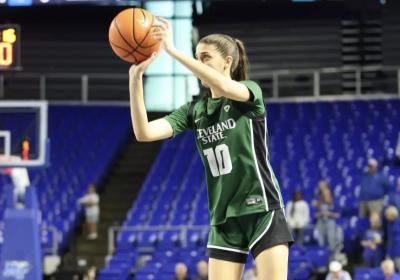
The Cleveland State University women's basketball team had its 2025-26 season come to a close Monday, March 30, as they dropped a 71-53 contest at Arkansas State in the WNIT Great 8.
One wall, one challenge
 Looking up at the climbing wall for the first time, I suddenly understood why rock climbing is as much about your mind as it is about your body.
CSU hosts Special Olympics basketball event for local students
 Volunteers and athletes connected through inclusive activities, building skills, confidence and community ahead of future events in Cleveland.


CSU Faculty Senate reviews budget model, technology overhaul
Cleveland State University received updates on a new budget model, technology initiatives and upcoming state requirements during the March 18 Faculty Senate meeting.
CSU senior to host benefit show at Treelawn Social Club
 “This concert has become a way for all of us to come together for one night and carry on the music in their honor,” said Anna Skalicki, a senior CSU studio art major.
SU men’s basketball drops regular-season finale to Robert Morris
Cleveland State men's basketball (10-21, 6-14) closed out the regular season with a loss at Robert Morris (21-10, 13-7) 83-64 on Saturday, Feb. 28.
CSU graduate student’s research offers hope for blood disorder patients
 Ph.D. candidate Anita Dhara studies how molecules in red blood cells could help patients with sickle cell anemia and beta thalassemia breathe easier and reduce painful symptoms.
CSU tennis hosts Youngstown Friday after narrow IU Indy loss
 The Vikings fell just short in Horizon League play, dropping a touch match to IU Indy 4-3. Next up, CSU hosts Youngstown State Friday.
"Best Of" The Cleveland Stater spring 2026 #1
 This edition of the “Best of” the Stater features a beloved Cleveland entertainer, Black History Month, parking problems at CSU, a student written and directed play, and whether LinkedIn matters for students.
CSU plans new gallery to expand student opportunities

Cleveland State University is moving forward with plans to open the Galleries at 13th Street.
Vikings finish 8th at Horizon League championship meet

The Cleveland State University indoor track and field team closed out the 2026 Horizon League Championship on Sunday, placing eighth overall after two days of competition at Youngstown State.
Students for a Just Society launches at CSU
 The new student organization aims to build student-led organizing, foster political education, and connect Cleveland State students with regional activism efforts.
Commentary: Student rights and campus safety in the age of ICE
 CSU students need clear information about their rights and safety as immigration enforcement in Ohio and nationwide raises concern, particularly for international and migrant students.
Don't miss the the student-run CSU Chamber Collective
 The concert March 6 in Drinko Recital Hall will showcase student initiative, creativity and collaboration across the School of Music.
The Stater Scoop - Episode 2
For the second episode of The Stater Scoop, we're celebrating Black History Month with CSU’s Black Student Union!
Building belonging: How one student athlete created a space for many
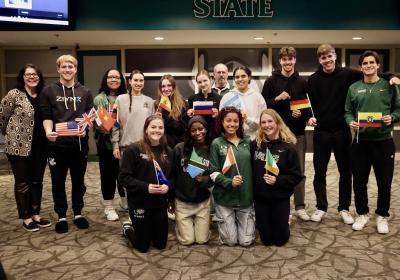 After navigating taxes, visas and internship barriers as an international student from Ireland, Ellie Mickibbin founded a dedicated support system to help future student-athletes adjust and succeed.
CSU faculty discuss emeritus policy, Workday, facilities at Senate meeting
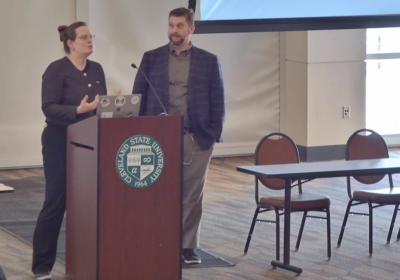
Cleveland State University faculty reviewed proposed changes to emeritus and retirement policies, received updates on the university’s Workday transition and heard extensive reports on campus facilities during the Feb.
The Stater Scoop - Episode 1
We’re excited to announce a new podcast from The Cleveland Stater – The Stater Scoop! Each episode, we’ll welcome different guests from around campus to talk with members of our newsroom.
Seiter wins 1-m springboard title at at Horizon League Championship
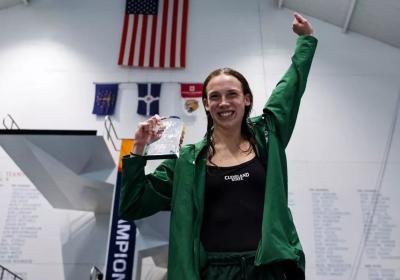 Sophomore Ellie Seiter captured Cleveland State’s only Horizon League title of the meet, winning the 1-meter diving event with a score of 294.35.
CSU men’s swimming finishes 5th at Horizon League meet

The Cleveland State University men’s swimming and diving team placed fifth at the 2026 Horizon League Swimming and Diving Championship, totaling 391 points when the four-day meet concluded Saturday.
CSU grad builds a brand and career in music marketing
 Alexis Figlar graduates from Cleveland State in 2023. Since then, she's turned internship connections, a self-made portfolio and a personal art business into a growing career in Cleveland’s music industry.
Greek letters signify Black excellence at CSU
 Sorority Zeta Phi Beta and fraternity Phi Beta Sigma are two organizations at Cleveland State which embody the achievements of Black students, highlighting the excellence that Black History Month honors every year.
CSU graduate student aims to improve Lake Erie's water quality
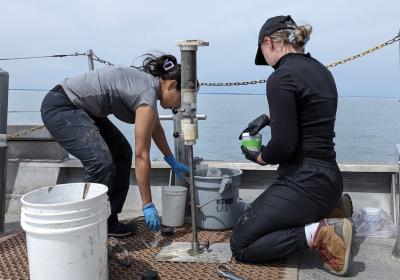 Anshula Dhiman is studying the causes of algae blooms. Her research explores how nutrients in lake sediments drive harmful summer blooms which impact water quality.
Student play “Journey West” debuts at playwright's festival
 “‘Journey West’ is a nonconventional Western, it’s pseudodisguised as a Western,” said writer Michael Anderson. “It’s not what you would typically expect."
CSU women’s basketball earns 57-52 victory at Robert Morris
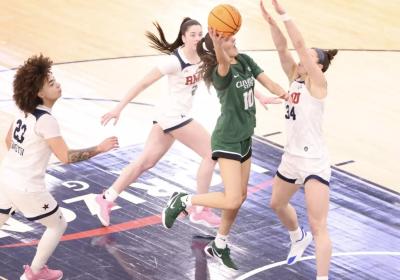 The Vikings picked up their 20th win of the season, with highlights from Colbi Maples and Izabella Zingaro.
Nearly 100 employers connect with students at CSU Career Fair
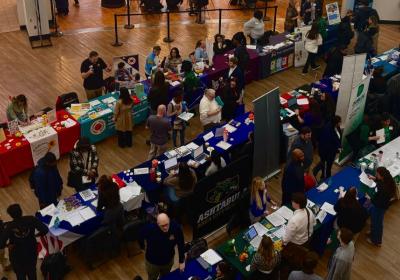 More than 900 students registered to attend the fair, networking with dozens of Cleveland and regional businesses and institutions, which are offering internships and employment opportunities from casual work to full-time jobs.
Paying the price: when street parking stops making cents
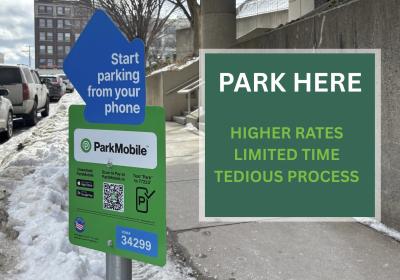 The City of Cleveland’s decision to hike parking rates across the city, and around campus is turning a once-affordable alternative for CSU students into yet another financial burden.
Cleveland State men's tennis earns 4-3 victory at Ball State

The Cleveland State men's tennis team was back in action Saturday, battling to a thrilling 4-3 victory at Ball State in Muncie, Indiana.
Commentary: Has social media broken Cupid’s arrow?
 College has always been about getting your degree. Possibly getting the Disney fairytale ending and finding your forever partner was also on the curriculum for many. But what does Gen Z want from the day?
Immigrant embraces the America that has embraced her
 Beloved Cleveland entertainer Bella Sin shares how living undocumented impacted their survival, self-identity, and quest for belonging in America. “Queer nightlife gave me a place to be fully myself, loved and accepted."
CSU track & field shines at Jud Logan Invitational

Cleveland State University track and field put together a strong showing at the fifth Jud Logan Light Giver Open, hosted by Ashland University in Ashland, Ohio, Feb. 6.
CSU women’s tennis falls 4-3 to Temple

The Cleveland State women’s tennis team on Sunday finished its Morgantown, West Virginia road swing with a narrow 4-3 loss against Philadelphia's Temple University.
Does LinkedIn really matter for college students?

Students might not seriously consider LinkedIn until their final year of college, when graduation suddenly feels close and the pressure to find a job becomes real.
Residence Life hosts trivia night at Viking Marketplace
 “It gets a lot of different students together, encourages them to talk to people they wouldn't otherwise talk to and just have a good time,” said Kaleb Roberts, a sophomore resident assistant.
CSU College of Law introduces “Fundamentals of Prompt Engineering for Lawyers”
 Co-Interim Dean, Brian Ray, explains the new specialized AI-focused training course as Cleveland State moves to integrate artificial intelligence into its teaching.
CSU students walk out to protest ICE
 The students joined the nationwide strike Friday against the Immigration and Customs Enforcement agency, following confrontations in several major cities in recent months, and the killing of two U.S. citizens in Minneapolis.
CSU faculty urged to prioritize SB1 compliance, enrollment strategies as spring semester begins
 Cleveland State University faculty were encouraged to prioritize course accessibility, student retention and strategic enrollment efforts during the first Faculty Senate meeting of the spring 2026 semester, held Jan. 21.
Student speak up on CSU socials about university weather alerts
 “We take feedback into account for sure, but the decisions that we make keep the safety of our campus community foremost, in terms of our people being able to get to campus safely,” said Nigamanth Sridhar, Ph.D., CSU executive vice president and provost.
Former WCSB general manager says lawsuit signals a wider fight for college radio
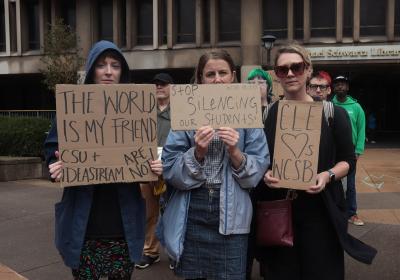 Alison Bomgardner spoke after she, WCSB and Friends of XCSB were named as the plaintiffs in a lawsuit filed Monday suing Cleveland State University for handing its student and community-run radio station to Ideastream Public Media.
Snow puts a dampener on first week back for CSU
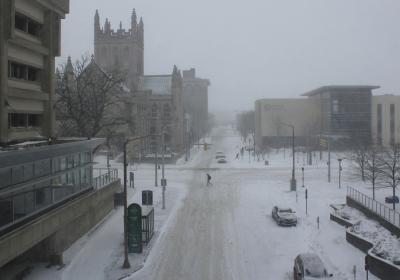 By KIRSTEN KIMBLER – posted January 16, 2026 Cleveland State University canceled all classes and closed business offices Thursday due to extreme weather conditions.
"Best Of" The Cleveland Stater fall 2025 #3
 This edition of the “Best of” the Stater features an interview with CSU President Laura Bloomberg, Ph.D., Thanksgiving festivities at CSU, underground student fashion in Cleveland, an Umoja event, and the hapless Cleveland Browns.
Why WCSB matters to me
 During my second semester at Cleveland State University, in February of 2025, I took the leap into college radio. It changed my life – then the station was taken over.