CSU students showcase undergraduate research
A documentary about a Cleveland arts institution, a commercial centered around pancakes, a student learning how to shape an entire scene through lighting, these were some of the projects CSU students showcased Sept. 17 at Cleveland State University’s 2026 Undergraduate Research Poster Session.
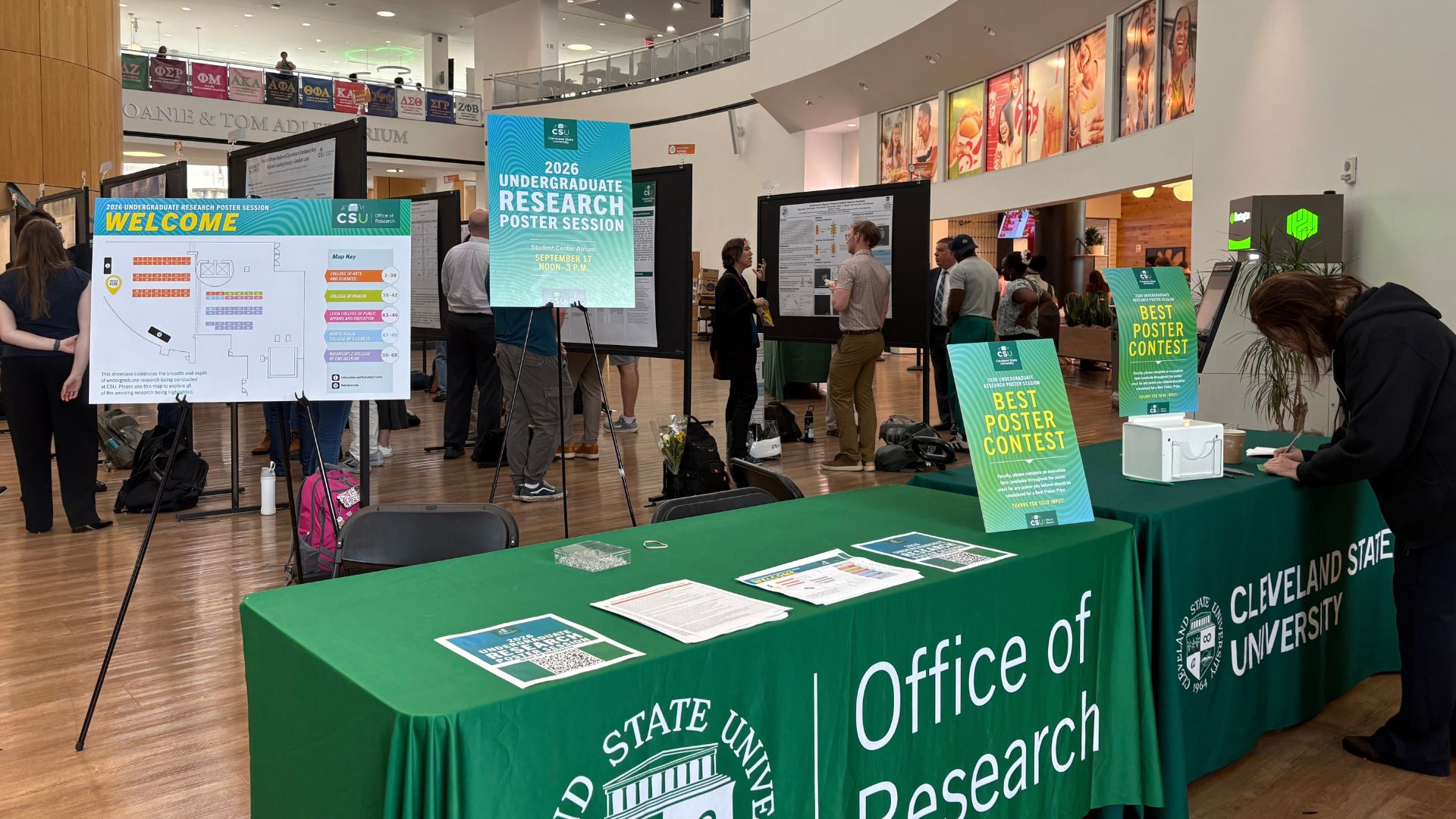
From noon to 3 p.m., students gathered in the Student Center Atrium to present research and internship projects developed throughout the year. Posters lined the room, organized by colleges, including the College of Arts and Sciences, College of Health, Levin College of Public Affairs and Education, Monte Ahuja College of Business and Washkewicz College of Engineering.
(Credit: Morgan Alten)
The event gave students an opportunity to showcase work that extended beyond traditional classroom assignments, professional and community settings.
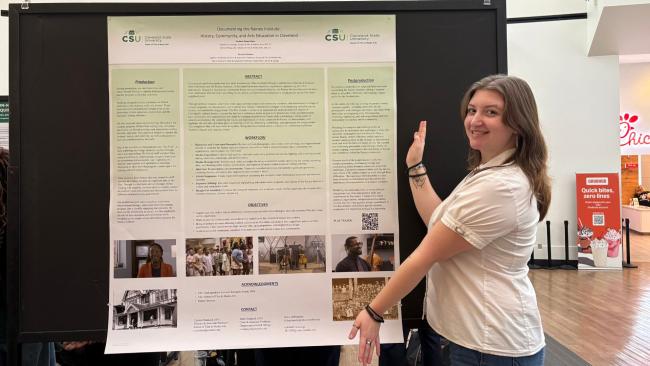
For Film and Media Arts student Bella Danielle DePasquale, that work meant helping document the history and community of the Rainey Institute, a Cleveland arts education organization approaching its 125th anniversary.
DePasquale presented “Documenting the Rainey Institute: History, Community, and Arts Education in Cleveland," a project focused on a short documentary produced through a collaboration between Cleveland State and the Rainey Institute.
(Credit: Morgan Alten)
Originally founded as a settlement house serving immigrant families, the Rainey Institute has evolved into a community arts organization that provides music, dance and performance education to young people across Cleveland.
DePasquale became involved after the head of the film school invited fellow student Gabriel Cummings to work on the project.
“As the editor, my role was to bring the project’s many elements together, including interviews, B-roll, photographs, event footage, and music and shape them into a clear and engaging story,” DePasquale highlighted from her poster. “I was in charge of editing the teaser trailer together for this documentary.”
The role required extensive organization and careful selection of footage to accurately represent the Institute and its relationship with the community.
During production, the students combined interviews with observational filming to capture both personal stories and the institute’s everyday activities.
One of the activities they documented was “Tea Time,” a daily tradition that brings students together to share music, stories and experiences.
By documenting these informal moments, the filmmakers were able to highlight the genuine connections formed within the Institute and provide a glimpse into its culture beyond formal interviews.
“We did interviews as part of our research,” DePasquale said. “It was about our approach to the project before production and post-production.”
The research process extended beyond filming. DePasquale and Cummings searched for news coverage, videos and photographs related to the institute and contacted libraries in search of historical materials.
“The process of collecting the necessary resources turned out to be more involved than we expected,” DePasquale said. “We emailed libraries asking if they had any relevant information on this material.”
The project also introduced DePasquale to the challenges of collaborating remotely.
Much of the post-production work required exchanging footage and communicating with her mentor and fellow CSU student from a distance.
“Working from different locations showed me how creativity and teamwork can still come together without being in the same space,” DePasquale said.
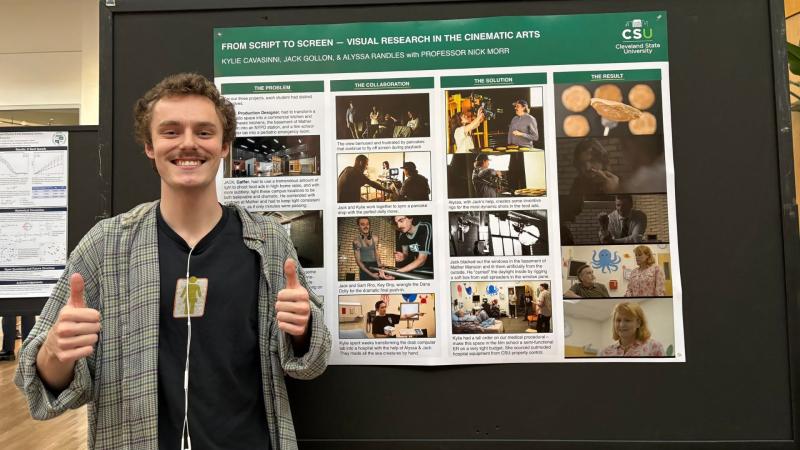
Across the atrium, film and media arts student Jack Gollon was showcasing a project that explored a different side of visual storytelling.
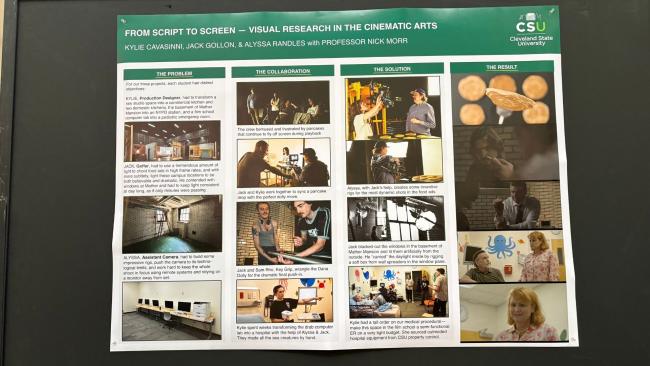
Gollon presented “From Script to Screen — Visual Research in the Cinematic Arts,” a project based on an internship with his cinematography professor, Nick Moor.
Funded through a Cleveland State grant, the internship allowed Gollon and fellow students Kylie Cavasinni and Alyssa Randles to assist in creating treatments for Moor’s professional portfolio.
As part of the project, the students worked on several productions, including commercial-style shoots for tabletop reels featuring breakfast foods.
(Credit: Morgan Alten)
“We did coffee, eggs, cracking eggs and a griddle for bacon sizzle,” Gollon said. “The pancakes were really fun.”
The project required each student to specialize in a different area of production.
Cavasinni focused on production design, transforming spaces into settings such as commercial and domestic kitchens. Randles worked with the camera, building rigs and helping with focus. Gollon worked in grip and electric, or G&E, which involves setting up and operating lighting equipment.
“Anytime a light is set up for a shot, I’m the person setting it up,” Gollon said. “I set up the stand, and then I turn on the lights as well.”
The job required more than simply flipping light switches.
Some of the food advertisements were filmed at high frame rates, requiring significant amounts of light. Gollon said the crew sometimes used five lights for a single shot.
He also experimented with book lights, which reflect light off white surfaces to create a softer glow.
“Gaffing is like painting with light,” Gollon said, explaining his job as the head lighting technician.
The lighting challenges became particularly important when filming in slow motion.
“For slow motion, you have to let a lot of light in because the camera catches things at a slower rate,” Gollon explained.
The students adjusted their lighting setups to accommodate high frame rates, including filming at 60, 120 and 240 frames per second.
The experience allowed each student to focus on a specialized area while continuing to work as part of a larger production team.
That collaboration often required creative problem-solving.
During one pancake shoot, the students needed a camera angle that would capture the food from a unique perspective.
“One day, Nick said, ‘I have to pick up my son from daycare. Put a spatula on the camera. I’ll be right back,’” Gollon said.
The students rigged a spatula to the camera using zip ties, allowing them to capture the pancake action from the camera’s perspective.
“We were able to flip pancakes from the camera,” Gollon said.
Other productions presented different challenges.
For a project filmed inside Mather Mansion, Gollon had to control the light coming through the windows so the scene would remain consistent throughout the day. On another project, the students transformed a film school computer lab into a pediatric emergency room.
The work required students to solve production problems while working within the limitations of their locations, equipment and budgets.
For Gollon, learning to work with different lighting equipment became one of the most valuable parts of the experience.
His group originally used LED lights, but after one broke, they switched to traditional hot lights.
Although hot lights can be difficult and dangerous to work with, Gollon said they can create a distinctive look on camera.
“Anytime you’re sweating or dying on set and you’re using hot lights, just know that in frame, it is paying off,” Gollon said.
For some students, research means documenting a community’s history, conducting interviews and preserving personal stories. For others, it means experimenting with cameras, lighting and production techniques.
The poster session brought those different disciplines into one space, giving students an opportunity to explain both what they created and the process behind it.
DePasquale’s project gave her experience with documentary production, research and post-production while connecting her to a Cleveland organization with more than a century of history.
Gollon’s internship provided hands-on experience with cinematography, lighting and collaboration while allowing him to work on professional-style productions.
Together, the projects showed how undergraduate research can extend beyond traditional laboratory work or written papers.
The poster session brought those different disciplines into one space, giving students an opportunity not only to present their work but also to see what their peers were researching across the university.
Recent News
More than a major: Finding your voice in communications
 For students studying journalism, public relations and communications, there is more than one way to find their voice and build a career.
CSU PRSSA dine-to-donate fundraiser at The Fruit Stand
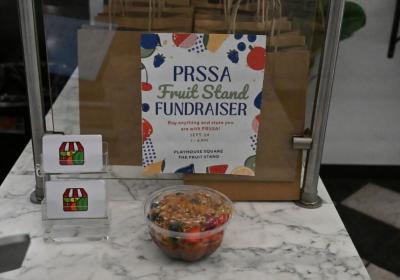
By KARINA TORRES – posted October 7, 2026
CSU PRSSA hosted a one-day fundraiser at The Fruit Stand to raise money for PRSSA's future events.
Six runners finish with a season best at the Joe Piane Invite
 The Vikings had a good outing at the event in South Bend, Indiana, with six athletes running season best times.
Guardians fans react to the 2026 season and look ahead to the postseason
 Guardians fans talk about how key additions to the lineup can help the team make a run in the postseason.
Men’s tennis falls short at the Horizon League Individual Championships
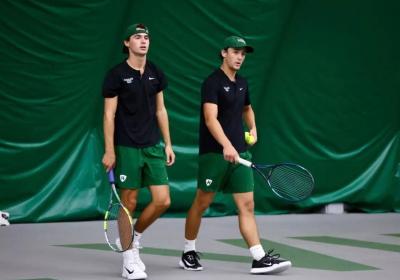 Members of Cleveland State men’s tennis advanced to the semifinals and finals, but missed out on the win.
CSU Volleyball falls to Purdue Fort Wayne to open 2026 Horizon League play
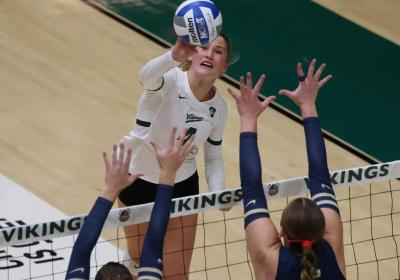 Cleveland State finished the Horizon League Play Opener 0-2 this past weekend, losing both its matches on the road to Purdue Fort Wayne.
Flock cameras remain in Cleveland and near campus despite community pushback
 Across the city of Cleveland, Flock cameras are watching intersections. However, the Cleveland City Council is reconsidering the program following pressure on social media and from the community.
CSU and regional partners host 3rd annual College Fest
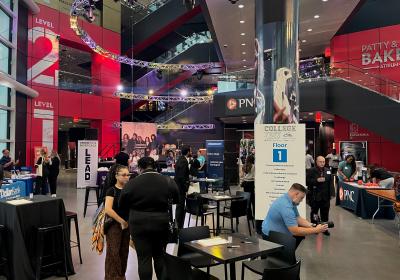
More than 900 students from 30 different regional institutions networked with around 80 employers at the 3rd annual College Fest, held at the Rock and Roll Hall of Fame, Sept. 9, 2026.
Browns fans sound off on Deshaun Watson at quarterback
 Fans are not happy with the decision of Browns management to name the controversial Watson to the starting position.
Women’s Soccer opens league play with a win against Oakland
 Sophomore Ryleigh Alcala was named the Under Armour #HLWSOC Offensive Player of the Week after scoring both goals in CSU's 2-0 victory over the Golden Grizzlies.
Women's tennis opens fall 2026 at the Betsy Kuhle Invite
 Cleveland State women's tennis began their season at the Betsy Kuhle Invite with two days of solid performances from the team.
CSU men’s soccer shuts out Detroit Mercy 2-0
 Djorde Petrovic (10) scored both goals in the home game Saturday, Cleveland State's first Horizon League win of the year and second clean sheet of the season.
The president's interview, spring 2026
 CSU President Laura Bloomberg, Ph.D., addressed the cost of balancing Cleveland State's budget, ongoing litigation with WCSB, housing concerns and AI implementation at the school in an interview with The Stater at the end of the spring 2026 semester.

Cleveland State cross country opens 2026 Season
 The Vikings kicked off the season with a sixth-place team finish, out of 15 colleges competing and 123 athletes.
"Best of" The Cleveland Stater spring 2026 #2
 This edition of "Best Of" The Stater features student artists and filmmakers, international student-athletes fostering a supportive community, and a podcast highlighting voices in POC communities.
CSU students showcase creativity in 54th annual art exhibition
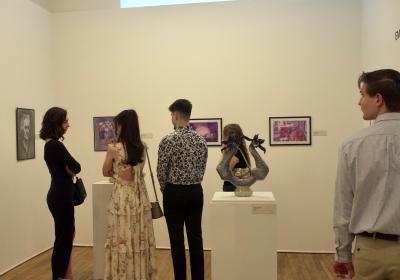 At the annual exhibition, student artists shared personal themes, creative challenges and the meaning behind their pieces.
Cleveland’s best-kept cultural secret returns to the stage at CSU
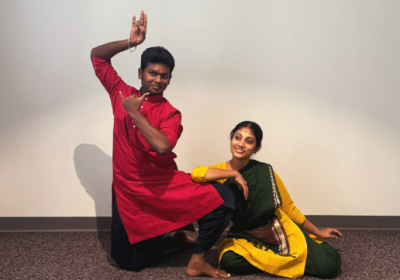 Cleveland State in April hosted for the 48th time the nation’s largest Carnatic music festival, one of the biggest gatherings of its kind in the world.
CSU golf finishes 12th at Redhawk Intercollegiate
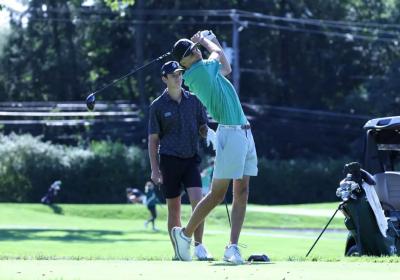 Ryan Dinan led the Vikings with a 5-over 218 over three rounds at the par 71 Pittsburgh Field Club, Pittsburgh.
CSU volleyball defeats Morgan State to open 2026
 Cleveland State finished the Lehigh Tournament 2-1 this past weekend with victories over Morgan State and Gardner Webb, while losing to hosts Lehigh.
The Stater Scoop - FUBU: For us, by us
Built on the spirit of “For Us, By Us,” a phrase rooted in culture and legacy, this episode opens by honoring Queen Latifah’s powerful track 1993 anthem “U.N.I.T.Y.” Host Alexis Stradford welcomes reporters Aria Ruiz, Alonzo Anderson and Derek Williams to the podcast studio for a thoughtful conv
Fall 2026 to see new director of the School of Communication
 “I hope that we’re at a point where we’re ready to experience explosive growth moving forward,” said Dr. Whitbred, current director of the School of Communication. “Our numbers are growing, word is beginning to get out and all the elements are in place to get back to where we were.”
Safety inside an urban university under scrutiny
 CSU’s open Student Center exposes contradictions between accessibility and security as students and the public share space on a downtown campus.
I’m graduating, now what?
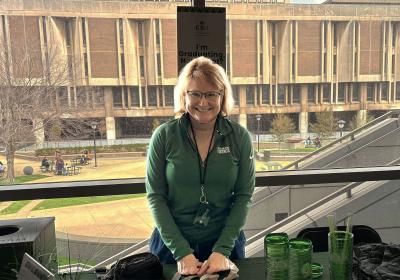
Cleveland State University students preparing to graduate gathered at the Student Center Innerlink April 14-16 for the "I'm Graduating, Now What?” event, hosted by Career Development and Exploration, to gain career guidance, resources and connections for life a
Rhode Tower library gets a facelift after flood
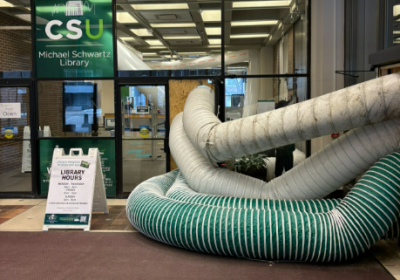 While access to the library remains temporarily restricted, multiple resources are still available to students as the semester winds down. The library thanks FAST and its own employees who worked so hard to restore the library to full functionality, which is expect by the start of the fall semester.
When the tennis gets petty, the petty turn pro
What do tennis players and their coaches make of the histrionics we see on court these days?
Kent State honors fashion icon, Fern Mallis shows what CSU could have
When fashion icon Fern Mallis is inducted into Kent State University’s School of Fashion Hall of Fame this May, students there won’t just be reading a
CSU students give the dining hall mixed reviews
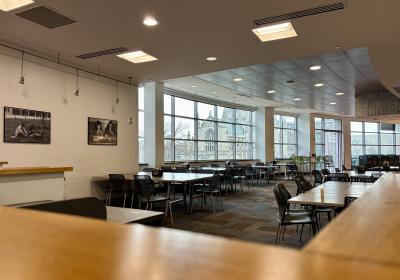 With the updates to the dining experience at Cleveland State over the past couple of years, especially the revamp of the dining hall, The Stater thought it was time for a restaurant review – and not everybody is happy.
CSU student films to show at this year’s CIFF
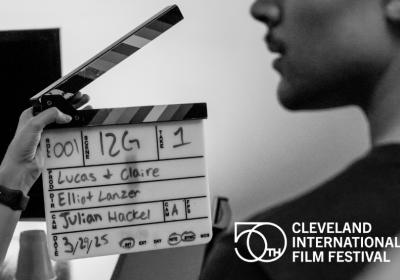 Film and media arts students Elliot Lanzer and Malakee McGuire will see their student-produced works on the silver screen at this year's Cleveland International Film Festival, the 50th anniversary of the renowned regional showcase.
Cleveland Magazine staff share industry insights with CSU students
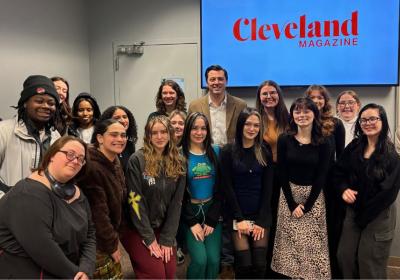
Cleveland State University students got an inside look at the evolving media landscape when staff members from Cleveland Magazine<
CSU hosts Special Olympics basketball event for local students
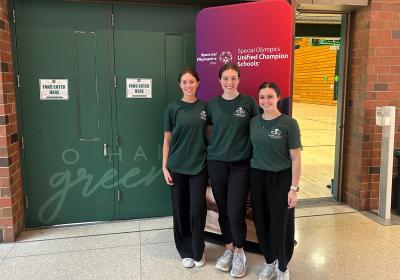 Volunteers and athletes connected through inclusive activities, building skills, confidence and community ahead of future events in Cleveland.
The Stater Scoop - Women's History Month
In this Women's History Month edition of The Stater Scoop, Cleveland Stater staff members Nicole, Kirsten and Morgan discussed how their identities as women have impacted their lives.
Rising student demand and the CSU Counseling Center
 As mental health needs grow on campus, CSU officials outline how students are prioritized and connected to care.
CSU Faculty Senate reviews budget model, technology overhaul
Cleveland State University received updates on a new budget model, technology initiatives and upcoming state requirements during the March 18 Faculty Senate meeting.
CSU graduate leads civic growth for Cleveland’s Latine community
 Cleveland State alumna Selina Pagan has transformed the volunteer-led Young Latino Network into a growing nonprofit while advancing civic engagement, cultural education and leadership opportunities for Latine residents.
Northeast Ohio’s drag scene is losing its own talent
A few years ago, a weekend in Northeast Ohio meant juggling drag shows across Lakewood, Cleveland and Akron.
CSU senior to host benefit show at Treelawn Social Club
 “This concert has become a way for all of us to come together for one night and carry on the music in their honor,” said Anna Skalicki, a senior CSU studio art major.
CSU graduate student’s research offers hope for blood disorder patients
 Ph.D. candidate Anita Dhara studies how molecules in red blood cells could help patients with sickle cell anemia and beta thalassemia breathe easier and reduce painful symptoms.
CSU plans new gallery to expand student opportunities

Cleveland State University is moving forward with plans to open the Galleries at 13th Street.
Students for a Just Society launches at CSU
 The new student organization aims to build student-led organizing, foster political education, and connect Cleveland State students with regional activism efforts.
Commentary: Student rights and campus safety in the age of ICE
 CSU students need clear information about their rights and safety as immigration enforcement in Ohio and nationwide raises concern, particularly for international and migrant students.
Don't miss the the student-run CSU Chamber Collective
 The concert March 6 in Drinko Recital Hall will showcase student initiative, creativity and collaboration across the School of Music.
The Stater Scoop - Episode 2
For the second episode of The Stater Scoop, we're celebrating Black History Month with CSU’s Black Student Union!
Building belonging: How one student athlete created a space for many
 After navigating taxes, visas and internship barriers as an international student from Ireland, Ellie Mickibbin founded a dedicated support system to help future student-athletes adjust and succeed.
CSU faculty discuss emeritus policy, Workday, facilities at Senate meeting
Cleveland State University faculty reviewed proposed changes to emeritus and retirement policies, received updates on the university’s Workday transition and heard extensive reports on campus facilities during the Feb.
The Stater Scoop - Episode 1
We’re excited to announce a new podcast from The Cleveland Stater – The Stater Scoop! Each episode, we’ll welcome different guests from around campus to talk with members of our newsroom.
CSU grad builds a brand and career in music marketing
 Alexis Figlar graduates from Cleveland State in 2023. Since then, she's turned internship connections, a self-made portfolio and a personal art business into a growing career in Cleveland’s music industry.
Greek letters signify Black excellence at CSU
 Sorority Zeta Phi Beta and fraternity Phi Beta Sigma are two organizations at Cleveland State which embody the achievements of Black students, highlighting the excellence that Black History Month honors every year.
Student play “Journey West” debuts at playwright's festival
 “‘Journey West’ is a nonconventional Western, it’s pseudodisguised as a Western,” said writer Michael Anderson. “It’s not what you would typically expect."
Paying the price: when street parking stops making cents
 The City of Cleveland’s decision to hike parking rates across the city, and around campus is turning a once-affordable alternative for CSU students into yet another financial burden.
Immigrant embraces the America that has embraced her
 Beloved Cleveland entertainer Bella Sin shares how living undocumented impacted their survival, self-identity, and quest for belonging in America. “Queer nightlife gave me a place to be fully myself, loved and accepted."
Former WCSB general manager says lawsuit signals a wider fight for college radio
 Alison Bomgardner spoke after she, WCSB and Friends of XCSB were named as the plaintiffs in a lawsuit filed Monday suing Cleveland State University for handing its student and community-run radio station to Ideastream Public Media.
Why WCSB matters to me
 During my second semester at Cleveland State University, in February of 2025, I took the leap into college radio. It changed my life – then the station was taken over.