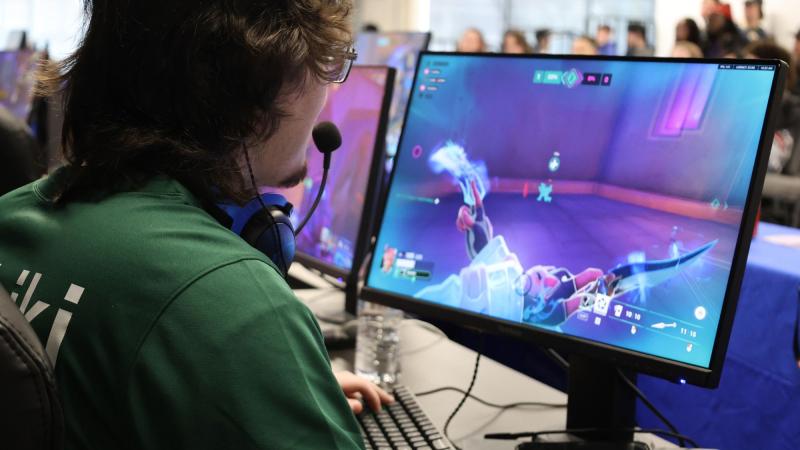
Get to know the CSU Esports team
Cleveland State University Esports staff and players share their experiences being on the team, and how their love for gaming brought them together to build CSU Esports.
Esports, or electronic sports, is organized competitive video gaming in which individuals or teams compete against each other for prizes or entertainment. The rise of streamers, especially on Twitch, has helped make competitive gaming more mainstream, bringing it to the general public outside of the gaming space. Many universities have also added esports teams in recent years.
CSU Esports has been around for only five years, but it's already highly ranked nationally in the NECC (National Esports Collegiate Conference).
Esports Director PJ Farrell has helped the program grow into what it is today. Farrell was a high school teacher teaching technology classes when he saw students who weren’t involved in clubs or athletics.
“They would rather compete in video games at home than join any of the after-school programs,” Farrell said. That motivated him to start a high school-level esports program, which later became successful.
His program won five national championships in four years, with each season in the High School Esports League (HSEL) lasting one semester.
“The high school had a phenomenal Rainbow 6 team,” said Farrell. He said they worked hard finding streams from other teams, took notes on their positioning, and executed their strategy against them during games. That happened before esports was mainstream.
When Farrell learned that Cleveland State was looking to start an esports program, he applied for the job, then started the program from scratch in 2022 when he was hired. Part of his motivation was that after his success at the high school level, he wanted to see if he could make a program succeed at the college level as well.
Q & A with CSU Esports Director PJ Farrell
- Q: For those who don't know what esports is, how would you explain it to them?
- A: I would say esports is competitive video gaming. We compete against a lot of other universities and against other teams that are just kind of built nationally as well, at different levels.
- Q: How do the teams work?
- A: Well, we run ourselves like a little athletic department. We have a lot of different games. We have Overwatch, Valorant, League of Legends, Rocket League, and other games that are just very different from one another. Lexi and I are mainly the managers. We just kind of control everything. We also allow a lot of opportunities for leadership and growth for our student-athletes, our players. They will run a lot of things through me. So they help make a lot of decisions, like our captains and our managers make a lot of team decisions that we help facilitate. Most teams are self-run, but we oversee everything and help facilitate travel, team conflict, and goal setting.
- Q: When players come and go, do teams change or do they tend to stay the same?
- A: We change all the time. We have students who are ready to graduate, and new students who come in. My primary job is really to recruit and bring kids on campus who weren’t necessarily coming to Cleveland State for education. They're coming here because we're really competitive in esports, but also to gain an education and get a degree.
- Q: How are recruitment and tryout processes handled?
- A: We'll do tryouts and start with new groups of students that are trying out this year. We either bring them in if they're close by. If they're not, we'll do some trials online. We get them to play with our team, and then our captains and managers make the decisions. They'll play with them and ultimately decide if they are a good fit for the team. After that, we'll work together on finances and try to get them into the university.
- Q: What makes an excellent esports athlete?
- A: It's a great question. An excellent esports athlete, I would say, starts in the classroom. We always want to make sure our guys are going to class and taking care of their grades. We do biweekly grade checks with all of our teams to make sure nobody's struggling and nobody's, you know, not going to class, things like that. That is kind of like the first most important one. Secondly, I would say their dedication to the game, making sure they're playing pretty consistently and getting better. We want to bring kids in, and we want them to get better. We don't want them to stay stagnant and, you know, kind of just decline. We're bringing them in to educate and teach them, and ultimately we want them to play at the highest levels.
- Q: What are the esports facilities like on campus?
- A: Our facility is amazing. It's a really nice space here in Fenn Hall, and we have 30 PCs. Spec-wise, we have Intel i9-12900Ks and RTX 4070 graphics cards. They handle everything we throw at them. We also stream all of the games that we have. Sometimes we'll have three or four games a night, and we'll stream multiple games at a time. We have just over 40 student workers who also work and facilitate a lot of things for us.
- Q: What are some goals for the future of esports at CSU?
- A: We'd love to expand. Right now, I think we're pretty much running at maximum capacity. We have 65 students in our varsity program, and I think we have 70 signed up in our club program. We get anywhere between 15 and 50 students on any given day. It depends on the day, when students come in here to play some games and hang out. We have about 40 student workers in our program. We'd really love to expand and have more space. We also want to try to get a space for the club on campus so we can continue to add people from campus and get them engaged.
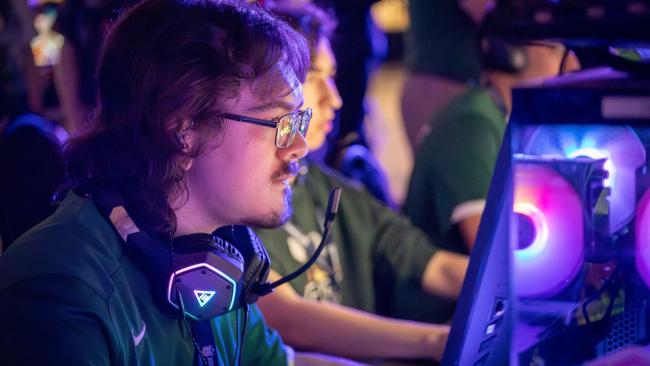
Meet Overwatch team captain Steven Folger
Steven Folger, 21, is the Overwatch captain and a design and psychology major who has been on the team for more than two years. Overwatch is a free-to-play, team-based action game set in an optimistic future, where every match is the ultimate 5v5 battlefield brawl. Two teams of five players each compete to capture control points, push payloads, or complete map-specific goals. Players pick from a large roster of unique characters, or "heroes," each with distinct weapons, personalities, and specialized abilities.
Folger has been competing in Overwatch since shortly after the game’s release in 2016. He had competed online for years, which influenced him to look for an esports team when considering colleges and universities. He searched for schools that have good esports opportunities and landed at CSU.
Q & A with CSU’s Overwatch captain Steven Folger
- Q: What are your responsibilities as team captain?
- A: For being captain, it's a lot of the interpersonal stuff within the team, like trying to resolve issues and resolving problems, and making sure everybody's coming when they need to get in. There’s a lot of scheduling everything and managing reschedules with other teams. A lot of times other teams will ask us if we can move games or, like, try to find practices, needing to schedule everything with everybody on the team. That’s a lot of what the team captain kind of thing is here. It's a big manager kind of position.
- Q: What's your experience on the team since you first started?
- A: When I first started, the team was very different. Over time, the team has changed completely since I got here. Originally, we started with the team we had, and someone did end up leaving. So I kind of had to fill different positions within the team. I had to swap my role in the game. Eventually, we were able to recruit some people over the summer. Over time, we've gotten to be at like a much higher, naturally competitive level. Last semester, we were able to get top eight in the country. Those are really good achievements for us.
- Q: How do you prepare and train for the season?
- A: It's usually just a lot of practice. We have in-person mandatory practices every week. We are in here three days a week. As a team, we play with each other, but we're also always at home playing online, either with each other or with other people. A lot of us have teams outside of, like, college that we compete with and just, like general competition. We're always playing and competing. We're always trying to get better, trying to find different ways that we can get better.
- Q: How do you balance classes and managing your team?
- A: It's really hard for me personally. It's very much for me, like, school first, and then my competition stuff afterwards. If I can't get all my school stuff in for the day, I'm slacking on competition stuff. For me, it's just focus on that and then worry about the competition stuff afterwards, but I'm always busy with everything. I just make myself do it. It’s a big commitment, but I know what I'm signing up for. I know kind of what it takes. I just have to tell myself it's what I signed up for, it's what I'm like dedicated to doing, so I can push through and do it.
- Q: How does a team prepare for competitions or competing with others?
- A: For us, to be honest, we're not usually worried about individual schools too much. It's a lot of just being prepared for whatever comes against us. So there's a lot of the six to ten practices every day. And if we have like a really important game coming up, we'll look at those teams individually. There are a lot of resources online where we can look at the other teams, see what they play, what they like to do, and prepare for them individually. But a lot of it is just overarching practice together, see what we like to do, and then just go up there and play it.
- Q: Do you have any advice for new players who want to join?
- A: I'd say don't be scared to reach out. I think a lot of people, especially when there are players who are better than them or they don't know what they're getting into, are scared to reach out or, like, learn new things about everything. I think people should just reach out and ask questions instead of worrying about stuff.
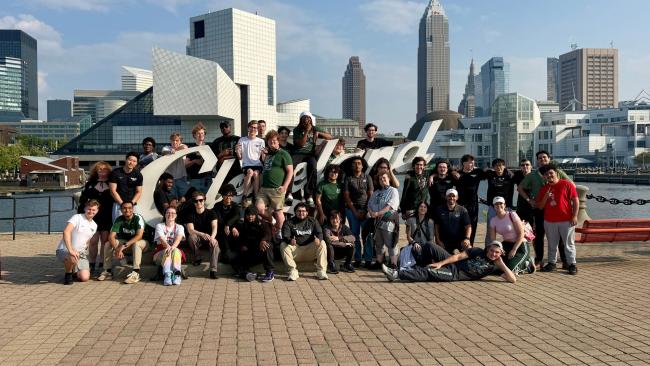
Meet CSU's Esports teams' coordinator Alexis Pewitt
Alexis Pewitt, 23, a psychology, journalism and public relations major, started as a player on the Overwatch varsity and academy teams before becoming the team’s coordinator and is now a substitute player for the academy team.
The varsity program has around 55-60 students. Within the varsity program, some of the games have two teams. Overwatch and Smash have varsity and academy teams. The varsity team is a bit higher in skill than the academy team.
Pewitt had always played video games, specifically Overwatch, and applied to try out for the team. She played on the varsity team for a semester and realized how competitive varsity can be. Eventually, she began helping Director Farrell with different tasks on the team and soon took on the role of coordinator.
- Q: What duties do you have as the team’s coordinator?
- A: I handle and make a lot of promotional content for the team, like graphics and flyers. I take photos for the team, whether it's at events or it's just a regular media day for headshots. I also help the director Farrell with just kind of whatever he needs, like organizational tasks, behind-the-scenes stuff. It’s really just whatever he needs that day. I kind of come in and I say, ‘What are we working on today?’
- Q: What are your plans to promote the team in the future?
- A: We'd like to see more recognition for esports, especially us as a team here. I feel like I hear someone say, ‘You know, we didn't know that CSU had an esports team.’ So I guess my goal is just to continue promoting it so that more people know about us. There’s just more awareness surrounding the program. I’ll continue making appealing visuals and promotional content, taking high-quality photos for the team. They can use them to promote themselves. I do take those photos not just for the team but also for everyone individually, because I encourage people to build their own brand surrounding esports and themselves.
- Q: How can others get involved to support the team?
- A: People can just come down to the lab anywhere from 10 a.m. to 5 p.m. They can come watch and play in the lab. We also stream all of our games so people can watch on Twitch to support us. There are also in-person tournaments. Sometimes we have family members come out to support us. We also have Giving Day every year in the spring, which gives people an opportunity to donate, and their donations help build the program.
- Q: Are there any events students should look out for if they want to watch?
- A: Nov. 6 and 7, we're having an event called Operation Valhalla. It is an Overwatch invitational where we are inviting some more schools around Ohio. They come and compete at a competitive skill level, and then we are also hosting an event called Helheim. That won't be until March, but that is a Smash Ultimate event. It's growing because we had our first event last year.
- Q: Where can students find more information about the team?
- A: They can find more about the team on our website. They can also sign up to get our newsletter. We have a biweekly newsletter that goes out, and every two weeks, we just put out new information on what the teams are doing and what they've been up to. They can also check out our Instagram, Twitch, and Twitter; we post pretty frequently on all of them.
Students can follow the CSU Esports Team and subscribe to their channels on Instagram, X, Twitch, YouTube, and TikTok to stay up to date. Upcoming events include Operation Valhalla on Nov. 6-7, and Helheimin in March 2027
Recent News
Women's tennis opens fall 2026 at the Betsy Kuhle Invite
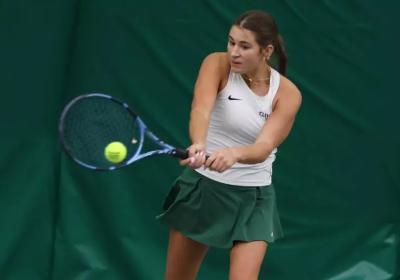 Cleveland State women's tennis began their season at the Betsy Kuhle Invite with two days of solid performances from the team.
Men’s tennis falls short at the Horizon League Individual Championships
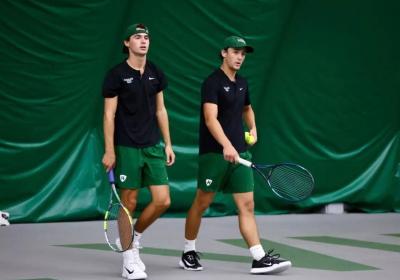 Members of Cleveland State men’s tennis advanced to the semifinals and finals, but missed out on the win.
CSU volleyball drops two matches at Milwaukee
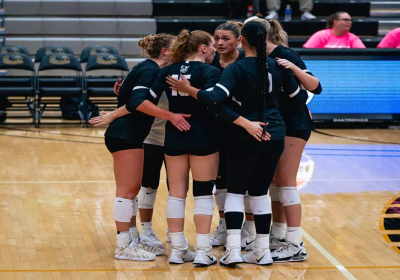 Volleyball struggled in its weekend series against Milwaukee, losing in straight sets on Friday, and dropping a five-set thriller on Saturday.
Women’s soccer shuts out Detroit Mercy 1-0
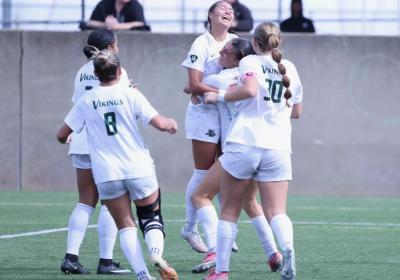
Cleveland State women’s soccer defeated Detroit Mercy 1-0 on Saturday, earning its third Horizon League win of the season.

CSU men's club hockey win home opener 13-7
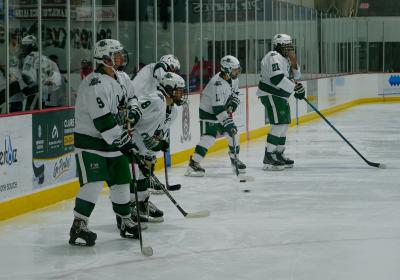 The CSU Vikings men’s club hockey team on Saturday won its home opener against the Robert Morris Colonials.
Six runners finish with a season best at the Joe Piane Invite
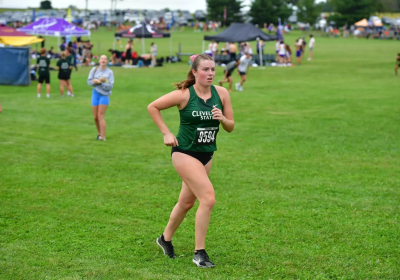 The Vikings had a good outing at the event in South Bend, Indiana, with six athletes running season best times.
CSU Volleyball falls to Purdue Fort Wayne to open 2026 Horizon League play
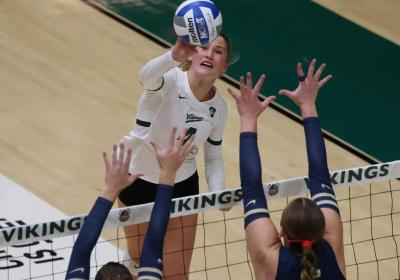 Cleveland State finished the Horizon League Play Opener 0-2 this past weekend, losing both its matches on the road to Purdue Fort Wayne.
Guardians fans react to the 2026 season and look ahead to the postseason
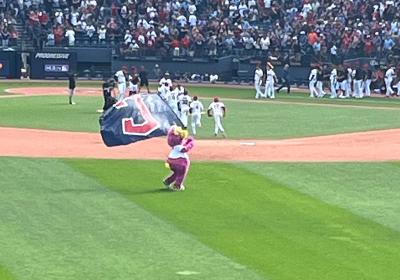 Guardians fans talk about how key additions to the lineup can help the team make a run in the postseason.
The life of a CSU ball shagger
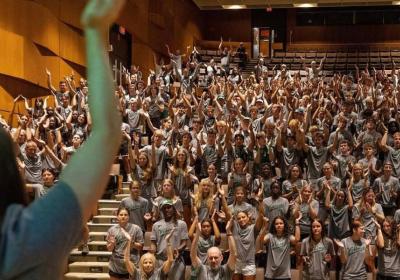 Two Cleveland State student-athletes share what it’s like to work the sidelines, chase down balls and get a different view of CSU athletics.
Women’s Soccer opens league play with a win against Oakland
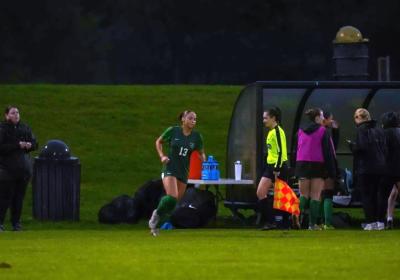 Sophomore Ryleigh Alcala was named the Under Armour #HLWSOC Offensive Player of the Week after scoring both goals in CSU's 2-0 victory over the Golden Grizzlies.
CSU men’s soccer shuts out Detroit Mercy 2-0
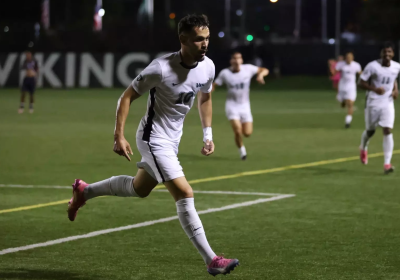 Djorde Petrovic (10) scored both goals in the home game Saturday, Cleveland State's first Horizon League win of the year and second clean sheet of the season.
Browns fans sound off on Deshaun Watson at quarterback
 Fans are not happy with the decision of Browns management to name the controversial Watson to the starting position.
Cleveland State cross country opens 2026 Season
 The Vikings kicked off the season with a sixth-place team finish, out of 15 colleges competing and 123 athletes.