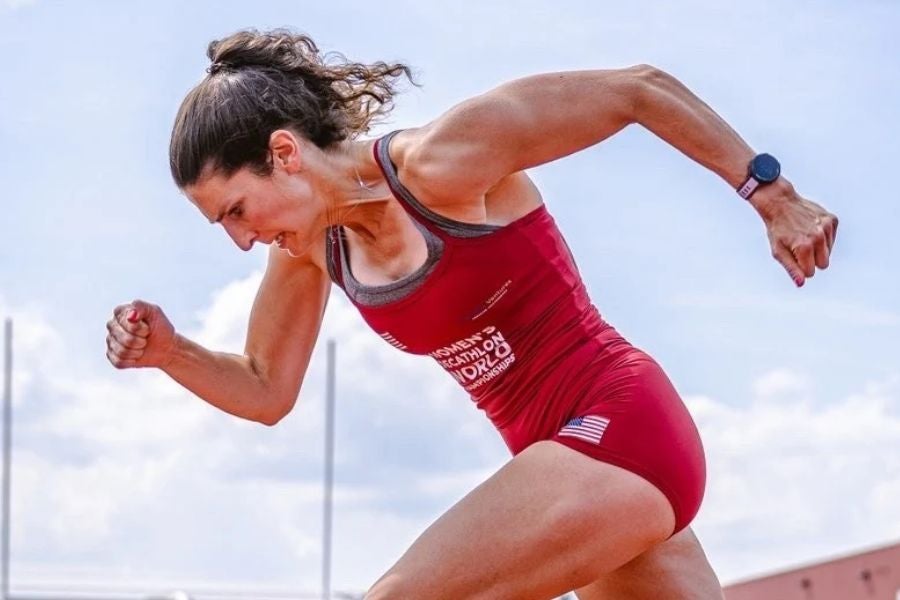
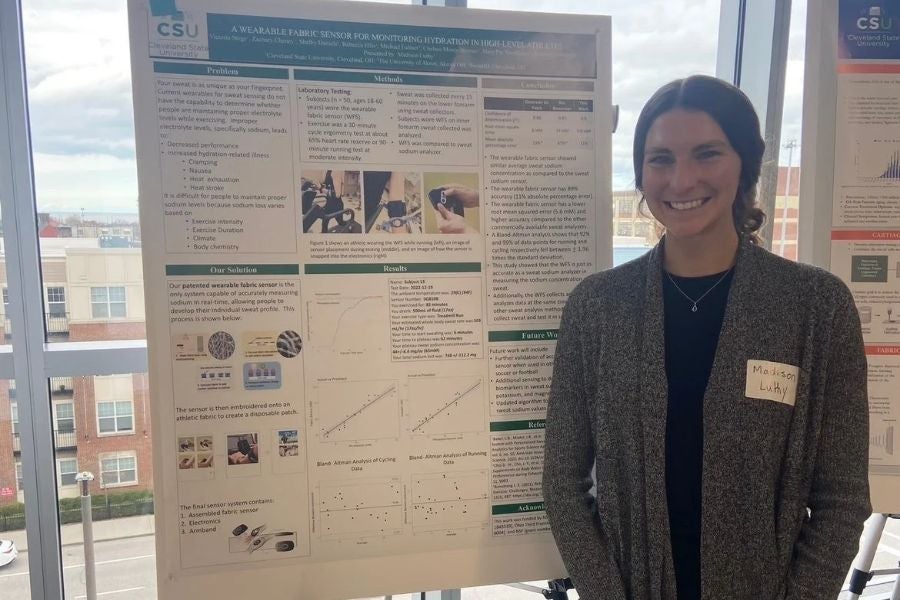
Most people have enough on their plate balancing schoolwork and a social life. For Madison Luthy, that list also includes training for a decathlon, developing a sweat sensor and pursuing a doctorate in applied biomedical engineering at Cleveland State University.
At 26, Luthy has built a schedule around her academic research and athletic goals. Some mornings start at 6 a.m. with lifting in her home gym, followed by experiments at CSU. Later, she might drive to her parents’ house to practice for the decathlon with her dad, who has coached her since she was young.
It is a lot to fit into one day, but Luthy has found a way to make room for both sides of her life.
“I feel like time management is like a big thing of like trying to figure out how you can make the most out of your time to like get the best results in the end,” Luthy said.
Her return to track and field, however, was not something she always expected. At one point, she thought her athletic career was over.
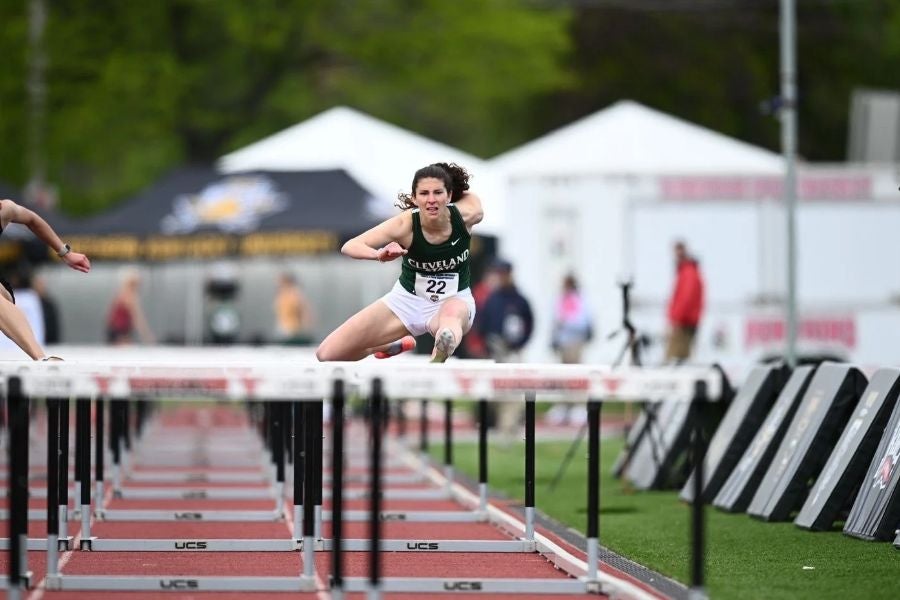
Growing up, Luthy played basketball, soccer and track. Her dad coached her, and the two often went to the track together to work on hurdles, high jump and sprints as she trained for the heptathlon, a seven-event track and field competition.
Luthy received the opportunity to play Division III basketball at the University of Mount Union while studying biomedical engineering for her bachelor's degree. By the end of her freshman year, however, she realized that basketball was not for her and decided to stop playing.
“I thought that sports were really pretty much over for me,” Luthy said.
She continued her education, eventually earning her undergraduate degree and moving on to Cleveland State to pursue her doctorate. She knew she wanted to become an engineer, but she was still figuring out what direction she wanted her career to take.
Cleveland State’s doctoral program gave her a chance to explore biomedical engineering research involving sweat sensors, eventually connecting her academic interests with her athletic background.
That connection would also bring her back to the track, and the field.
During her second year in the doctoral program, Luthy met with then-Cleveland State track and field coach Hudson to discuss testing sweat sensors on members of the cross-country team. During their conversation, she mentioned her own track background.
Hudson asked whether she had been a hurdler in high school. Eventually, the conversation turned into an unexpected invitation to join the CSU track and field team.
Luthy accepted.
“That was, like, such a pivotal moment in my life,” Luthy said. “I would have never gotten into track and field if that hadn’t happened.”
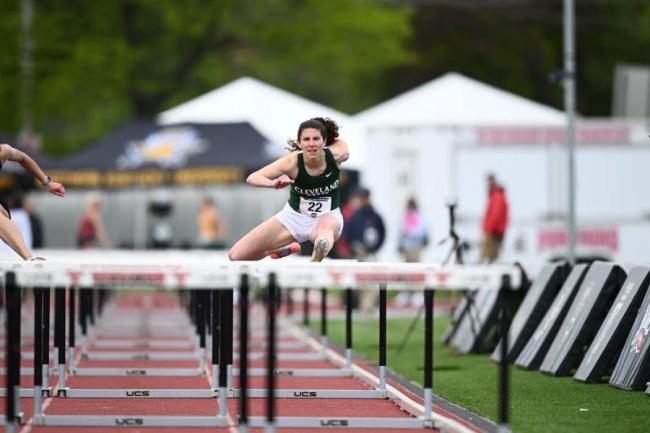
(Picture credit: Madison Luthy)
Returning to the sport was exciting, but it also came with some nerves. After spending time away from competitive track and field, Luthy wondered whether she could still perform at the level she wanted.
“I haven’t done this in so long,” Luthy said, recalling her initial worries. “I’m like, what if I’m really slow? What if I can’t, like, jump anymore?”
Those worries did not last long. Luthy said her teammates welcomed her, and she found an encouraging environment where athletes wanted to see one another succeed.
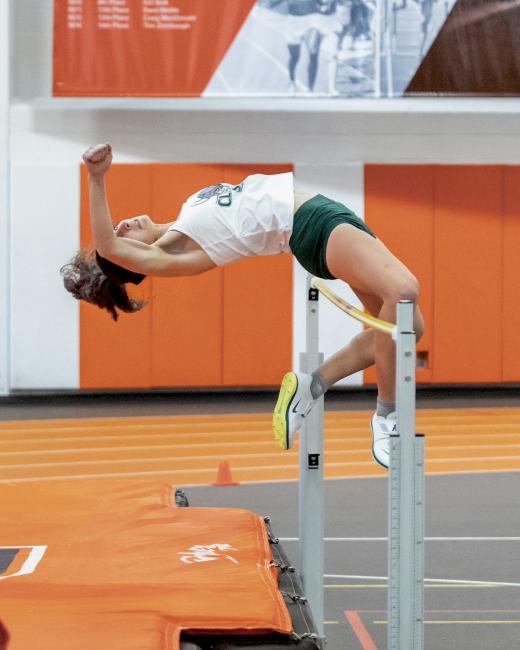
(Picture credit: Madison Luthy)
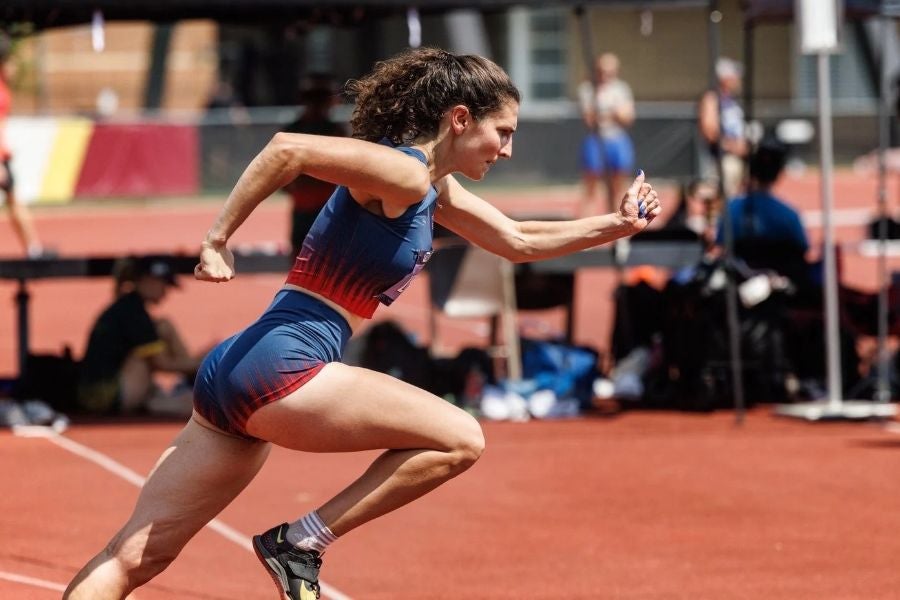
After returning to competition as a heptathlete and pole vaulter, Luthy set her sights on the decathlon after college. The 10-event competition includes three new events not featured in the heptathlon: pole vault, discus and the 400-meter run. Although the heptathlon is more common for women in track and field, Luthy wanted to push her limits in the decathlon.
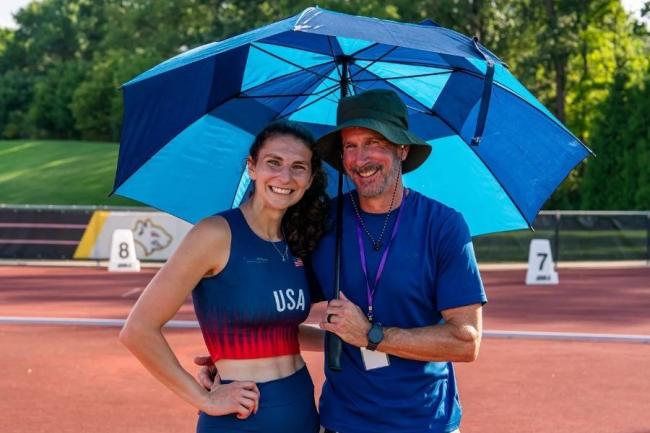
The decision also brought her back to something familiar: training with her dad.
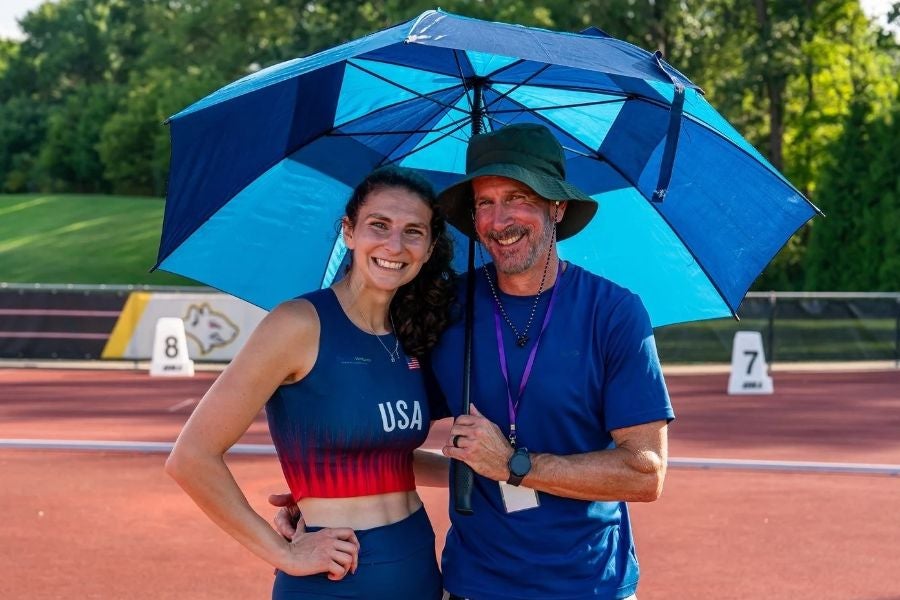
He competed in the decathlon in college, winning two national championships, and had spent years coaching Luthy when she was younger. Now, the two could share the track again, this time working toward her goals in the decathlon.
“I think the best part about it is being able to do it with my dad,” Luthy said.
She said training with him brings back memories of going to the track after soccer practice when she was younger. What began as something they did together during her childhood has become part of her life again, years later.
(Picture credit: Madison Luthy)
For Luthy, competing in the decathlon has also been about proving something to herself. She wanted to see whether she could complete all 10 events and continue competing beyond college.
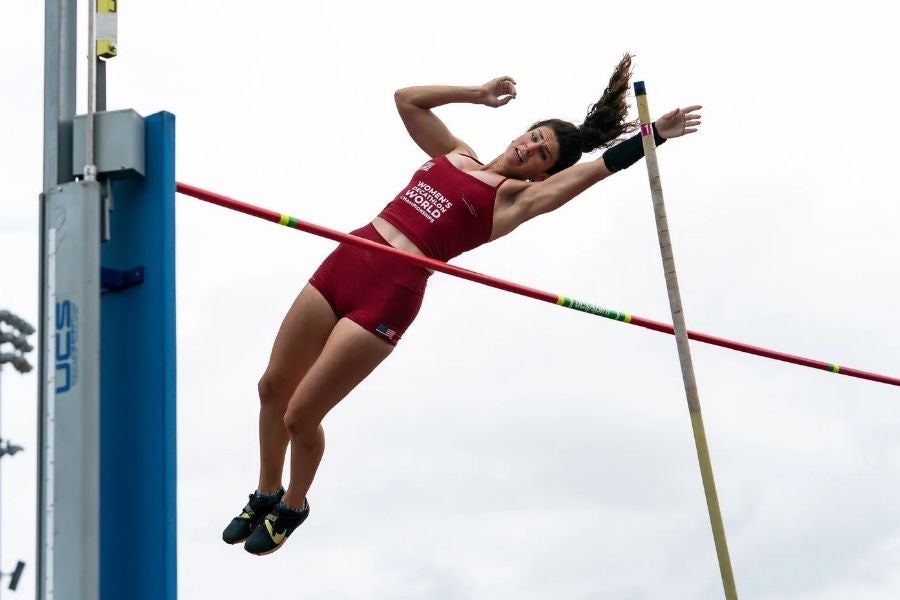
Luthy made her debut in the elite section of the World Championships of the Women’s Decathlon at Oberlin College in Oberlin, Ohio, 2025. She finished ninth, qualifying her for the following year’s competition, where she placed 17th.
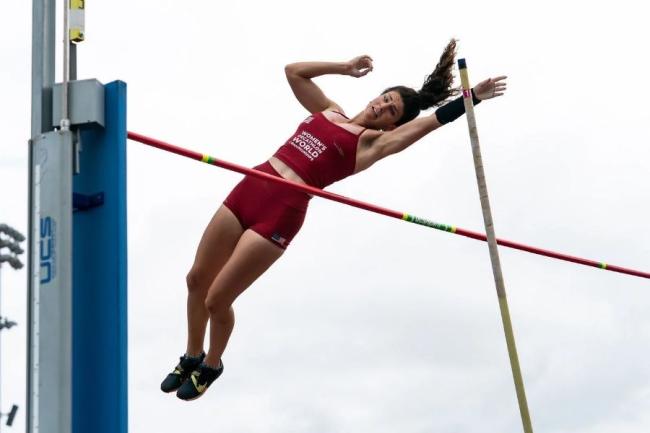
At her first World Championship, Luthy tied for first in the pole vault, her favorite event. For her, the best part is the feeling of being in the air.
(Picture credit: Madison Luthy)
“In the decathlon, my favorite event is definitely pole vaulting,” Luthy said. “Because it's just like the feeling of just flying through the air that is so cool.”
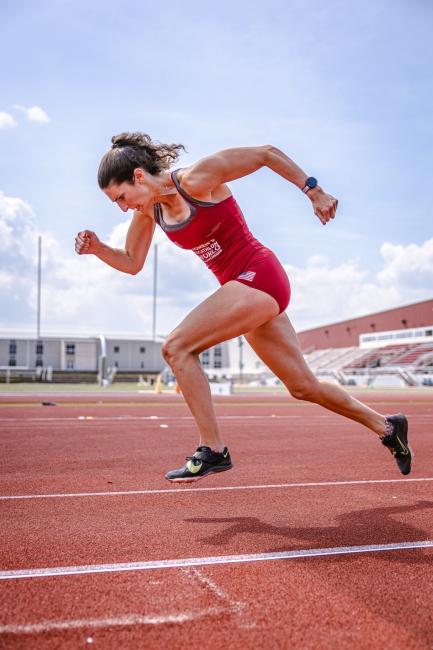
Of course, not every event goes the way she hopes. Competing in 10 events means moving on quickly when something doesn’t go as planned.
“I feel like in the decathlon, it's like there are so many ups and downs,” Luthy said. “If you don't do good in an event, like, put it behind you.”
(Picture credit: Madison Luthy)
That mindset carries into her academic work, too.
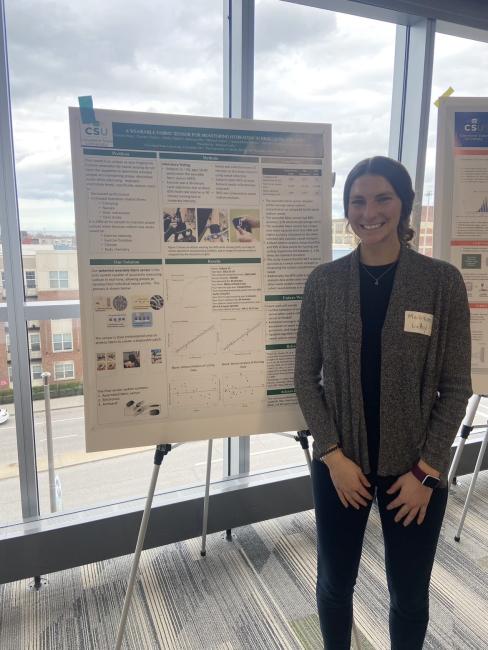
While her athletic career has taken a unique turn, Luthy’s research has remained a constant throughout her time at CSU. Her doctoral project focuses on developing a potassium sweat sensor, building on existing research involving sodium sensors.
The technology examines the concentrations of electrolytes lost through sweat, with the goal of helping people better understand their hydration needs during exercise.
For Luthy, one of the most rewarding parts of the work is seeing how her research can help people outside the laboratory. She remembers testing a friend who had passed out after playing pickleball and using the results to help him better understand his electrolyte losses.
“It makes me feel like I'm actually helping people,” Luthy said.
But research doesn’t always go smoothly. Luthy has spent plenty of time working through problems with the sensors, sometimes feeling like she’s made progress only to hit another setback.
“I've just been going back and forth on this sweat sensor and been like, everything's working, everything's going great,” Luthy said. “Then the next day I'll be like, oh my gosh, nothing works. I'm not gonna graduate.”
(Picture credit: Madison Luthy
She has had to learn how to manage those frustrations while keeping up with training and the other responsibilities in her life. During the summer, she balanced her research at CSU, an internship and preparation for the decathlon. Some days included a morning workout, work or testing during the day, and more training in the evening.
There are moments when the schedule feels exhausting, especially when training requires a long drive to a facility. But the feeling tends to change once she arrives.
“Sometimes when I'm, like, driving there, I'm like, ‘Oh my God, like, why am I doing this?’” Luthy said. “But then when I get there, I'm like, ‘This is so fun.’”
Madeline Crissman, a current electrical engineering graduate student and former teammate of Luthy’s, has noticed Luthy’s dedication both on the track and in the laboratory.
Crissman participated in one of Luthy’s sweat tests, spending time in a sauna while Luthy collected information about her sweat. Although the experience was not the most comfortable, Crissman remembers how excited Luthy was about the research and its ability to help other athletes.
Crissman said that Luthy wanted to share what she knew and help others with the testing rather than focus only on her own work.
“Madison was extremely hardworking, supportive, and motivating,” Crissman said. “She was very talented, but what stood out more was how hard she worked and how she always gave her best effort.”
That willingness to try different things has shaped more than Luthy’s athletic career, from trying multiple sports to pursuing different interests in her education and professional life.
“I don't want to be really good at one thing. I want to be good at a lot of different things,” Luthy said.
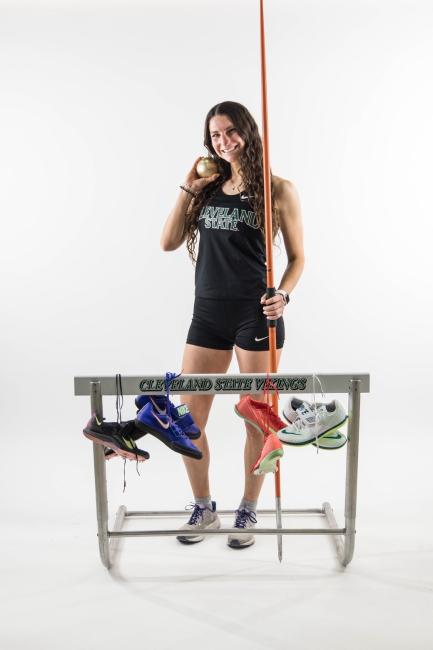
(Picture credit: Madison Luthy
Luthy hopes to finish her doctorate in December 2027 and pursue a career in industry, potentially working for a company developing technology or medical devices. She is still figuring out what comes next for her athletic career, but she knows she wants to keep working toward something.
“I like to have a goal. I like to have something to work for,” Luthy said.
After once thinking her athletic career had ended, returning to the track has given her a new reason to keep going. Luthy’s path at Cleveland State has allowed her to bring together the interests she developed growing up, from engineering and research to athletics and her special bond with her dad.
Luthy hopes others take away a similar message from her experience: They do not have to limit themselves to one interest or give up on something simply because their path changes.
“I think one of the biggest things is that, like, you can really do whatever you want,” Luthy said. “Whatever you set your mind to.”
For Luthy, that has meant finding a way to keep competing while working toward a doctorate, one event, experiment and early morning at a time.
Recent News
Women’s soccer shuts out Detroit Mercy 1-0
Cleveland State women’s soccer defeated Detroit Mercy 1-0 on Saturday, earning its third Horizon League win of the season.
Six runners finish with a season best at the Joe Piane Invite
 The Vikings had a good outing at the event in South Bend, Indiana, with six athletes running season best times.
Men’s tennis falls short at the Horizon League Individual Championships
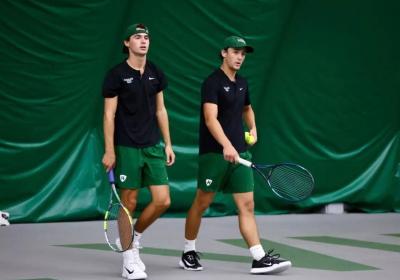 Members of Cleveland State men’s tennis advanced to the semifinals and finals, but missed out on the win.
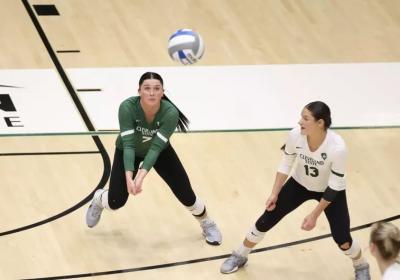
CSU Volleyball falls to Purdue Fort Wayne to open 2026 Horizon League play
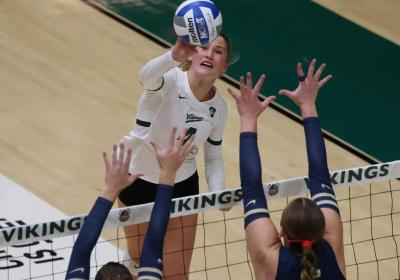 Cleveland State finished the Horizon League Play Opener 0-2 this past weekend, losing both its matches on the road to Purdue Fort Wayne.
Guardians fans react to the 2026 season and look ahead to the postseason
 Guardians fans talk about how key additions to the lineup can help the team make a run in the postseason.
Women’s Soccer opens league play with a win against Oakland
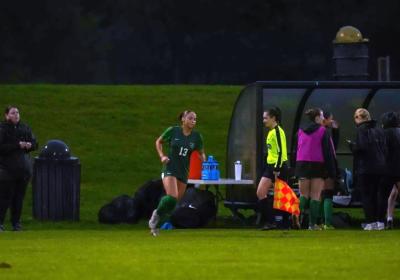 Sophomore Ryleigh Alcala was named the Under Armour #HLWSOC Offensive Player of the Week after scoring both goals in CSU's 2-0 victory over the Golden Grizzlies.
Women's tennis opens fall 2026 at the Betsy Kuhle Invite
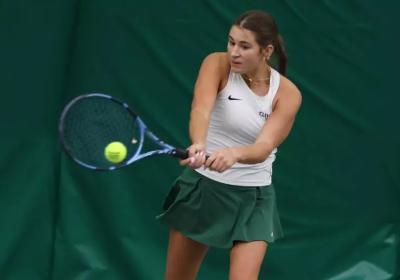 Cleveland State women's tennis began their season at the Betsy Kuhle Invite with two days of solid performances from the team.
CSU golf finishes 12th at Redhawk Intercollegiate
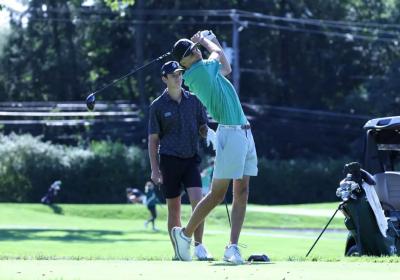 Ryan Dinan led the Vikings with a 5-over 218 over three rounds at the par 71 Pittsburgh Field Club, Pittsburgh.
CSU men’s soccer shuts out Detroit Mercy 2-0
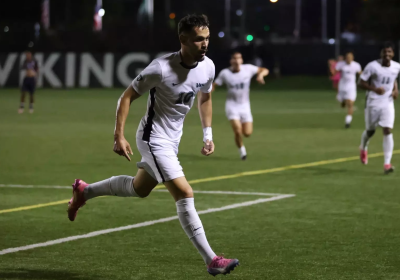 Djorde Petrovic (10) scored both goals in the home game Saturday, Cleveland State's first Horizon League win of the year and second clean sheet of the season.
Browns fans sound off on Deshaun Watson at quarterback
 Fans are not happy with the decision of Browns management to name the controversial Watson to the starting position.
Cleveland State cross country opens 2026 Season
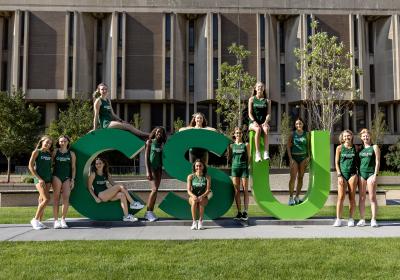 The Vikings kicked off the season with a sixth-place team finish, out of 15 colleges competing and 123 athletes.
CSU volleyball defeats Morgan State to open 2026
 Cleveland State finished the Lehigh Tournament 2-1 this past weekend with victories over Morgan State and Gardner Webb, while losing to hosts Lehigh.