
Glenville HS banned from football playoffs
The Ohio High School Athletic Association announced Oct. 29 that it was removing Glenville High School from the football play-offs. Two Glenville players took the OHSAA to court the following day. Clevelanders were left asking “should this stop the kids from playing?”
Ahead of the Division III, Region 9 playoffs, the OHSAA released a statement Oct. 29 saying that 5th-seeded Glenville was being investigated for team mismanagement and wrongful player acquisition based on location.
The OHSAA rules and guidelines state that if a student goes to a school not participating in the football athletic conference, they are to be assigned to the closest school geographically.
Glenville was being investigated on the basis that many of its players go to Ginn Academy, a school not part of the conference, and were wrongfully assigned to Glenville’s team.
The OHSAA determined that 63 of Glenville's 64 players did not attend Glenville High School and that CMSD (Cleveland Metropolitan School District) did not adequately demonstrate that many of those players were eligible to compete there.
The timeline
The OHSAA removed Glenville from the playoffs Oct. 29, with the team due to meet University School Oct. 30 in its first-round playoff game.
Glenville players Emiere Lemons and LaNeil Watson, both 17, filed suit Oct. 30, asking the court to issue a temporary restraining order to prevent the OHSAA from banning Glenville from the tournament.
Judge Andrew Santoli ruled for the plaintiffs, filing a restraining order against the OHSAA Oct. 30 which would allow Glenville to play in a rescheduled game Oct. 31 against University School.
Glenville arrived at John F. Kennedy football stadium in Cleveland that Saturday night for the rescheduled game, but its opponent was nowhere to be seen.
"We will not compete in the now rescheduled contest," University High said in a statement, adding that it would "respect the court's prudence in deciding the ultimate outcome of the legal dispute."
Judge Santoli said the following day that University's decision to not attend the game was “pathetic.”
"It is not CMSD who is now prohibited from suiting up in its pads and stand with its teammates to play the Playoff game(s) that its on-field play earned it," Santoli said. "It is Plaintiffs (and the rest of their teammates) alone who suffer at the hands of OHSAA's actions."
Following the game that was not played, Judge Santoli on Nov. 2 took up the lawsuit and ruled Nov. 3 that the OHSAA acted arbitrarily to ban Glenville from the play-offs and that the team should be reinstated.
The OHSAA appealed that decision to the Ohio 8th Circuit Court of Appeals, prompting Glenville on Nov. 4 to say it would bench the players being investigated, about 10 total, a fraction of the 63 the OHSAA had determined were ineligible to represent Glenville.
The OHSAA counter-argued Nov. 5 that Judge Santoli did not have jurisdiction to say who can and cannot enter the tournament. The appeals court agreed with the OHSAA, ruling on the same day that Judge Santoli overstepped his jurisdiction, and voided Santoli's ruling allowing Glenville to play.
The OHSAA then announced that 12th-seeded University School would advance directly to the Division III, Region 9 quarterfinal at No. 4 seed Salem. University School’s no-show Oct. 31 therefore did not become a forfeit that eliminated it.
University School defeated Salem, 14–10, on Friday, Nov. 6, in the OHSAA Division III, Region 9 quarterfinal.
The context
This isn’t the first time Glenville High School has been in court and for the same reason. In 2018, the school was banned from the playoffs following a court order, fined $5,000 and put on probation until 2021.
The core of the problem is the relationship of Ginn Academy to Glenville High School. They are separate members of the Cleveland Metropolitan School District. But neither school's base of players based on residency is large enough to fill a football roster.
The two schools are linked by Ted Ginn Sr., who founded Ginn Academy in 2007, but who is also head coach of the Glenville football team.
Many students who attend Ginn Academy play football under Glenville’s name, an arrangement that is not inherently prohibited. The dispute is over which Ginn Academy students are eligible to play for Glenville rather than another district school, based on residency which governs OHSAA guidelines on eligibility.
Neither school's base of players based on residency alone is large enough to fill a football roster. Both schools are on Cleveland's East Side, about 2.5 miles apart.
The eligibility of Glenville, a regional powerhouse, is now in the hands of the OHSAA. For the players, their families and fans, unless a compromise is found it's a no-win situation as neither Glenville nor the Ginn Academy can field a football team unless the current arrangement is allowed to stand.
Family and fan reaction
Many Glenville fans and players' family members say the OHSAA’s actions hurt the spirit of the sport for the fans and the players, and that the players should not be punished for the actions of coaches.
"What difference does it make if Ginn Academy is the school that’s being represented," said Glenville supporter Daryl Hopes. "Why can’t kids come from all over?"
"I wish they would, you know, have made it clear earlier in the day,” said Glenville parent Elmer Graham.
Recent News
Glenville HS banned from football playoffs
 The Ohio High School Athletic Association announced Oct. 29 that it was removing the regional powerhouse from the 2026 football playoffs over player eligibility, a ban courts upheld after two Glenville players filed suit to play.
Walking for awareness of breast cancer
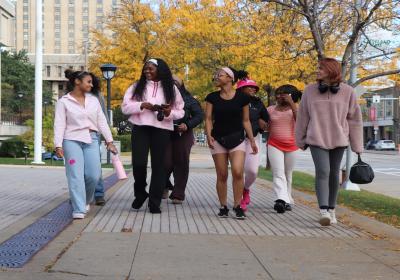
Miles are usually measured in sweat, but at Cleveland State University on Oct. 15 they were measured with purpose and a path towards healing.
More than a major: Finding your voice in communications
 For students studying journalism, public relations and communications, there is more than one way to find their voice and build a career.
Ten Kings of Hell: The Afterlife in Medieval Korea
 The Cleveland Museum of Art partners with the National Museum of Korea to showcase “Ten Kings of Hell: The Afterlife in Medieval Korea”
“Best of” The Cleveland Stater fall 2026 #1
 In this edition of “Best of” The Cleveland Stater, we examine Flock cameras, CSU’s new meal-swipe system, the opening of the Glick Recovery Campus, CSU’s Around the World in 80 Minutes event, and the main water break that temporarily affected some campus operations.
Symphony at Sunset plays an encore to its summer season
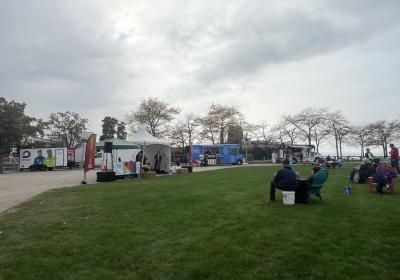 The Symphony at Sunset concluded its summer series of concerts with an Autumn Encore, much to the delight of fans.
CSU hosts wellness walk to promote student-athlete mental health
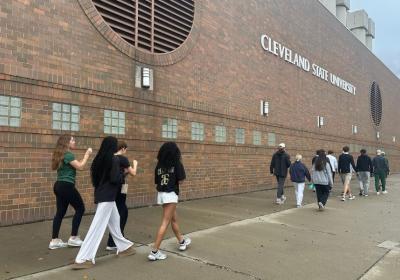 Student-athletes from all sports gathered for the event, which focused on reducing stigma and encouraging athletes to seek support.
Beyond the Plate: With Chef Douglas Katz
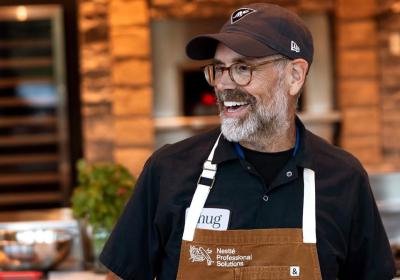
On this episode of The Stater Scoop, host Alexis Stradford, sits down with James Beard Award outstanding restaurateur semifinalist Chef Douglas Katz. The conversation that followed was an intimate look into his culinary journey.
At IngenuityFest, ‘America Dreams’ through art, technology and imagination

What does America dream about?
At IngenuityFest, the answer wasn’t exactly straightforward.
CSU students spend 80 minutes going around the world
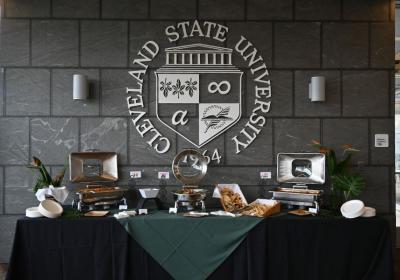
By KARINA TORRES - September 24, 2026
The Center for Campus Engagement hosted the cultural event for students to attend and try food from various countries while enjoying live music.
CSU PRSSA dine-to-donate fundraiser at The Fruit Stand

By KARINA TORRES – posted October 7, 2026
CSU PRSSA hosted a one-day fundraiser at The Fruit Stand to raise money for PRSSA's future events.
CSU’S BIG Band opens semester with jazz concert
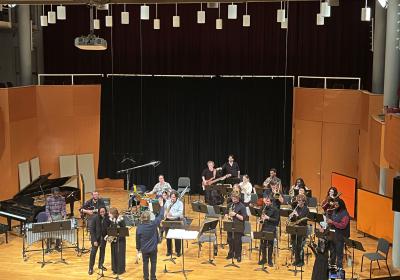
The Cleveland State University BIG Band opened its first concert season Oct. 5 with a performance at Drinko Recital Hall, featuring student musicians and a variety of jazz styles ranging from swing to soul to mambo and New Orleans jazz.
CSU students showcase undergraduate research
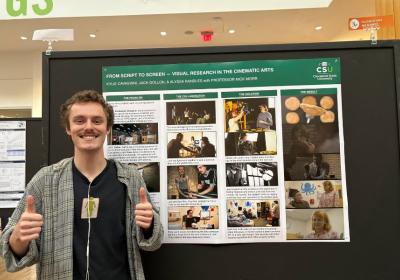 The poster session highlighted the range of research and work students are doing across the university, from work on film sets to a focus on Cleveland's history.
CSU’s new meal-swipe system changes how students eat on campus
 The university says the $5 cash-equivalency system offers more flexibility, but some students say they are using retail dining less as a result of its implementation.
CSU and regional partners host 3rd annual College Fest
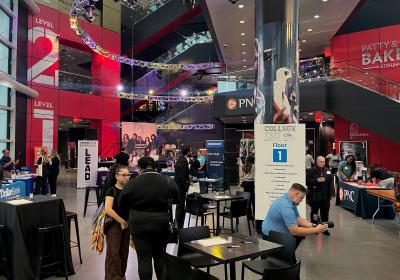
More than 900 students from 30 different regional institutions networked with around 80 employers at the 3rd annual College Fest, held at the Rock and Roll Hall of Fame, Sept. 9, 2026.