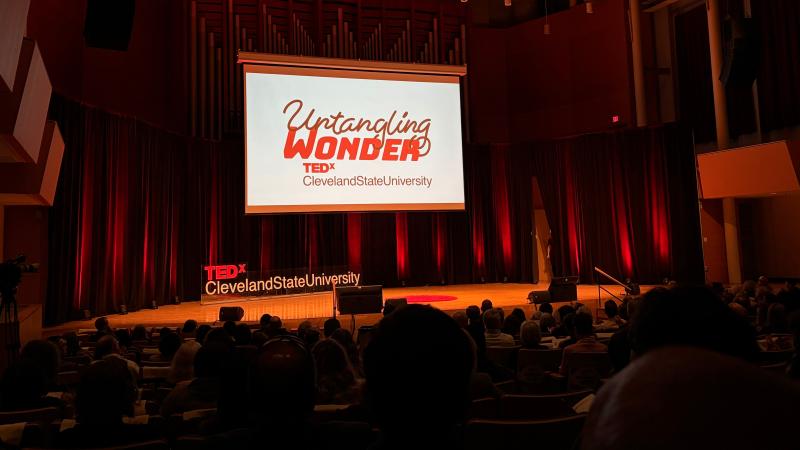
TEDx Cleveland State University explored curiosity and discovery at ‘Untangling Wonder’ event
Twelve speakers explored the connections between human curiosity, scientific discovery and the power of new ideas during TEDx Cleveland State University’s “Untangling Wonder” event on Friday at Waetjen Auditorium.
The event marked the return of TEDx to Cleveland State University following a post-pandemic effort to revive the program. CSU President Laura Bloomberg, Ph.D., welcomed all attendees with an opening statement, thanking sponsors and recognizing the event’s lead organizer, Colette Hart.
Bloomberg compared the event’s theme to a specific line of poetry from Emily Dickinson’s work, “I dwell in possibility,” describing wonder as an opportunity to stay curious.
Emmy-Award-winning journalist Eleanor Hayes served as the event’s emcee, introducing the speakers one by one while guiding the audience through the four dimensions of wonder: cognitive, emotional, motivational, and existential.
“Just think of me as the glue in between magical moments of untangling wonders,” Hayes said.
Following a brief video introducing the TEDx mission, the program opened with the cognitive dimension, where speakers closely examined the world that surrounds them.
Restoring what illness takes away
Claudio Milstein, Ph.D., a speech scientist, speech-language pathologist and voice specialist at Cleveland Clinic's Head and Neck Institute, served as our first speaker with stories of his patients whose voices stopped functioning without structural damage.
He described helping a mother of four, who lost her voice after a minor cold and struggled to communicate for years, regain full speaking ability after one treatment session. He also described restoring physical function in a teenage athlete who lost the ability to participate in sports.
Milstein explained that these experiences helped to restore confidence and independence in his patients, while maintaining connections with their loved ones.
Finding history in everyday objects
Sabrina Kretzschmar, director of education and the art collection at the Cleveland Museum of Art, argued that physical objects can deepen our learning in the age of artificial intelligence (AI).
As she stepped onto the stage, a table with an object hidden underneath a white sheet followed her. The object was revealed to be a 16th-century German knight’s close helmet, which she used to demonstrate the notion that historical artifacts can encourage empathy and questions about history.
“Objects inspire confidence in facts,” Kretzschmar said, encouraging attendees to visit museums and understand the significance of objects in their own homes.
The economics of medical innovation
Christa Laser, Ph.D., an intellectual property law professor and director of the Intellectual Property Law Center at CSU’s College of Law, addressed how financial incentives and patent laws have a direct impact on the development of medical treatments.
After experiencing the loss of her father to Parkinson’s disease and her stepfather to Alzheimer’s disease, Laser described her journey to researching benfotiamine, a 2010 mouse study and a 2020 human study on cognitive decline. She explained that families want urgent answers, while valuable treatments are not funded due to the existing compounds with financial incentives for patent-protected pharmaceutical products.
“They were willing to pay because the answer was ownable,” Laser said.
The program eventually shifted to the emotional dimension with a video preview titled, “The Hidden World of Whales.”
Making waves with water innovation
Samantha Martin, director of communications and engagement at the Cleveland Water Alliance, highlighted Northeast Ohio’s history of innovation and its access to Lake Erie as an advantage in developing water technologies.
Martin detailed her technological innovations being developed in South Korea, reducing the need to transport hazardous chlorine gas used for cleaning water. With this $6 million investment, she argues that Cleveland is slowly returning to its roots as a hub for new designs.
“There was money to be made in protecting water,” Martin said.
Navigating information in the age of AI
Mandi Goodsett, an academic librarian and educator at Cleveland State University, explored how she continues to teach her students amid the spread of online misinformation.
As she opened her speech, Goodsett encouraged attendees to participate in an exercise of identifying whether certain photos were AI-generated and how they measure confidence in these answers. She related the uncertainty in the room to the lack of confidence her students experience on a daily basis.
Goodsett shared several useful tactics for building healthier information habits, including subscribing to email newsletters and avoiding AI-generated summaries.
Using music to preserve history
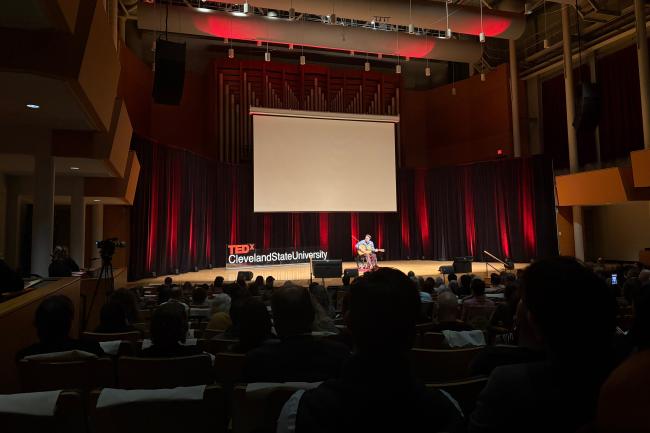
Charlie Mosbrook, a Cleveland-based singer-songwriter and music educator, explored how songs can effectively communicate emotions.
Mosbrook used his guitar skills to explain how music has allowed historians to connect people with their experiences, such as racial violence in the Jim Crow South and the sinking of Edmund Fitzgerald.
“Those who rule write history, those who suffer write songs,” Mosbrook said, quoting Irish singer and song collector Frank Harte.
(Credit: Aria Ruiz)
|During the intermission, Hayes invited all attendees, students and members of the press to the Taste of Wonder, an outdoor gathering in the Music and Communications parking lot. Guests continued to connect and enjoy refreshments from local caterers.
A multicultural and diverse catering service was provided by Fresh Green Catering, Aladdin’s, Wholly Frijoles, Smooth Rider and Thai It Up.
(Credit: Aria Ruiz)
The program resumed at the motivational dimension of wonder, exploring how personal experiences can inspire change.
Finding commonality through humor
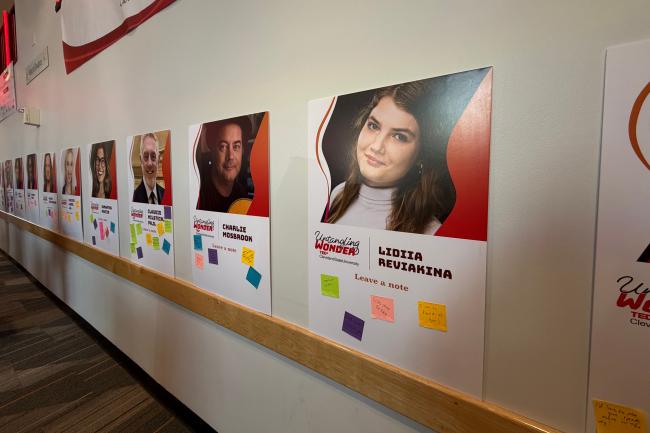
Lidiia Reviakina, a Cleveland State University student studying electrical engineering and computer science, shared her initial struggles trying to blend in with American culture after immigrating from Ukraine.
In an attempt to challenge the pressures she felt to fit in, she began creating TikTok videos showing humorous interactions with her Slavic mother. Once the videos attracted millions of viewers, she discovered that various audiences could relate to her experiences despite their cultural differences.
“Sometimes we recognize ourselves in each other long before we fully understand each other,” Reviakina said.
Reimagining the future of plastics
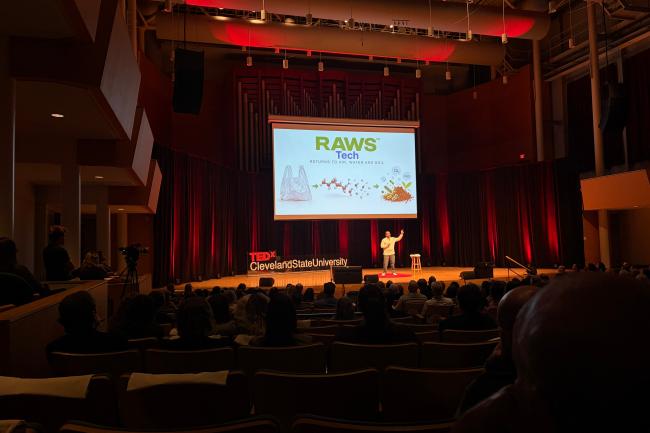
Camilo A. Ferro, a sustainability innovator and president of RAWS Tech, helped to clarify the long-term consequences affecting the environment due to plastic usage.
While explaining Lake Erie’s history of pollution, he referenced past innovations in detergents and refrigerants that unintentionally affected the environment negatively. He also shared how watching his father battle cancer helped him understand the role plastic plays in medical care and life-support equipment, arguing researchers develop better ways to improve life cycles.
“History’s greatest inventions are never finished, and neither are we,” Ferro said.
(Credit: Aria Ruiz)
Breaking through generational traumas
Stacey Diane Arañez Litam, Ph.D., an educator and counselor, examined how generational trauma can shape future family relationships and affect specific ideologies about love and sacrifice.
Litam described the experiences of family members who survived the Japanese occupation of the Philippines during World War II, sharing that this exemplified the type of sacrifice her family went through, ultimately influencing the values her family passed down. To combat the association of self-sacrifice and connection, she represents conscious efforts to create a healthier pattern for her own family.
“Because love does not need to be a ledger,” Litam said.
The program then transitioned to the final dimension of wonder, existential, inviting attendees to reflect on their own purpose.
Redefining family income struggles
Sharon Sobol Jordan, president and CEO of United Way of Greater Cleveland, shared how her father’s personal financial struggles with maintaining their family inspired her to create better economic strategies for other families.
After her father lost his business and their family home, it affected her parents’ 23-year marriage, leading to their eventual divorce. Jordan explained that the challenges faced by families struggling to afford basic expenses, despite working, influenced her to work with United Way’s 211 service to target financial coaching, access to resources and building long-term stability.
Jordan’s story helps highlight how individual acts of support can create lasting change for families everywhere.
Creating spaces where everyone can breathe
Richard Austin, Ph.D., a Cleveland-based educator and scholar-practitioner, challenged attendees to consider the significance of how schools support their marginalized students.
As his speech began, Austin continued to slowly drop coins into a cup, asking the room to imagine a world where every breath came with a cost. As a Black student at St. Ignatius High School, he was able to find belonging through the school’s Multicultural Retention Office. He compared safe spaces to airplane oxygen masks.
“Safe spaces make sure people can breathe today,” Austin said. “But structural change asks why they couldn’t breathe yesterday.”
Finding belonging through song
Jessica Gallagher-Steuver, Ph.D., a music educator and choral conductor, explored how singing can create a sense of belonging for marginalized communities.
As the director of Windsong, Cleveland’s feminist chorus, Gallagher-Steuver leads approximately 110 members, many of whom identify as LGBTQ+ or have experienced other forms of marginalization. She also highlighted other important organizations that support inclusive musical communities, such as the Sister Singers Network.
While describing the act of “musicking”, Gallagher-Steuver invited all attendees to join in singing alongside Windsong. The song, “Love is Love is Love is Love”, honors victims and survivors of hate crimes, specifically those affected by the 2016 Pulse nightclub shooting in Orlando, Florida.
“Dividing us silences us, but singing together makes us loud,” Gallagher-Steuver said.
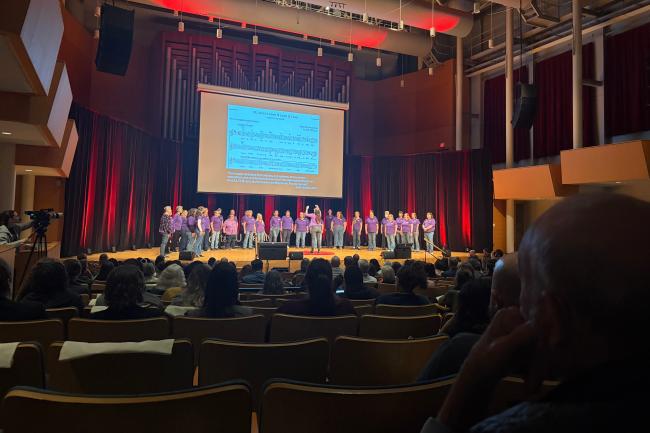
(Credit: Aria Ruiz)
Cleveland State University students brought wonder to life from business and entrepreneurship, arts and sciences, public affairs and education, engineering, and health.
All attendees received TEDx tote bags containing university-themed gifts, such as a Viking Outfitters discount coupon and many more amenities.
The bags also featured custom “Untangling Wonder” keychains designed and 3D-printed by CSU students. In total, students produced 700 keychains for the event.
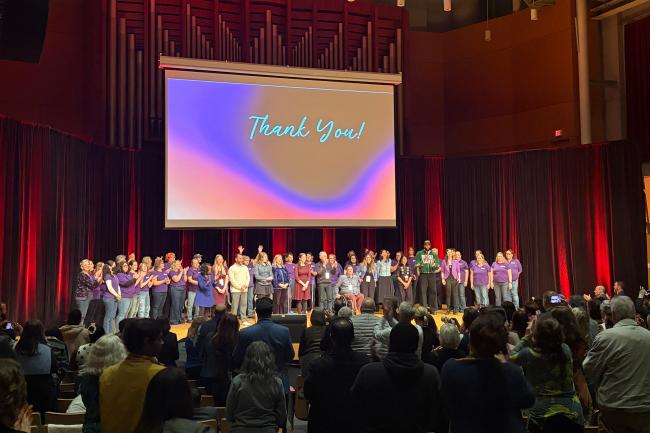
(Credit: Aria Ruiz)
From exploring medical and environmental innovation, the speakers demonstrated how curiosity can inspire discovery and change. The next TEDx Cleveland State University is scheduled for Sept. 24, 2027.
Recent News
More than a major: Finding your voice in communications
 For students studying journalism, public relations and communications, there is more than one way to find their voice and build a career.
Ten Kings of Hell: The Afterlife in Medieval Korea
 The Cleveland Museum of Art partners with the National Museum of Korea to showcase “Ten Kings of Hell: The Afterlife in Medieval Korea”
“Best of” The Cleveland Stater fall 2026 #1
 In this edition of “Best of” The Cleveland Stater, we examine Flock cameras, CSU’s new meal-swipe system, the opening of the Glick Recovery Campus, CSU’s Around the World in 80 Minutes event, and the main water break that temporarily affected some campus operations.
Symphony at Sunset plays an encore to its summer season
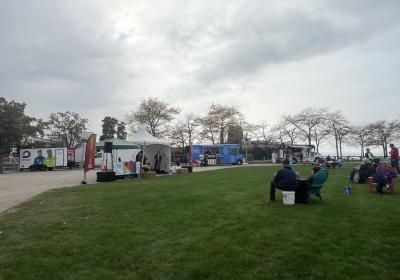 The Symphony at Sunset concluded its summer series of concerts with an Autumn Encore, much to the delight of fans.
CSU hosts wellness walk to promote student-athlete mental health
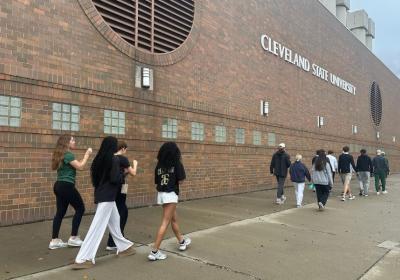 Student-athletes from all sports gathered for the event, which focused on reducing stigma and encouraging athletes to seek support.
At IngenuityFest, ‘America Dreams’ through art, technology and imagination
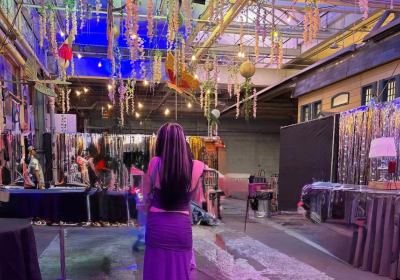
What does America dream about?
At IngenuityFest, the answer wasn’t exactly straightforward.
CSU students spend 80 minutes going around the world
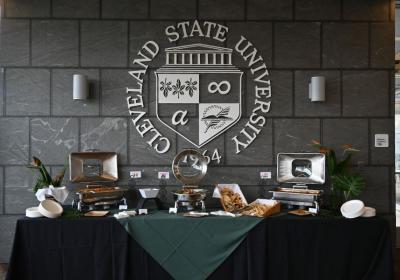
By KARINA TORRES - September 24, 2026
The Center for Campus Engagement hosted the cultural event for students to attend and try food from various countries while enjoying live music.
CSU PRSSA dine-to-donate fundraiser at The Fruit Stand
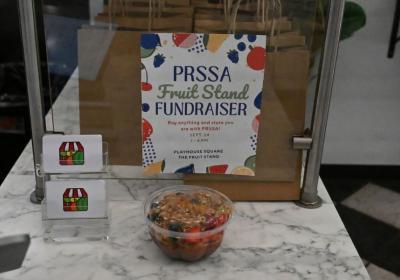
By KARINA TORRES – posted October 7, 2026
CSU PRSSA hosted a one-day fundraiser at The Fruit Stand to raise money for PRSSA's future events.
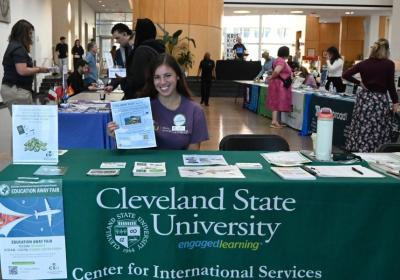
CSU’S BIG Band opens semester with jazz concert
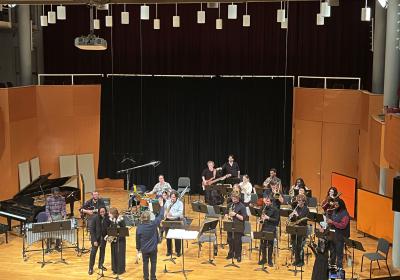
The Cleveland State University BIG Band opened its first concert season Oct. 5 with a performance at Drinko Recital Hall, featuring student musicians and a variety of jazz styles ranging from swing to soul to mambo and New Orleans jazz.
CSU students showcase undergraduate research
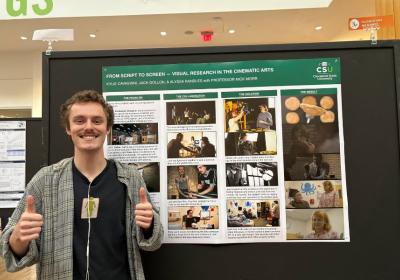 The poster session highlighted the range of research and work students are doing across the university, from work on film sets to a focus on Cleveland's history.
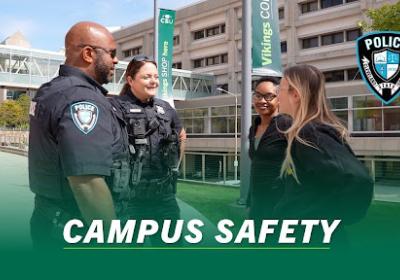
CSU’s new meal-swipe system changes how students eat on campus
 The university says the $5 cash-equivalency system offers more flexibility, but some students say they are using retail dining less as a result of its implementation.
CSU and regional partners host 3rd annual College Fest
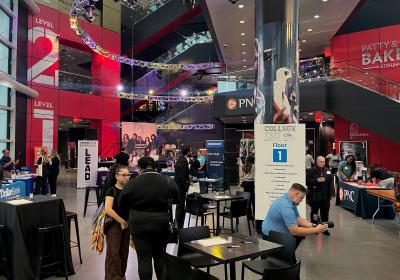
More than 900 students from 30 different regional institutions networked with around 80 employers at the 3rd annual College Fest, held at the Rock and Roll Hall of Fame, Sept. 9, 2026.