
The president's interview, spring 2026
CSU President Laura Bloomberg sat down with Nicole Wloszek and Ava Fuduric from The Cleveland Stater in the final week of the spring 2026 semester in what has become a staple of the student news site, an in-depth discussion about the successes, challenges and occasional controversies that define any semester and the decisions shaping life for the Cleveland State community.
The interview on Tuesday, April 28, took place at a conference table in the president's office in front of a tan wall painted with CSU’s place in Cleveland’s skyline. The image served as a reminder of the university’s relationship with the city just outside the window. Each decision made in a room like this ripples across campus and throughout the community we’re a part of.
The setting was a fitting backdrop for the bi-annual conversation about choices and the people affected by them – a tradition Dr. Bloomberg said she enjoys taking part in before diving into the questions.
The Cleveland Stater "asks probing questions and you’re so prepared for these," Bloomberg said. "I’m always really impressed with the work that you do to get ready."
After all that happened in the spring 2026 semester, there was plenty to probe. But first, The Stater wanted to learn a bit more about Laura Bloomberg the person – what daily life looks like from her position, what she values about being at CSU, and how she sees her successes and the ongoing challenges the university faces.
A day in the life of Dr. Laura Bloomberg
Bloomberg’s work day starts as the sun comes up. Some mornings beginning with donor breakfasts as early as 7:30 a.m., others with jotting down a list of the day’s tasks that inevitably evolves with whatever lands on her desk when she gets to campus. As the president of the university, she’s not on a 9-5 schedule. Each day requires something different from her, from ceremony appearances to decision-making and managing relationships with alumni and donors.
Some days, she’s not off campus until as late as 10 p.m. The hours are long, but with an estimated base salary of $477,000 for the 2025-2026 school year, it’s a workload coupled with compensation as the highest paid officer in the CSU administration.
Even with the pressure of her work, she said her favorite days are ones that she gets to walk around campus and interact with students.
Why Bloomberg came to Cleveland
Dr. Bloomberg started her position as CSU’s president in April 2022, thrust into the position after the board of trustees unexpectedly let go her predecessor, Dr. Harlan Sands.
At the time, Bloomberg had been serving as CSU's provost and senior vice president for seven months. Born and raised in Minnesota, she acknowledged that she had never been to Cleveland before the university recruited her.
"I thought I’d never leave Minnesota," Bloomberg said.
But during the coronavirus pandemic, she and her husband took a drive to Cleveland to see what it was all about – without telling recruiters she would be in town. She wanted to know if she could picture herself starting a new life and career here, and was surprised by what she found.
"We loved that it was on the lake. We loved that there's a relatively high level of diversity," she said. "I certainly was a Minnesota lake snob. No one has lakes or beautiful rolling hills and woods like northern Minnesota. Well, I was wrong. It’s beautiful here."
The move meant that she would have to leave her home state, but it came with the offer of the president’s residence. The over 5,000 square foot home on Fairmount Boulevard in Cleveland Heights served as housing for CSU’s presidents from 2016 until 2025, when the university voted to sell the property and instead provide President Bloomberg with a housing allowance, stating that it would “save the University over $145,000 annually.”
Now entering her fifth year as president, she said the job still feels new, with both its perks and drawbacks. Her sense of success comes when she’s building strong teams that function for the betterment of the university and each other. Moments when she sees singularity instead of a collective effort make her feel that something in the system isn’t working the way it should, since even her accomplishments are shared as a collective achievement.
"There’s very little that a president does alone," she said.
She maintains her faith in the future of higher education, despite the skeptical lens it is sometimes viewed under.
"I think the thing that sucks the energy out of me more than anything else is the drumbeat negative narrative about higher education because I don’t believe it," Bloomberg said. "We do have declining enrollment, we do see changes that need to be made in higher education. But what I see when I talk to students is the great opportunities that lie ahead of them."
With the challenges that many universities face, CSU’s president said this makes it even more important for her to prioritize the responsibility of staying focused on students’ futures.
"I still have to believe that my role is advancing the reason I’m in higher (education) in the first place," she said. "And that is to help people change their lives, chase their dreams and build the kind of future that they want."
Giving Day
Optimism can only go so far, and the university’s fiscal challenges in the spring 2026 semester ultimately brought the conversation back to numbers. A highlight was the 13th annual Giving Day, a 24-hour fundraising event that brings alumni, students and faculty together to support on-campus athletics, research and programs. In spring 2026, it took place on February 13, raising $942,421 from 2,689 donors.
Nearly half of the amount raised went to CSU Athletics, which Bloomberg said has been particularly savvy about Giving Day promotion. To keep these numbers high for future Giving Days, the goal is to expand on Athletics' expertise across campus, building a more coordinated approach.
"I think we have some areas of campus that have gotten really savvy about marketing for Giving Day and really pushing it," she said. "Athletics has frequently been in the lead in that regard. But now they’re starting to share that skill set with others, and actually, we’re going to have them talk more broadly across campus about how to do that."
Balancing the budget, and the cuts that followed
The state of CSU’s finances has been a consistent topic of discussion from before Bloomberg took office. At the time, the university was on track to reach a projected $40 million deficit.
Fast forward through Bloomberg's tenure at the helm, and as of spring 2026, CSU’s budget is largely balanced, a feat that the president contributed to hiring discipline, merging departments and degrees, and a cut back of some clubs and sports. The process was a delicate balance of navigating fiscal constraints and their impact on the university's culture and student life.
To close the gap, Cleveland State implemented hiring freezes, program closures and mergers. Bloomberg emphasized that she tried to keep cuts "as far from the student experience as possible." But for many on campus, the austerity hit close to home.
Three sports, wrestling, women’s golf and softball, were discontinued in January 2025 as part of the restructuring effort. The esports team was also transitioned out of the athletics department and into the College of Engineering as a club sport, a decision that Bloomberg said was difficult to make.
"That was a tough decision. And so I take responsibility for that decision, but we very carefully put together a committee to look at all of the data and really study," she said. "We knew you just can’t keep cutting and expect a level of quality."
Another difficult and contentious decision was CSU's decision to shutter WCSB 89.3 FM, ironically on National College Radio Day in October 2025, handing to Ideastream (see below) the signal previously allocated to the student and community-run radio station that had served Cleveland for nearly 50 years. A group associated with the now defunct station is suing CSU and Bloomberg to try to find out why the station was shuttered in the first place.
One overhaul that students will start to see the effects of in fall 2026 is to club funding. After students reported delayed stipends in fall 2025, spring 2026 semester saw the start of scholarship stipends being removed or inaccessible for some student organizations.
The opportunities, which include editor and design lead positions at student publications, have given students amounts up to $1,000 in a scholarship stipend per semester. In exchange, students produce a consistent body of published work over the course of the year. They edit, write, design, take pictures and even help to promote the student-run publications. But Bloomberg said these positions were never supposed to serve as de-facto jobs.
"Student activities are never intended to be jobs for students," she said. "They’re intended to be student activities."
Following an internal audit of student activities compared to peer institutions, Bloomberg said that CSU shifted to a more conservative approach to stipend allocation. She recognized how this might sound out of touch after earlier saying that cuts were meant to be made with as little effect as possible on student life.
"It’s a tricky balance," she admitted. "When we say the guiding principle is to make decisions as far from the student experience as possible, I can imagine that might sound tone deaf when you’re going, 'Yes, but we’ve got people who had stipends and now they don’t have stipends. But those were prudent decisions we had.'"
She shared her appreciation for The Vindicator, CSU’s culture and arts print magazine, and her personal experience with Rob Kisner, who founded it in 1970. Kisner was recently hospitalized, and Bloomberg brought the magazine to his family and friends for them to read and remind Kisner of his legacy at CSU.
"I went and grabbed copies of the publication and just left them in the conference room," Bloomberg said. "They could talk about The Vindicator, they could talk about the legacy of what he’s done here."
Kisner founded The Vindicator as a Black student newspaper that transitioned into a magazine focused on multicultural arts, culture and social justice. The publication’s mission is "To serve as a beacon for diverse voices and to amplify marginalized student voices."
When asked if a print budget would be provided for publications that produce physical copies to distribute on campus, Bloomberg said she didn’t know the specifics, but pointed to putting more attention on online content, and less on print.
"There are places where we’re no longer printing magazines because the practice is outdated," Bloomberg said. "Why are we not investing more time into the quality of our online product and less on our print materials?"
WCSB, six months on
The handoff of CSU’s WCSB signal to Ideastream, shuttering broadcast operations without prior notice and taking student voices off the airwaves, generated a response of anger and confusion when students turned up to work Friday, Oct. 3, 2025, to find police posted and the doors to the studio locked.
Six months and one lawsuit later, Bloomberg stands behind the decision and maintains it was an outdated platform that few listened to, despite being voted as best college radio station in Cleveland Scene multiple times over the years, most recently in 2025.
"The number of times, I can tell you, that somebody approached me and just lit into me about what happened," she said. "My response would be, 'I’m really sorry you feel that way. Tell me what you loved most about WCSB,' and they said, 'Oh, I never listened to it. I don’t know what it is. I’m just mad.'"
Bloomberg said the ultimate goal was to better serve student needs.
"I am sorry that we caused such pain to the community, and this is a hard thing for people to hear." Bloomberg said. "I care deeply about our service to the community, but the fact is, my job is to serve the university, and the needs of the students are my job."
With litigation pending, the WCSB community has moved to resurrect the station online, at XCSB. Bloomberg acknowledged the importance of respecting the legal process, a position XCSB has also taken.
"We’re not going to comment on (the lawsuit), so I have no comment, and candidly, I’m not daily monitoring that in any kind of way." Bloomberg said. "It is our right as citizens to bring suit in court. That is not at all rare. It’s one venue for seeking whatever it is you’re seeking – justice, whatever. So I think that people are exercising their rights, and I think that’s fine."
She said she had listened to XCSB’s online stream, which features former WCSB DJs alongside new student and community hosts, but couldn’t comment on specific programming, though she noted there was much she had enjoyed about WCSB.
"I can’t speak to what they’re doing now, I have seen the schedule," Bloomberg said. "I think there was a lot to like about WCSB. I thought they did a great job making space for nationality programming."
Ideastream, students 'at the table,' TEDx
Central to the transfer of the WCSB signal to Ideastream were promises of a partnership between CSU and the corporate non-profit that would offer internship opportunities to students, though at the time of the agreement, the specifics of what the internships would be and how many would be available were not outlined in the agreement. Bloomberg added that the term "internship" did not represent the full scope of the partnership, and a fixed amount would "limit opportunities."
"I understand… it seems wishy-washy to not identify the number of internships. That was really by design," she said. "I think 'student internships' is too narrow. It’s students at the table."
Bloomberg pointed to the April 7 episode of Ideastream’s Sound of Ideas, a daily news show that discusses issues pertaining to Northeast Ohio, and features guests including local experts, business owners and entertainers. Although the episode about Aquamissions featured CSU students in various roles, it was not part of the CSU-Ideastream deal. However, Bloomberg congratulated those involved in a Facebook post.
Bloomberg emphasized her excitement about the future of the partnership, and about the return of TEDx to CSU after a decade-long pause.
"The thing that I’m really excited about right now is that we’re starting to talk about TEDx coming back to Cleveland State," Bloomberg said.
The first TEDxClevelandStateUniversity event is scheduled for Friday, Oct. 23 with the theme "Untangling Wonder." Bloomberg said the question was how to fully embed students in Ideastream’s production and amplification of TEDx, a process the university would pick up on in fall 2026.
AI on Campus
Artificial intelligence has been changing the way that schools function as a whole, including CSU. One of the more visible ways the university has integrated AI is with the May 2025 rollout of AVA, an autonomous AI virtual engagement initiative meant to support alumni and donor engagement after CSU found itself with limited staff resources. The Stater reported that AVA sends texts and emails out to alumni with birthday messages, event invitations and surveys.
The AI program came at the cost of $75,000 for an 18-month contract, funded by the CSU Foundation, a nonprofit with an operating budget outside of CSU’s own financial plan.
One year after its implementation, Bloomberg said the response to AVA has been distinctive, but to be expected.
"People are responding to her in ways that are really interesting. People are responding to her as if she’s a person," she said. "She’s doing what she’s supposed to do. She’s doing it in a way that’s engaging."
This reaction is reflected in the way the president talks about the AI project as well. She often refers to it in human terms, calling the AVA 'she' and 'her.' "It’s hard not to talk about AVA as a person," Bloomberg said. "I refer to her as 'she' all the time."
With AVA up and running, the university is shifting its focus to the larger questions and opportunities for artificial intelligence initiatives, and the conversations about the positive and negative effects it could have locally and on a larger scale.
"We have to think about the curriculum of AI, the business operations of AI, the ethics of AI, the environmental impact of AI," she said. "We’re one of the largest employers in downtown Cleveland. What does AI mean for employment?"
She also acknowledged how the adoption of AI practices at school can affect faculty as they try to navigate a landscape that’s uncharted.
"It’s really stressful," Bloomberg said. "If you’ve taught, I don’t know, 18th century British literature and that's your area of expertise, and then AI comes on the scene it's like, 'Wow, how do I help my students?'"
While the president acknowledged the ethical implications of AI on the environment and the workforce, CSU plans to move forward with additional AI initiatives, continuing into the 2026-2027 school year.
The third annual CSU AI Symposium was held on Friday, April 24 at the Wolstein Center, where researchers, faculty, students and campus partners gathered to discuss how artificial intelligence is becoming a part of teaching and learning.
CSU’s website specifies that the event looked at "how educational institutions are shifting from curiosity about AI to its intentional, meaningful adoption." It’s an occasion that Bloomberg said provides an opportunity to discuss how AI might affect the university experience.
"We’re bringing people together to talk about what AI means for the university," she said, emphasizing that as the use of artificial intelligence becomes more prevalent, so does the importance of the conversation around it.
"AI is an amazing enabler of human creativity," she said. "But we need to have a clear-eyed view of the impact … especially the energy costs."
Increased street parking rates
Another change that affected CSU’s community in spring 2026 was the updated City of Cleveland street parking rates, turning a $3.35 four-hour parking session into nearly $11.
In 2024, U.S. News reported that 94% of undergraduate students at CSU live off campus and commute. Only 6% of the student body lives in college-owned, operated or affiliated housing. As a university with a high population that drives to campus, parking remains a logistical concern that affects their everyday life.
The least expensive parking pass offered in spring by CSU for commuters cost $171, so for students who don't attend class five days a week, before the change street parking was a reliable, less expensive option. It's a change with real effects on campus life that the president is aware of, but acknowledged the city had its own rationale for hiking the cost to students and the community.
"I voiced a fairly strong opinion when the city decided to do this," she said. "I have opinions, we’ll just leave it at that. But the city does what the city needs to do."
When Bloomberg was asked if CSU had any plans to reevaluate the on-campus parking rates to help students offset the burden of street-parking cost increase, she said that the university doesn't have plans to adjust parking rates, but is continually reviewing ways to keep student expenses manageable.
"I think that it would be a difficult thing to discount that. I do think that we need to think carefully all the time about the cost of parking on campus," she said. "If we could focus on that and think about what it is that we can do to create the best possible and most affordable opportunity for students on campus, that might be about as much as we can bite off."
Bloomberg pointed to the last-mile scholarships as a potential resource for students affected by high parking rates to turn to. The scholarships offer students need-based support, allowing flexibility to provide assistance for any personal and financial obstacles, from a busted carburetor to a loved one’s funeral.
"Nobody likes to pay that amount, but some people can," Bloomberg said. "Some people will never drive a car to campus, but desperately need support in some other way. So I want us to be somewhat flexible."
Housing, flooding and the future of CSU's aging infrastructure
Housing was a consistent topic of discussion throughout the spring 2026 semester, with students living in multiple off campus buildings experiencing construction, flooding and displacements.
After being closed since summer 2024 for extensive repairs, Fenn Tower is set to reopen this summer as renovated, first-year student housing. The historical piece of 1924 Art Deco architecture will have upgraded rooms and an improved facade. Bloomberg said potential future CSU students were impressed with the changes.
"Over 100 prospective students walked through on visit day," she said. "They loved it."
Another building housing CSU students, The Edge, also faced its share of problems in spring, including flooding and water shutoffs, in part due to a flaw in the original design of the plumbing system, an unfortunate circumstance that Bloomberg said was beyond the university’s control, as CSU didn’t build The Edge. Still, she insisted that after the construction is finished, it will be safe for students to reside in.
"The Edge has been structurally reviewed. The engineers have reviewed it. Once it’s fully repaired, it is going to be a sound place to live," she said. "I think it’s important to note that the colossal flood was no fault of CSU’s."
There are no set plans for CSU to build new housing any time soon, but the university is exploring options to use existing buildings, including using floors of The Langston for new faculty member housing.
Across campus, CSU’s infrastructure is aging. This reflects a consistent problem for the university as it grapples with a lengthy list of deferred maintenance, which CSU is attempting to deal with.
These maintenance issues came to the forefront of the campus community’s attention after a water main broke between Rhodes Tower and Rhodes West, causing a destructive flood, even damaging areas with computers and technology that students regularly used.
Rhodes Tower, built in 1971, has long been one of the most maintenance-intense buildings on campus. Its age has shown not only in the frequent repairs but also in the years-long asbestos treatment process that’s currently underway after CSU received state funding.
"Our reality is we've got to abate asbestos in Rhodes Tower and we have the money to do it from the state," Bloomberg said.
The Wolstein Center is another major facility under review. Once a hub for athletics and large events, the arena has become increasingly costly to operate.
"We are exploring options for taking Wolstein down," Bloomberg said. "We’re losing a lot of money every year operating it… But I don’t have a specific timeline."
The conversation about Wolstein Center’s future is far from new.
"I keep telling people, 10 years," she said. "These conversations precede me and God willing, they will end with me."
Faculty and restructuring
One of the consequences of Rhodes Tower's condition is the reshuffling of office space across several departments. Bloomberg said when a building undergoes asbestos treatment, it must be done floor by floor, and each phase requires emptying not only the floor being treated but also the floors directly below and above it.
First moves will happen this summer, as faculty are transferred from the offices they have been in for years to make way for displaced staff members who worked on the affected floors of Rhodes Tower. One of the buildings affected was Music and Communications, where long-standing faculty are being moved out of their offices to share the space with English. Bloomberg saw the move as a challenge, and an opportunity too.
"Even if it’s uncomfortable (to move)" Bloomberg said, "When we put people in proximity to each other, cool, serendipitous things can happen too."
Communication and transparency
With change comes implementation, and when something changes at a university, the community is affected, for better or for worse. When communication between a population and the leaders who make decisions on their behalf breaks down, individuals feel left out of the loop and blindsided by transformations they didn’t see coming.
The issue of communication is not new. In January 2025, CSU’s Student Government Association introduced Senate Resolution SR-1-2025: "A Resolution for Enhanced Communication and Transparency." This measure states that on multiple occasions, the university failed to adequately convey important updates to the campus community, calling for "radical transparency" going forward.
As CSU continues to move through a period of significant restructuring, construction and campus-wide transition, the need for more consistent communication has only become more apparent. When upheaval happens and uncertainty follows, students, faculty and staff are directly affected in ways that shape their sense of stability and trust in the university.
Bloomberg said that this perceived gap in communication and transparency isn't a matter of secrecy, but a matter of selective messaging. Information is provided to groups that are deemed as directly involved or affected, in an attempt to reduce inbox and mental clutter for the rest of the campus community. She emphasized the goal is to balance doing "the best possible job" at keeping people informed without trying to overwhelm them.
"I didn’t know doesn’t mean that nobody knows," she said, while acknowledging that CSU should be consistently trying to do a better job with informing the university of what decisions are being made and why.
"We need to always focus on: are we doing the best possible job at communicating? And I think the answer should always be no," Bloomberg said. "You can always do better."
Looking ahead
With the campus community looking towards a new academic year in the fall 2026 semester, and Bloomberg entering her fifth year as president of the university, she pointed to the opening of Fenn Tower and renovations of the science labs as signs of forward momentum. Despite ongoing challenges and changes at CSU, as president she’s able to maintain an optimistic outlook.
"The sun is shining," Bloomberg said. "Life is good."
As the university moves forward, the president's optimism reflects the hope that CSU's next steps are towards a future that ensures "life is good" for the campus community as a whole.
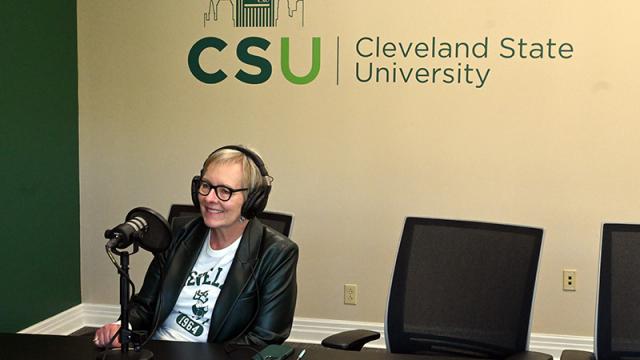
** Editor's note: Although the interview with Dr. Bloomberg was done on April 28, 2026, for logistical reasons The Cleveland Stater held over its posting until the fall 2026 semester.
Recent News
Midterms: What Cleveland residents want candidates to address
From rising rent and grocery prices to health care costs and public transportation, affordability remains a major concern for people trying to make ends meet.
Walking for awareness of breast cancer
Miles are usually measured in sweat, but at Cleveland State University on Oct. 15 they were measured with purpose and a path towards healing.
“Best of” The Cleveland Stater fall 2026 #1
 In this edition of “Best of” The Cleveland Stater, we examine Flock cameras, CSU’s new meal-swipe system, the opening of the Glick Recovery Campus, CSU’s Around the World in 80 Minutes event, and the main water break that temporarily affected some campus operations.
Midterms: The policies and controversy of the Ohio governor's race
 Having last minute voter anxiety? Read up on the candidates running for governor of Ohio, Democrat Amy Acton and Republican Vikek Ramaswamy.
Midterms: Does spending more money lead to more votes?

Political advertisements have become increasingly difficult to avoid as the Nov. 3 midterm election approaches.
Midterms podcast: Cleveland Stater editors discuss the issues ahead of Tuesday's election
 Cleveland Stater editors discuss the upcoming midterms, including the race for Ohio governor, which pits Amy Acton (D) against Vivek Ramaswamy (R), and the race for the U.S. Senate, in which Sherrod Brown (D) is competing with Jon Husted (R).
Midterms: CSU student hosts The Ballot, A fight for education
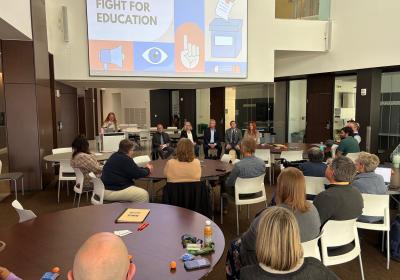 Ahead of next week's midterms, Alissa Burkholder, an Aspiring Educator, moderated The Ballot: A fight for education, featuring five speakers who discussed current issues education in Ohio is facing and how Tuesday's election could affect them.
Midterms opinion: Campaign ads suggest some people aren't fit for office
 Vivek Ramaswamy's attack ad. featuring his opponent's estranged mother shows that no low is too low for some people. The ad tells us a lot more about the person behind the ad than Amy Acton, target of the attack.
Midterms: Meet the candidates for federal and Ohio state office

Ohio voters are heading to the polls on Nov. 3 to elect candidates in the 2026 midterm elections. Major races include the U.S. Senate and governor.
Beyond the Plate: With Chef Douglas Katz
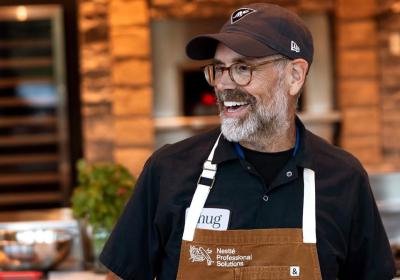
On this episode of The Stater Scoop, host Alexis Stradford, sits down with James Beard Award outstanding restaurateur semifinalist Chef Douglas Katz. The conversation that followed was an intimate look into his culinary journey.
CSU hosts wellness walk to promote student-athlete mental health
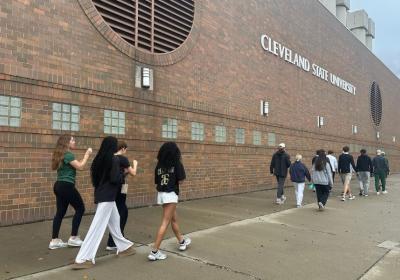 Student-athletes from all sports gathered for the event, which focused on reducing stigma and encouraging athletes to seek support.
Ten Kings of Hell: The Afterlife in Medieval Korea
 The Cleveland Museum of Art partners with the National Museum of Korea to showcase “Ten Kings of Hell: The Afterlife in Medieval Korea”
Women's soccer holds off Green Bay, drops home closer to Milwaukee
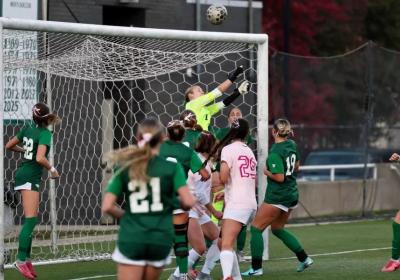 Goalkeeper Senior Hayleigh Lewis made a penalty kick save and a diving save during the Vikings' game against Green Bay.
Delventhal records 1,000 career digs in CSU's 3-1 loss to Oakland
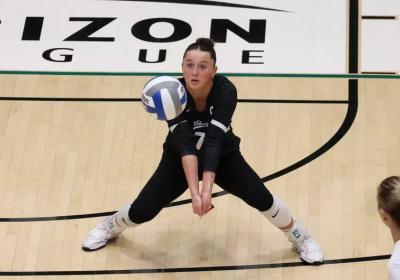 As a team, the Vikings combined for 11 blocks, including six from Julia Jozefov and five each from Sariyah Glanton and Sophie Butler.
Cavs fans look ahead to the 2026-27 season
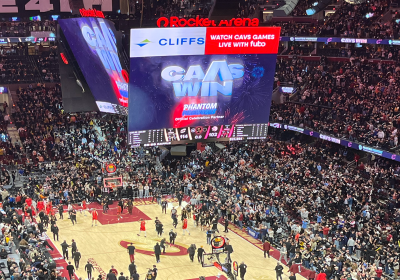 Fans of the hometown Cleveland Cavaliers talk offseason moves and expectations for the upcoming season.
Symphony at Sunset plays an encore to its summer season
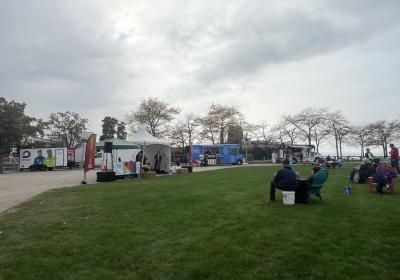 The Symphony at Sunset concluded its summer series of concerts with an Autumn Encore, much to the delight of fans.
CSU men’s swimming and diving takes third at Zips Classic

Cleveland State University men’s swimming and diving team claimed third place at the Zips Classic in Akron, Ohio, after two days of competitive performances in the pool and on the diving board Oct. 16-17.
CSU women’s swimming and diving finishes 4th at the Zips Classic

Cleveland State University women's swimming and diving finished fourth of five teams competing at the two-day Zips Classic, hosted by the University of Akron, Friday and Saturday.
CSU volleyball drops two matches at Milwaukee
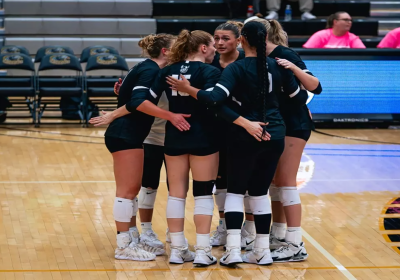 Volleyball struggled in its weekend series against Milwaukee, losing in straight sets on Friday, and dropping a five-set thriller on Saturday.
At IngenuityFest, ‘America Dreams’ through art, technology and imagination
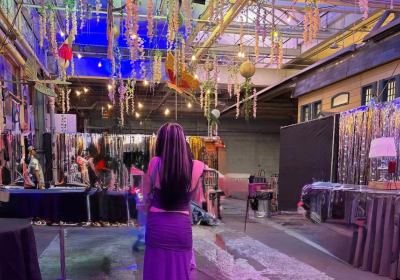
What does America dream about?
At IngenuityFest, the answer wasn’t exactly straightforward.
CSU honors Constitution Day with visit by former Ohio AG
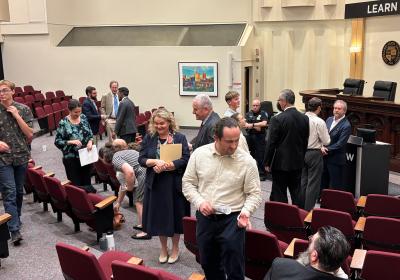 Former Ohio Attorney General Dave Yost spoke to students about the Supreme Court's shifting position on the separation of church and state.
Midterms: Senate candidate Greg Levy addresses CSU students
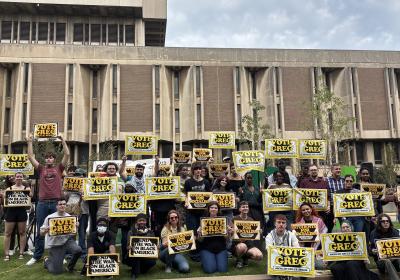 Ahead of the Nov. 3 midterms, Ohio senate candidate Greg Levy spoke to CSU students about the possibility of real change for the good of the community.
$10 million Ahuja family and foundation gift will transform business education at CSU
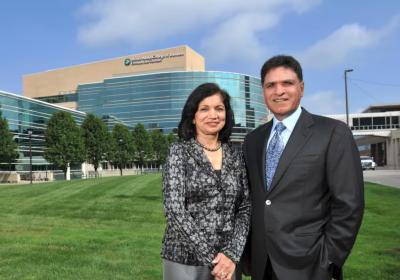 The gift will transform how CSU prepares tomorrow’s business leaders, and Cleveland State will rename the business college the “Ahuja College of Business and Entrepreneurship" to honor the family.
People of CSU - Madison Luthy finds her stride in science and sport
 The Cleveland State doctoral student balances biomedical engineering research with competing in the women's decathlon, returning to a sport she once thought she had left behind.
CSU’S BIG Band opens semester with jazz concert
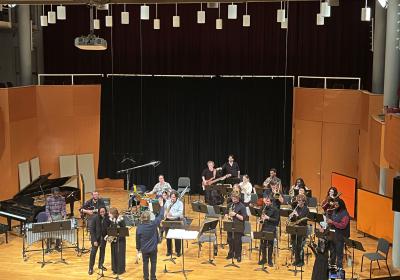
The Cleveland State University BIG Band opened its first concert season Oct. 5 with a performance at Drinko Recital Hall, featuring student musicians and a variety of jazz styles ranging from swing to soul to mambo and New Orleans jazz.
Women’s soccer shuts out Detroit Mercy 1-0
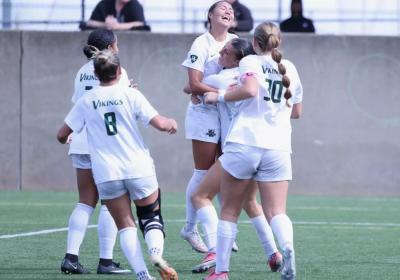
Cleveland State women’s soccer defeated Detroit Mercy 1-0 on Saturday, earning its third Horizon League win of the season.
CSU announces free tuition plan for eligible Ohio students
 Cleveland State University on Friday unveiled the Cleveland State Commitment, a new program that will cover tuition for eligible Ohio students beginning in fall 2027.
CSU men's club hockey win home opener 13-7
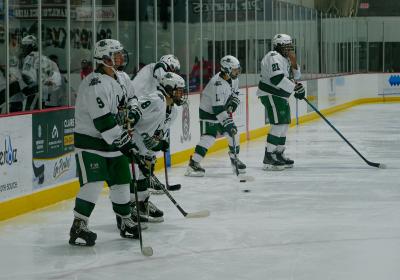 The CSU Vikings men’s club hockey team on Saturday won its home opener against the Robert Morris Colonials.

CSU PRSSA dine-to-donate fundraiser at The Fruit Stand
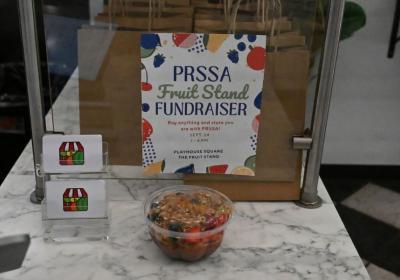
By KARINA TORRES – posted October 7, 2026
CSU PRSSA hosted a one-day fundraiser at The Fruit Stand to raise money for PRSSA's future events.
CSU students showcase undergraduate research
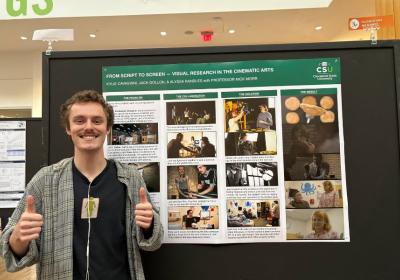 The poster session highlighted the range of research and work students are doing across the university, from work on film sets to a focus on Cleveland's history.
Six runners finish with a season best at the Joe Piane Invite
 The Vikings had a good outing at the event in South Bend, Indiana, with six athletes running season best times.
Get to know the CSU Esports team
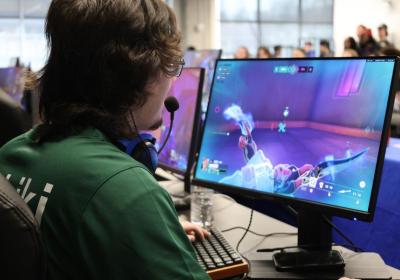 A behind-the-scenes look at who’s on the CSU Esports team. They share their experiences on the team and their hopes for its future.
Learn about the markets at the Viking Trading Lab
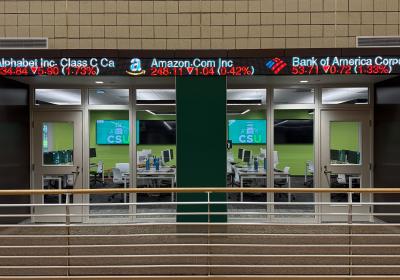 New to Cleveland State this semester is the Viking Trading Lab, a classroom with computers running the latest electronic trading and financial software. It's open to all CSU students who want to learn about markets and how to navigate them.
Is Carson Hocevar too aggressive for his own good?
 Carson Hocevar celebrates after his first career win, at Talladega Superspeedway on April 26, 2026.
XCSB holds flea market fundraiser
 XCSB, Cleveland’s new alternative media station and successor to CSU's shuttered WCSB hosted a flea market fundraiser at the Beachland Ballroom and Tavern to raise money so the station can continue to serve the community.
More than a major: Finding your voice in communications
 For students studying journalism, public relations and communications, there is more than one way to find their voice and build a career.
EXPLAINER: Why Flock cameras are getting creepy
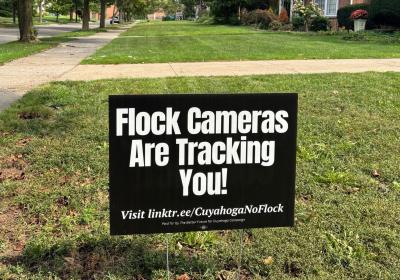 Mounted on poles across cities and suburbs, Flock cameras collect license plate information and vehicle characteristics sparking an ongoing debate over privacy and surveillance.
Men’s tennis falls short at the Horizon League Individual Championships
 Members of Cleveland State men’s tennis advanced to the semifinals and finals, but missed out on the win.
CSU Volleyball falls to Purdue Fort Wayne to open 2026 Horizon League play
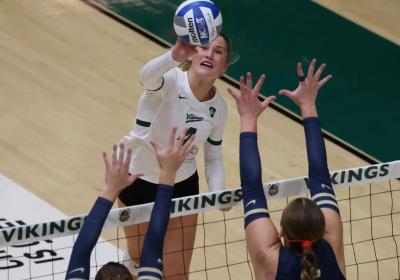 Cleveland State finished the Horizon League Play Opener 0-2 this past weekend, losing both its matches on the road to Purdue Fort Wayne.
CSU’s new meal-swipe system changes how students eat on campus
 The university says the $5 cash-equivalency system offers more flexibility, but some students say they are using retail dining less as a result of its implementation.
The Jagged Little Pill, a musical for all who live and learn
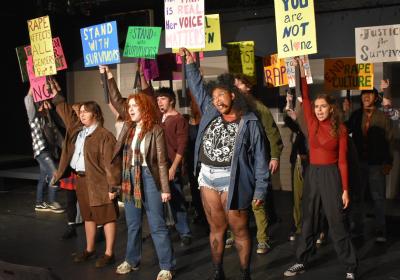 Alanais Morissette's Broadway musical made its regional debut at the Broadview Heights Spotlights community theater on Sept. 18, 2026, playing to a sold-out audience.
Women's tennis opens fall 2026 at the Betsy Kuhle Invite
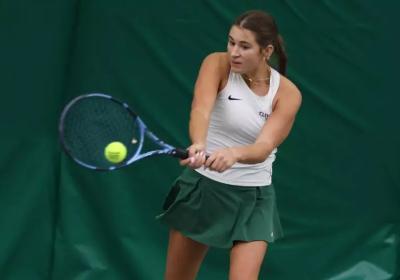 Cleveland State women's tennis began their season at the Betsy Kuhle Invite with two days of solid performances from the team.
Women’s Soccer opens league play with a win against Oakland
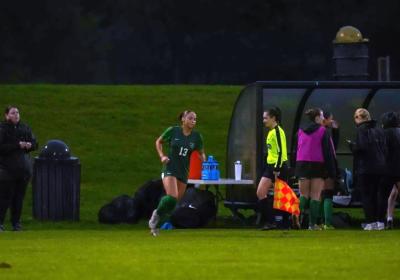 Sophomore Ryleigh Alcala was named the Under Armour #HLWSOC Offensive Player of the Week after scoring both goals in CSU's 2-0 victory over the Golden Grizzlies.
CSU students spend 80 minutes going around the world
By KARINA TORRES - September 24, 2026
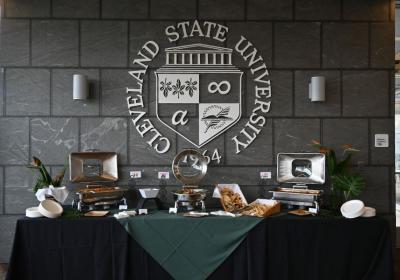
The Center for Campus Engagement hosted the cultural event for students to attend and try food from various countries while enjoying live music.
CSU reopens Student Center, Berkman Hall following water break
By ALEXANDER GIAMPIETRO - posted September 25, 2026
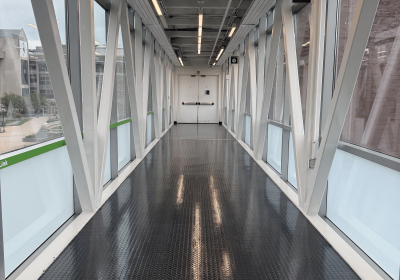
Cleveland State University on Wednesday reopened the Student Center, the hub of campus life, after a Cleveland City main water break on Monday caused flooding on part of campus Monday, and forced the closure of the SC and Berkman Hall Tuesday.
The life of a CSU ball shagger
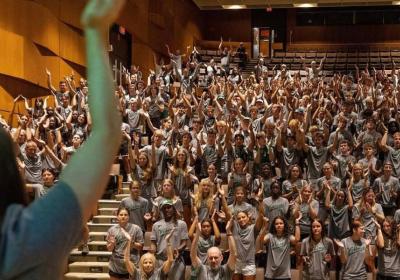 Two Cleveland State student-athletes share what it’s like to work the sidelines, chase down balls and get a different view of CSU athletics.
Guardians fans react to the 2026 season and look ahead to the postseason
 Guardians fans talk about how key additions to the lineup can help the team make a run in the postseason.
Flock cameras remain in Cleveland and near campus despite community pushback
 Across the city of Cleveland, Flock cameras are watching intersections. However, the Cleveland City Council is reconsidering the program following pressure on social media and from the community.
CSU and regional partners host 3rd annual College Fest
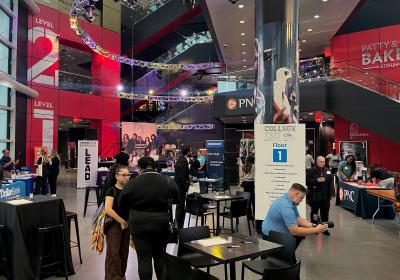
More than 900 students from 30 different regional institutions networked with around 80 employers at the 3rd annual College Fest, held at the Rock and Roll Hall of Fame, Sept. 9, 2026.
CSU men’s soccer shuts out Detroit Mercy 2-0
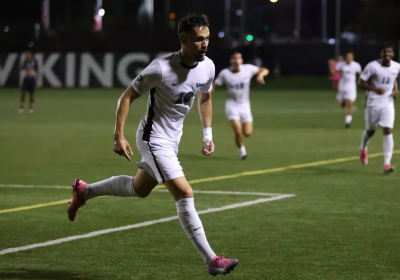 Djorde Petrovic (10) scored both goals in the home game Saturday, Cleveland State's first Horizon League win of the year and second clean sheet of the season.
For the love of fashion: with Aimon Ali
 Fashion Talks Foundation founder Aimon Ali joined The Stater Scoop to discuss the inner workings of the fashion industry with host Alexis Stradford.
Browns fans sound off on Deshaun Watson at quarterback
 Fans are not happy with the decision of Browns management to name the controversial Watson to the starting position.
Faculty Senate discusses key issues for the fall semester
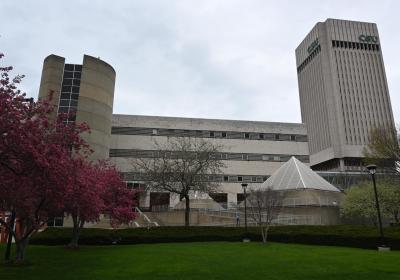 Better cross-campus communication was a key theme at the first Senate meeting of the year for the fall 2026 semester.
The president's interview, spring 2026
 CSU President Laura Bloomberg, Ph.D., addressed the cost of balancing Cleveland State's budget, ongoing litigation with WCSB, housing concerns and AI implementation at the school in an interview with The Stater at the end of the spring 2026 semester.

Cleveland State cross country opens 2026 Season
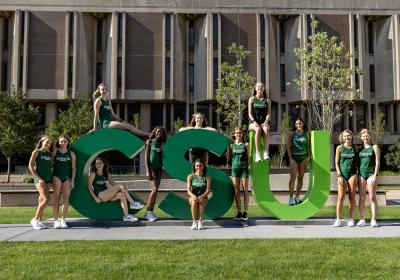 The Vikings kicked off the season with a sixth-place team finish, out of 15 colleges competing and 123 athletes.