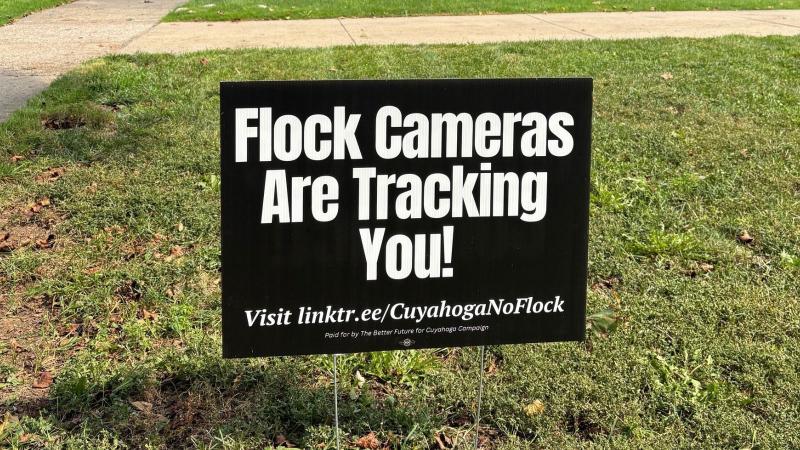
EXPLAINER: Why Flock cameras are getting creepy
In the past week, a Flock camera likely photographed your car. Most people have walked by or driven past them without even knowing. Mounted on poles near roads and intersections, the cameras are easy to overlook.
Many people may not realize these devices do much more than scan your license plates. They can collect detailed information about vehicles, store data which can be linked to drivers and help create searchable records of vehicle movements, which can be linked to people.
While Flock cameras are often promoted as a tool for fighting crime, their spread across the U.S. is raising serious concerns about privacy, government overreach and how much information should be collected on people, most of whom have done nothing to warrant any kind of surveillance.
[Editor's note: to learn more about Flock in your community, go to DeFlock.]
What Flock was supposed to be
The original pitch behind Flock cameras was relatively straightforward. A camera would capture a license plate, compare it to a database and alert law enforcement if the vehicle was stolen or connected to a crime. Most people agree that recovering stolen vehicles and helping solve crimes are worthwhile goals. If that were the extent of the technology, the debate surrounding Flock would be much simpler.
But Flock has evolved beyond basic license plate recognition. According to the ACLU, company materials and reporting on the technology, the system now creates what Flock calls a “vehicle fingerprint,” collecting information such as a vehicle’s make, model, color and any distinguishing characteristics. Some systems can even identify vehicles through decals and bumper stickers.
Why this should concern you
That expansion should concern anyone who values personal privacy. Think about what a vehicle can say about the person who is driving it. A bumper sticker can display a political belief, and a decal can show support for a cause, organization or religion. A vehicle can have a unique feature that makes it recognizable even when the license plate is not visible.
Flock’s technology can turn those details into searchable data.
The American Civil Liberties Union warned that Flock’s ability to identify unique vehicle characteristics could allow law enforcement to search for vehicles displaying specific political messaging. In other words, a person could potentially become searchable not because their car was reported stolen or because they were suspected of committing a crime. Still, because of something they chose to display on their vehicle.
That raises a First Amendment question.
The First Amendment protects freedom of speech and expression, including political expression. A bumper sticker on the back of a car may seem insignificant. Still, when a surveillance system can identify and search for that message across thousands of vehicles, it becomes something much different.
Your car is no longer just transportation; it can become a collection of identifying information that somebody can search.
The concern becomes even greater when those individual observations are collected over time. A camera does not just see a vehicle once. Across a network of cameras, it can potentially record where that vehicle appears, when it appears and what other vehicles repeatedly appear alongside it.
What began as a tool to find stolen cars can become a system capable of documenting the movements of people who have never been accused of a crime.
From one photograph to a pattern
This is where Flock becomes different from a traditional security camera. One camera capturing one car is one piece of information. A network of cameras capturing that same car repeatedly creates a pattern. Flock says its system is designed to help law enforcement search for vehicles and investigate crimes. The company says its cameras now record about 20 billion plate scans each month and that its network has helped officers investigate about 1 million crimes each year. Flock says it has more than 120,000 cameras installed across the United States.
That scale matters.
If a vehicle is captured at one intersection in the morning and another location later that day, those photographs can become part of a larger record of where the vehicle was seen.
The technology does not have to know your name to create a record of your movements. It can start with a license plate and build from there. That is one reason privacy advocates have linked automated license readers to a much broader template for surveillance.
A nationwide network
Flock’s cameras don’t operate as isolated devices.
The company’s business model connects cameras used by different law enforcement agencies and other customers into a broader network. The ACLU has described this as a nationwide surveillance system because information collected by one camera can become searchable through the larger network.
That raises another question: Who gets access to the information?
In 2025, 404 Media reported that federal agencies including Immigration and Customs Enforcement, the Secret Service and the Navy’s criminal investigative division had access to portions of Flock’s nationwide network. The reporting was based in part on a letter from Sen. Ron Wyden that detailed federal access.
But the issue is not simply whether a police department owns a camera; it is who can search the information collected by that camera, what they can search for and how long that information remains available.
The Fourth Amendment
The debate over Flock also connects to a much older question in American law. How much information can the government collect about people without violating the Fourth Amendment, which protects people from unreasonable searches and seizures by the government?
The Supreme Court has addressed different versions of this question as technology has changed.
In United States v. Miller (1976), the Supreme Court considered whether a person could claim Fourth Amendment protection over bank records held by a bank. The case became an important part of what is now known as the third-party doctrine. SCOTUS decided that you have no right to privacy under the Fourth Amendment for information or records you voluntarily gave to a third party, like a bank or phone company.
Three years later, in Smith v. Maryland, the Court considered telephone numbers recorded by a pen register. The Court again applied the idea that information voluntarily conveyed to a third party could receive less Fourth Amendment protection.
While the politicians, lawyers and jurists continue to argue, the technology continues to change and evolve.
In United States v. Jones (2012), police attached a GPS tracking device to a vehicle and monitored its movement for 28 days. The Supreme Court ruled that the government's physical attachment of the device constituted a search. Several justices also raised concerns about the government's ability to conduct long-term monitoring of a person's movements.
Then came Carpenter v. United States in 2018.
The case involved historical cell-site location information that allowed the government to reconstruct a person’s movements over time. The Supreme Court held that obtaining seven days of that information from a wireless carrier was a violation of what was permitted under the Fourth Amendment. The Court emphasized that people do not automatically lose all Fourth Amendment protection simply because a third party holds the information.
Where does Flock fit into this?
Flock data is not identical to cell-site location information and Carpenter did not specifically decide whether automated license plate reader records require a warrant.
But the case shows how the Supreme Court has had to reconsider older privacy rules as technology makes it easier and cheaper to track people.
The question surrounding Flock is similar: at what point does collecting individual pieces of information create a detailed picture of someone's life?
So, who is watching you?
Another legal issue also hides beneath the technology.
Flock is a private company. Police departments are government agencies.
This distinction matters because constitutional protections like the Fourth Amendment generally restrict government action. A private company is not automatically treated the same way as the government simply because it provides technology to police.
But the relationship between private surveillance companies and government agencies raises questions about where to draw that line.
Flock’s system is built specifically for law enforcement investigations, and the company says it works with thousands of law enforcement agencies. Its technology can turn camera-collected information into searchable records for police officers.
That creates a difficult question for courts and lawmakers. When a private company builds and operates surveillance infrastructure primarily for government use, how should constitutional protections apply to the information being collected?
That question becomes even more important as surveillance companies expand what their technology can identify and how they can connect different databases .
What happens when the operators are the problem?
Even if a surveillance system is created for legitimate purposes, another problem remains: the people using it.
A Washington Post investigation published in August 2026 found dozens of cases in which law enforcement officers were accused, charged or convicted of misusing license plate reader systems to track people for personal reasons. The cases included officers searching for information about ex-partners or romantic interests.
In one case examined by the Post, a former Georgia deputy was charged with stalking a woman using a network of license plate readers. The report raised a broader question about how many ordinary people may have been tracked without knowing it.
These cases show why access controls and auditing matter.
If a system can reveal where someone’s car has been, it must also show who searched for that information and why.
The problem isn’t only the bad officer
The Washington Post reported that some departments had not been regularly auditing searches of license plate reader systems. Flock responded in August 2026 by announcing changes that require officers to connect searches to criminal case numbers and automatically review searches for what the company calls “abnormal activity.”
Flock also announced that it would reduce its standard retention period for license plate data from 30 days to seven days. Agencies can still keep information longer under certain circumstances, including preserving evidence connected to a case.
Those changes show that the company itself recognizes the need for additional oversight.
But they also raise another question: Why weren’t those safeguards mandatory in the first place?
The cameras can be wrong, too
There is also a basic problem with relying on automated technology: It can make mistakes.
The ACLU cites testing that found Flock’s cameras misidentified a license plate’s state about 1 out of every 10 times.
A wrong state identification might sound minor, but when the information is being used to locate a vehicle, connect it to an investigation or build a record of where it has been, an incorrect identification definitely matters.
A camera does not understand context. It just captures an image and an algorithm interprets what it sees.
That means we need to worry not only about what the system can find, but also whether what it finds is accurate.
Flock’s crime-fighting claims
Flock’s central argument is that the technology helps police solve crimes.
The company says its network has helped officers investigate roughly 1 million crimes annually.
But evaluating those claims requires looking at individual cases and independent evidence, not simply accepting a company’s statistics.
For example, Flock has promoted results from San Marino, California, where the company said burglaries dropped by 80% after installing the cameras. Journalist Cyrus Farivar later examined the city’s crime data and found that burglaries had actually increased during the period he analyzed.
The disagreement does not prove that Flock cameras never help solve crimes, but it does show why claims about effectiveness should be independently examined rather than treated as proof on their own.
When the surveillance system itself was exposed
Another concern has nothing to do with police misuse.
What happens if someone else gains access?
In December 2025, 404 Media reported that at least 60 Flock Condor cameras had been left exposed to the open internet without a password or login. Reporters were able to watch live footage, access archived video and view administrative controls on exposed cameras.
The reporting showed just how much information a surveillance camera can capture.
In one demonstration, a reporter stood underneath a camera while watching himself on the livestream. The camera's resolution was detailed enough to see what he was doing on his phone.
Flock cameras are designed to collect information about vehicles, right?
But newer systems show that the technology is moving beyond simply reading plates.
That makes security just as important as privacy.
If a system can collect detailed information about people and vehicles, protecting that information becomes part of protecting the people being recorded.
A different way is possible
Not every state treats license plate data the same way.
Some states have restricted what information can be collected and how long it can be retained. New Hampshire, for example, has adopted restrictions designed to limit the retention and transmission of certain non-hit license plate information.
Here in Ohio, the state government’s current position i “use with safeguards,” not ban the cameras. In a statement issued Sept. 16, Attorney General Andy Wilson defended Flock as a valuable police tool, while acknowledging documented cases of misuse, prompting a call for the state legislature to make misuse a felony.
Policies like these are alternatives to collecting everything and deciding later what might be useful, which is how the use of Flock seems to have evolved .
The debate doesn’t have to be framed as surveillance vs. no surveillance.
It can also be about limits.
How long should information be stored?
Who can search it?
What justifications should be required?
Can agencies share it with other agencies?
New Hampshire, for example, has adopted restrictions designed to limit the retention and transmission of certain non-hit license plate information. The people of Ohio are waiting to see how the state legislature reacts to Wilson's proposal.
Flock Is changing its rules
In August 2026, Flock announced several changes following reporting about law enforcement misuse. Searches will now be tied to criminal case numbers, automated systems will look for unusual search behavior and the standard retention period will drop from 30 days to seven.
The company has also said agencies will have more control over how they share their data .
Flock says these changes are part of the company’s effort to improve accountability.
Civil liberties groups have responded differently. The ACLU has argued that the changes do not resolve broader concerns about the scale of the surveillance network and how the technology can be used.
That disagreement gets to the heart of the issue. The technology is not going away just because people are concerned about it.
We need to address what rules should exist around it.
The question we have to ask
A Flock camera may look like a small gray box attached to a pole.
But the picture it takes can become much more than a picture.
It can become a record of a vehicle's appearance, a time and location, a possible connection to other vehicles, and, depending on the technology and system settings, information that can be searched later.
The technology can help police investigate crimes.
But it can also collect information about people who have never been accused of one.
That is the part that deserves attention.
At the center of the debate is a simple question. How much information should be collected about ordinary people, who gets access to it and what limits should exist once that information is stored?
Because once a record exists, someone has to decide who gets to look at it.
And that decision should not be made after the surveillance has already happened.
Recent News
Midterms: What Cleveland residents want candidates to address
From rising rent and grocery prices to health care costs and public transportation, affordability remains a major concern for people trying to make ends meet.
Walking for awareness of breast cancer
Miles are usually measured in sweat, but at Cleveland State University on Oct. 15 they were measured with purpose and a path towards healing.
“Best of” The Cleveland Stater fall 2026 #1
 In this edition of “Best of” The Cleveland Stater, we examine Flock cameras, CSU’s new meal-swipe system, the opening of the Glick Recovery Campus, CSU’s Around the World in 80 Minutes event, and the main water break that temporarily affected some campus operations.
Midterms: The policies and controversy of the Ohio governor's race
 Having last minute voter anxiety? Read up on the candidates running for governor of Ohio, Democrat Amy Acton and Republican Vikek Ramaswamy.
Midterms: Does spending more money lead to more votes?

Political advertisements have become increasingly difficult to avoid as the Nov. 3 midterm election approaches.
Midterms podcast: Cleveland Stater editors discuss the issues ahead of Tuesday's election
 Cleveland Stater editors discuss the upcoming midterms, including the race for Ohio governor, which pits Amy Acton (D) against Vivek Ramaswamy (R), and the race for the U.S. Senate, in which Sherrod Brown (D) is competing with Jon Husted (R).
Midterms: CSU student hosts The Ballot, A fight for education
 Ahead of next week's midterms, Alissa Burkholder, an Aspiring Educator, moderated The Ballot: A fight for education, featuring five speakers who discussed current issues education in Ohio is facing and how Tuesday's election could affect them.
Midterms opinion: Campaign ads suggest some people aren't fit for office
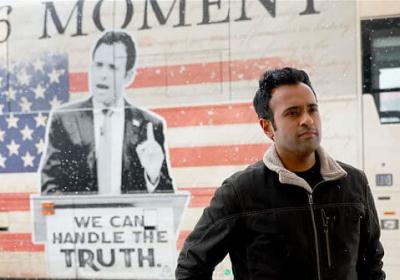 Vivek Ramaswamy's attack ad. featuring his opponent's estranged mother shows that no low is too low for some people. The ad tells us a lot more about the person behind the ad than Amy Acton, target of the attack.
Midterms: Meet the candidates for federal and Ohio state office
Ohio voters are heading to the polls on Nov. 3 to elect candidates in the 2026 midterm elections. Major races include the U.S. Senate and governor.
Beyond the Plate: With Chef Douglas Katz

On this episode of The Stater Scoop, host Alexis Stradford, sits down with James Beard Award outstanding restaurateur semifinalist Chef Douglas Katz. The conversation that followed was an intimate look into his culinary journey.
CSU hosts wellness walk to promote student-athlete mental health
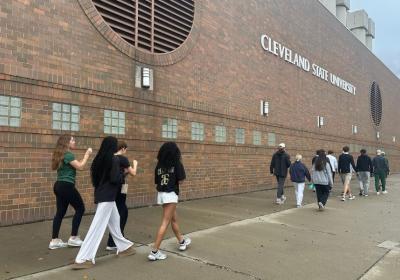 Student-athletes from all sports gathered for the event, which focused on reducing stigma and encouraging athletes to seek support.
Ten Kings of Hell: The Afterlife in Medieval Korea
 The Cleveland Museum of Art partners with the National Museum of Korea to showcase “Ten Kings of Hell: The Afterlife in Medieval Korea”
Women's soccer holds off Green Bay, drops home closer to Milwaukee
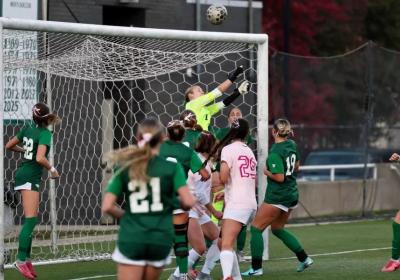 Goalkeeper Senior Hayleigh Lewis made a penalty kick save and a diving save during the Vikings' game against Green Bay.
Delventhal records 1,000 career digs in CSU's 3-1 loss to Oakland
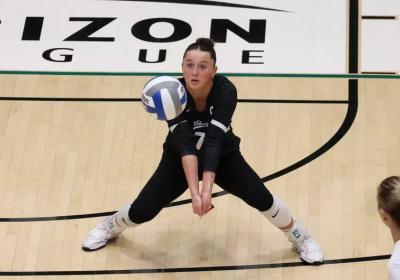 As a team, the Vikings combined for 11 blocks, including six from Julia Jozefov and five each from Sariyah Glanton and Sophie Butler.
Cavs fans look ahead to the 2026-27 season
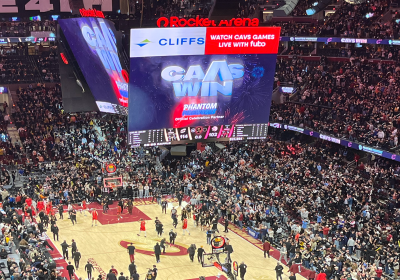 Fans of the hometown Cleveland Cavaliers talk offseason moves and expectations for the upcoming season.
Symphony at Sunset plays an encore to its summer season
 The Symphony at Sunset concluded its summer series of concerts with an Autumn Encore, much to the delight of fans.
CSU men’s swimming and diving takes third at Zips Classic

Cleveland State University men’s swimming and diving team claimed third place at the Zips Classic in Akron, Ohio, after two days of competitive performances in the pool and on the diving board Oct. 16-17.
CSU women’s swimming and diving finishes 4th at the Zips Classic

Cleveland State University women's swimming and diving finished fourth of five teams competing at the two-day Zips Classic, hosted by the University of Akron, Friday and Saturday.
CSU volleyball drops two matches at Milwaukee
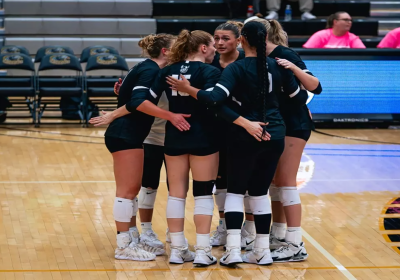 Volleyball struggled in its weekend series against Milwaukee, losing in straight sets on Friday, and dropping a five-set thriller on Saturday.
At IngenuityFest, ‘America Dreams’ through art, technology and imagination
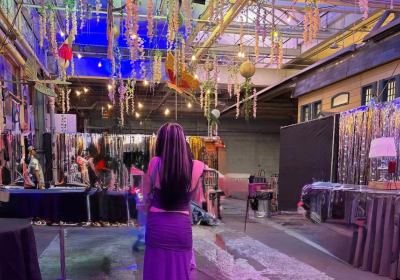
What does America dream about?
At IngenuityFest, the answer wasn’t exactly straightforward.
CSU honors Constitution Day with visit by former Ohio AG
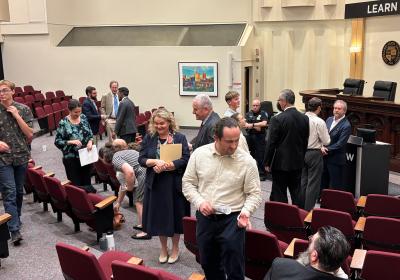 Former Ohio Attorney General Dave Yost spoke to students about the Supreme Court's shifting position on the separation of church and state.
Midterms: Senate candidate Greg Levy addresses CSU students
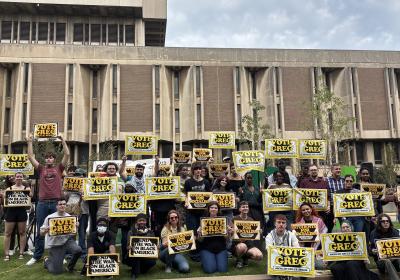 Ahead of the Nov. 3 midterms, Ohio senate candidate Greg Levy spoke to CSU students about the possibility of real change for the good of the community.
$10 million Ahuja family and foundation gift will transform business education at CSU
 The gift will transform how CSU prepares tomorrow’s business leaders, and Cleveland State will rename the business college the “Ahuja College of Business and Entrepreneurship" to honor the family.
People of CSU - Madison Luthy finds her stride in science and sport
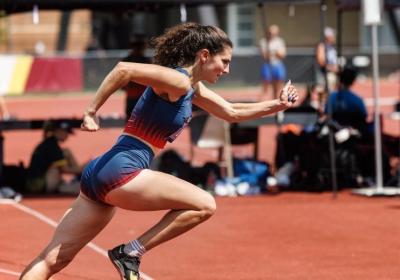 The Cleveland State doctoral student balances biomedical engineering research with competing in the women's decathlon, returning to a sport she once thought she had left behind.
CSU’S BIG Band opens semester with jazz concert
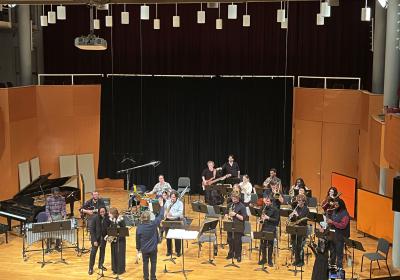
The Cleveland State University BIG Band opened its first concert season Oct. 5 with a performance at Drinko Recital Hall, featuring student musicians and a variety of jazz styles ranging from swing to soul to mambo and New Orleans jazz.
Women’s soccer shuts out Detroit Mercy 1-0
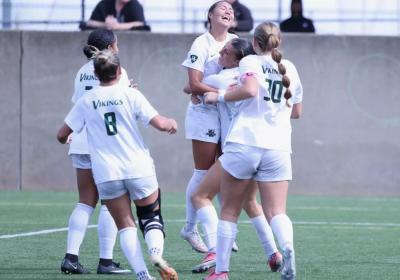
Cleveland State women’s soccer defeated Detroit Mercy 1-0 on Saturday, earning its third Horizon League win of the season.
CSU announces free tuition plan for eligible Ohio students
 Cleveland State University on Friday unveiled the Cleveland State Commitment, a new program that will cover tuition for eligible Ohio students beginning in fall 2027.
CSU men's club hockey win home opener 13-7
 The CSU Vikings men’s club hockey team on Saturday won its home opener against the Robert Morris Colonials.

CSU PRSSA dine-to-donate fundraiser at The Fruit Stand

By KARINA TORRES – posted October 7, 2026
CSU PRSSA hosted a one-day fundraiser at The Fruit Stand to raise money for PRSSA's future events.
CSU students showcase undergraduate research
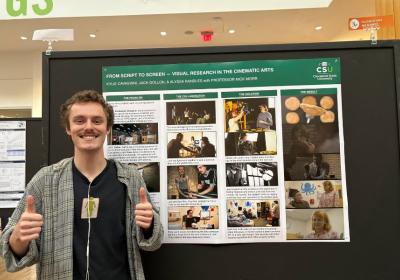 The poster session highlighted the range of research and work students are doing across the university, from work on film sets to a focus on Cleveland's history.
Six runners finish with a season best at the Joe Piane Invite
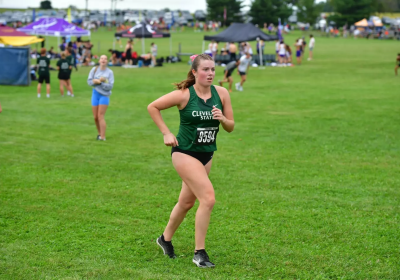 The Vikings had a good outing at the event in South Bend, Indiana, with six athletes running season best times.
Get to know the CSU Esports team
 A behind-the-scenes look at who’s on the CSU Esports team. They share their experiences on the team and their hopes for its future.
Learn about the markets at the Viking Trading Lab
 New to Cleveland State this semester is the Viking Trading Lab, a classroom with computers running the latest electronic trading and financial software. It's open to all CSU students who want to learn about markets and how to navigate them.
Is Carson Hocevar too aggressive for his own good?
 Carson Hocevar celebrates after his first career win, at Talladega Superspeedway on April 26, 2026.
XCSB holds flea market fundraiser
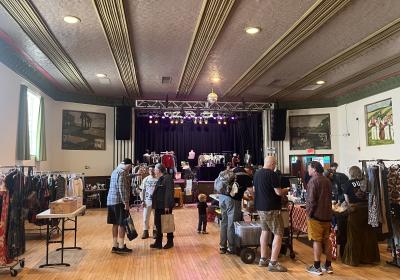 XCSB, Cleveland’s new alternative media station and successor to CSU's shuttered WCSB hosted a flea market fundraiser at the Beachland Ballroom and Tavern to raise money so the station can continue to serve the community.
More than a major: Finding your voice in communications
 For students studying journalism, public relations and communications, there is more than one way to find their voice and build a career.
EXPLAINER: Why Flock cameras are getting creepy
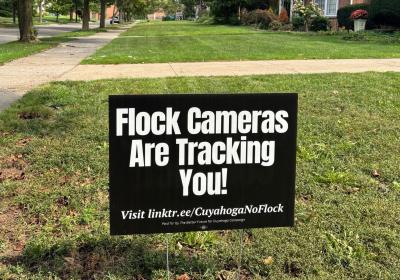 Mounted on poles across cities and suburbs, Flock cameras collect license plate information and vehicle characteristics sparking an ongoing debate over privacy and surveillance.
Men’s tennis falls short at the Horizon League Individual Championships
 Members of Cleveland State men’s tennis advanced to the semifinals and finals, but missed out on the win.
CSU Volleyball falls to Purdue Fort Wayne to open 2026 Horizon League play
 Cleveland State finished the Horizon League Play Opener 0-2 this past weekend, losing both its matches on the road to Purdue Fort Wayne.
CSU’s new meal-swipe system changes how students eat on campus
 The university says the $5 cash-equivalency system offers more flexibility, but some students say they are using retail dining less as a result of its implementation.
The Jagged Little Pill, a musical for all who live and learn
 Alanais Morissette's Broadway musical made its regional debut at the Broadview Heights Spotlights community theater on Sept. 18, 2026, playing to a sold-out audience.
Women's tennis opens fall 2026 at the Betsy Kuhle Invite
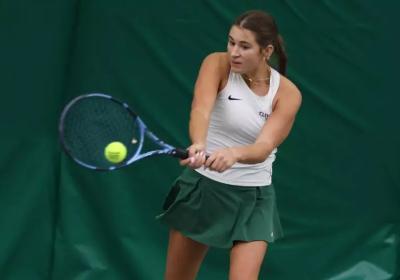 Cleveland State women's tennis began their season at the Betsy Kuhle Invite with two days of solid performances from the team.
Women’s Soccer opens league play with a win against Oakland
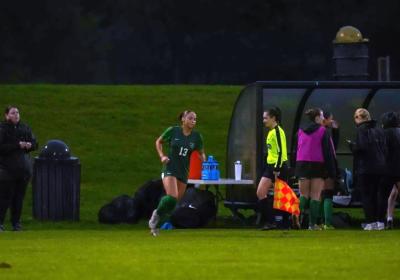 Sophomore Ryleigh Alcala was named the Under Armour #HLWSOC Offensive Player of the Week after scoring both goals in CSU's 2-0 victory over the Golden Grizzlies.
CSU students spend 80 minutes going around the world

By KARINA TORRES - September 24, 2026
The Center for Campus Engagement hosted the cultural event for students to attend and try food from various countries while enjoying live music.
CSU reopens Student Center, Berkman Hall following water break

By ALEXANDER GIAMPIETRO - posted September 25, 2026
Cleveland State University on Wednesday reopened the Student Center, the hub of campus life, after a Cleveland City main water break on Monday caused flooding on part of campus Monday, and forced the closure of the SC and Berkman Hall Tuesday.
The life of a CSU ball shagger
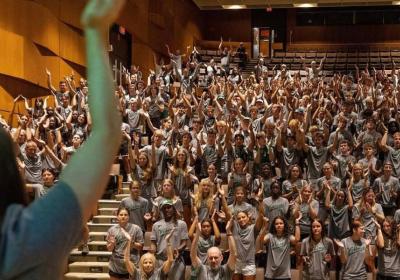 Two Cleveland State student-athletes share what it’s like to work the sidelines, chase down balls and get a different view of CSU athletics.
Guardians fans react to the 2026 season and look ahead to the postseason
 Guardians fans talk about how key additions to the lineup can help the team make a run in the postseason.
Flock cameras remain in Cleveland and near campus despite community pushback
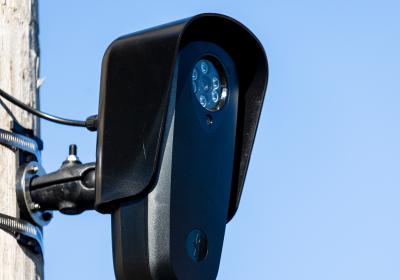 Across the city of Cleveland, Flock cameras are watching intersections. However, the Cleveland City Council is reconsidering the program following pressure on social media and from the community.
CSU and regional partners host 3rd annual College Fest
More than 900 students from 30 different regional institutions networked with around 80 employers at the 3rd annual College Fest, held at the Rock and Roll Hall of Fame, Sept. 9, 2026.
CSU men’s soccer shuts out Detroit Mercy 2-0
 Djorde Petrovic (10) scored both goals in the home game Saturday, Cleveland State's first Horizon League win of the year and second clean sheet of the season.
For the love of fashion: with Aimon Ali
 Fashion Talks Foundation founder Aimon Ali joined The Stater Scoop to discuss the inner workings of the fashion industry with host Alexis Stradford.
Browns fans sound off on Deshaun Watson at quarterback
 Fans are not happy with the decision of Browns management to name the controversial Watson to the starting position.
Faculty Senate discusses key issues for the fall semester
 Better cross-campus communication was a key theme at the first Senate meeting of the year for the fall 2026 semester.
The president's interview, spring 2026
 CSU President Laura Bloomberg, Ph.D., addressed the cost of balancing Cleveland State's budget, ongoing litigation with WCSB, housing concerns and AI implementation at the school in an interview with The Stater at the end of the spring 2026 semester.

Cleveland State cross country opens 2026 Season
 The Vikings kicked off the season with a sixth-place team finish, out of 15 colleges competing and 123 athletes.