Safety inside an urban university under scrutiny
To be a student at Cleveland State University is to live a constant contradiction – a campus embedded in a city, a somewhat porous walled city in its own right, but one governed in most cases by a plastic ID access card.
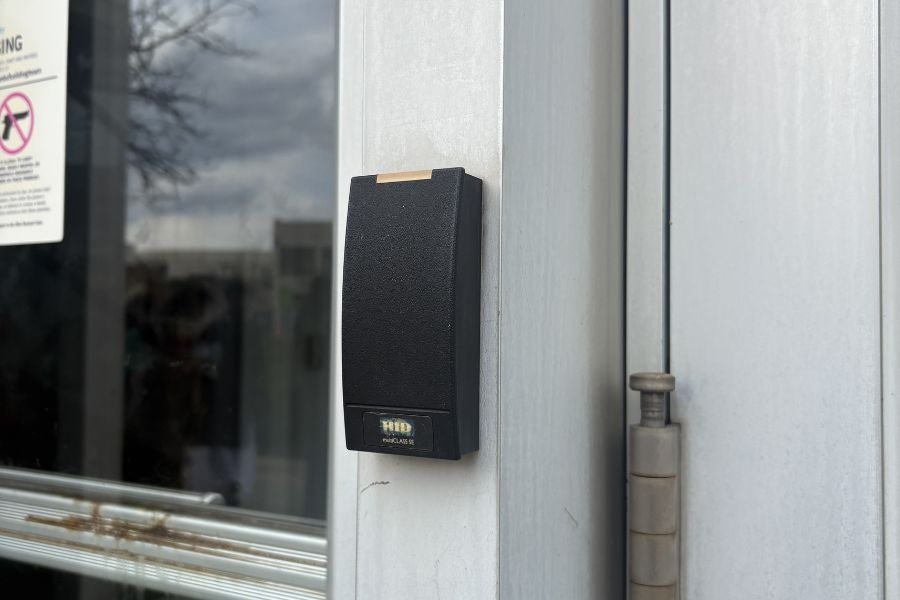
Entry to buildings like the Monte Ahuja College of Business, the Levin College of Urban Affairs and Music and Communication (except for concert venues) requires a Viking Card – a piece of plastic with a headshot that every student carries, granting the ability to enter and exit the buildings.
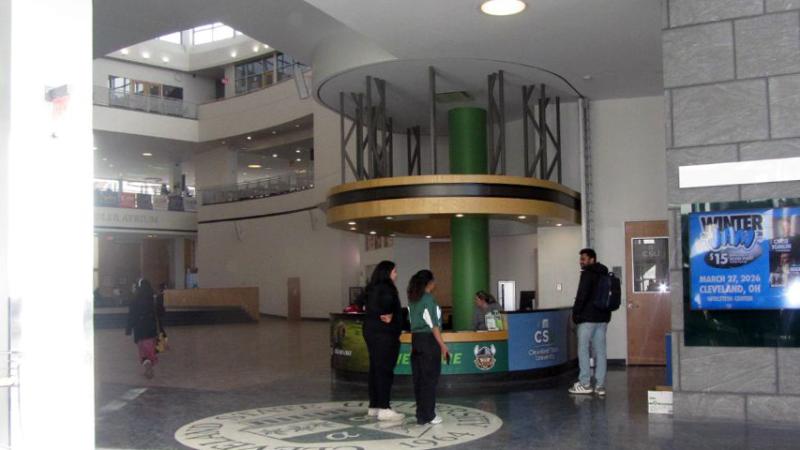
These spaces are controlled – quiet, secure and limited to students, faculty and staff. But just steps away, the Cleveland State Student Center operates differently.
Unlike most academic buildings, the Student Center is open to the public.
Those open doors reflect the reality of CSU as an urban university, but they also raise questions among students about safety, accessibility and what it means to share space with the broader Cleveland and beyond community. The CSU Police Department is the key to making this work.
“The Student Center is designed to be a welcoming space for students, staff, visitors and members of the community,” said Chief Beverly J. Pettrey, head of Cleveland State University Police.
Pettrey said the building’s accessibility does not mean it is without security. Instead, CSU relies on what she describes as a “layered” approach: campus police patrols, safety ambassadors, security cameras and coordination with building staff.
A CSU Police Department hub located on the first floor allows officers to respond quickly to incidents and also serves as a deterrent, Chief Pettrey said.
Still, the contrast between secured academic buildings and the open Student Center is noticeable.
Because it is one of the few large public-facing buildings downtown that does not require ID for entry, the space often attracts non-students, including the general public and members of Cleveland’s unhoused population. It is not uncommon to see individuals resting in the same areas where students study or eat between classes.
A warm space in the winter
Scott said he spent time in the Student Center intermittently throughout the cold winter months. He said he found the building by chance while traveling through Ohio from Sandusky. After getting a ride into downtown Cleveland, he said he tried the doors and found them unlocked, promising a warm place to escape the frigid weather.
“It’s just somewhere safe to be,” Scott said, adding that he comes and goes, primarily seeking warmth during colder days.
Pettrey said simply being present in a public building is not a violation of university policy.
“Public buildings can sometimes attract individuals who are seeking a warm or safe place to be,” she said. “However, our officers regularly check the building and address situations if someone is sleeping, creating a disruption or entering areas where they are not permitted.”
Scott said his experience inside the building has largely been uneventful. Occasionally, he encounters pushback from others or interactions with campus police, but he noted those situations are infrequent.
“As long as I’m not bothering anybody, it’s usually fine,” he said.
Scott said he is typically required to leave the building by 10 p.m., but returns when he needs shelter from the weather.
The university does not track every individual who enters the Student Center. Instead, campus safety relies on observation and response. If someone attempts to access restricted areas, such as classrooms or offices, police intervene.
“Our officers and building staff are trained to observe activity and address concerns quickly if something appears out of place,” Pettrey said, adding that students are encouraged to report suspicious behavior through campus police or the RAVE Guardian app.
Not just safety, but identity too
For many students, the issue is not just about safety, but about identity.
CSU’s compact campus is often seen as one of its strengths. Its downtown layout allows students to move easily between classes, coffee shops and study spaces, creating a close-knit feel uncommon for a commuter school.
But that same layout means the boundary between campus and city is nearly invisible.
At CSU, the sidewalk is the campus. Students move between secured buildings while also navigating the realities of the city.
The presence of the general community in the Student Center is a contentious topic. Some students view it as a safety concern or question whether their tuition should guarantee more restricted spaces. Others see it as an unavoidable – and even important – part of attending a public university in an urban environment.
Pettrey said CSU works to balance those competing expectations.
“Public universities are meant to be open, welcoming and accessible spaces,” she said. “At the same time, safety is always our top priority.”
Security presence in the Student Center increases during busy periods, evenings and events, according to Pettrey. Officers are typically able to respond to incidents within minutes due to their on-campus presence.The university also maintains emergency protocols, including coordination with city police, fire and EMS, as well as campus-wide alert systems.
“Universities across the country, including ours, regularly evaluate access control practices,” Pettrey said. “Any future changes would be based on safety needs and campus input.”
As CSU continues to assess its security policies, the Student Center remains a symbol of the university’s dual identity, a campus and a part of the city itself.
For students, that means navigating not just classrooms and coursework, but the realities of an urban environment, where the line between the CSU community and the public is blurred.
Recent News
Students for a Just Society launches at CSU
 The new student organization aims to build student-led organizing, foster political education, and connect Cleveland State students with regional activism efforts.
CSU PRSSA dine-to-donate fundraiser at The Fruit Stand
By KARINA TORRES – posted October 7, 2026
CSU PRSSA hosted a one-day fundraiser at The Fruit Stand to raise money for PRSSA's future events.
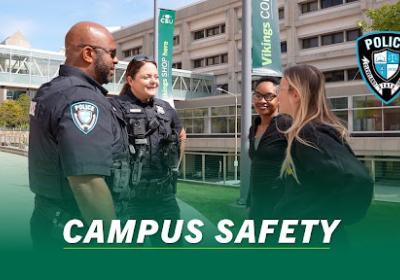
More than a major: Finding your voice in communications
 For students studying journalism, public relations and communications, there is more than one way to find their voice and build a career.
CSU and regional partners host 3rd annual College Fest
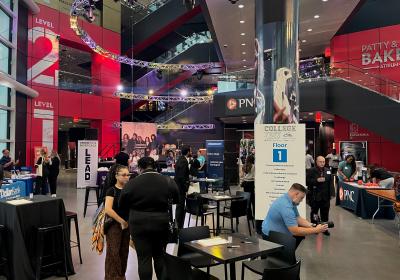
More than 900 students from 30 different regional institutions networked with around 80 employers at the 3rd annual College Fest, held at the Rock and Roll Hall of Fame, Sept. 9, 2026.

Rhode Tower library gets a facelift after flood
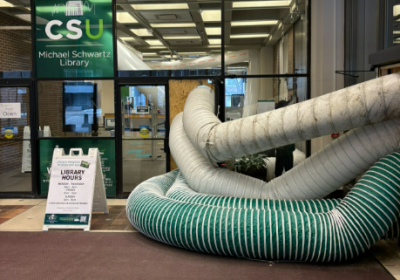 While access to the library remains temporarily restricted, multiple resources are still available to students as the semester winds down. The library thanks FAST and its own employees who worked so hard to restore the library to full functionality, which is expect by the start of the fall semester.
The Stater Scoop - Women's History Month

In this Women's History Month edition of The Stater Scoop, Cleveland Stater staff members Nicole, Kirsten and Morgan discussed how their identities as women have impacted their lives.
The Stater Scoop - Episode 1

We’re excited to announce a new podcast from The Cleveland Stater – The Stater Scoop! Each episode, we’ll welcome different guests from around campus to talk with members of our newsroom.
Cleveland’s best-kept cultural secret returns to the stage at CSU
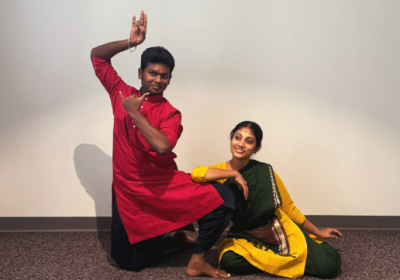 Cleveland State in April hosted for the 48th time the nation’s largest Carnatic music festival, one of the biggest gatherings of its kind in the world.
The Stater Scoop - FUBU: For us, by us

Built on the spirit of “For Us, By Us,” a phrase rooted in culture and legacy, this episode opens by honoring Queen Latifah’s powerful track 1993 anthem “U.N.I.T.Y.” Host Alexis Stradford welcomes reporters Aria Ruiz, Alonzo Anderson and Derek Williams to the podcast studio for a thoughtful conv
Don't miss the the student-run CSU Chamber Collective
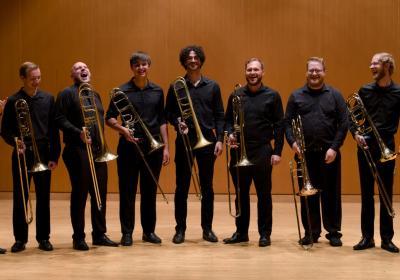 The concert March 6 in Drinko Recital Hall will showcase student initiative, creativity and collaboration across the School of Music.
CSU grad builds a brand and career in music marketing
 Alexis Figlar graduates from Cleveland State in 2023. Since then, she's turned internship connections, a self-made portfolio and a personal art business into a growing career in Cleveland’s music industry.
CSU graduate leads civic growth for Cleveland’s Latine community
 Cleveland State alumna Selina Pagan has transformed the volunteer-led Young Latino Network into a growing nonprofit while advancing civic engagement, cultural education and leadership opportunities for Latine residents.
Safety inside an urban university under scrutiny
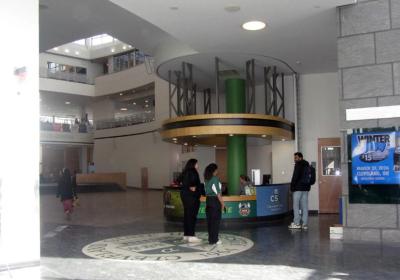 CSU’s open Student Center exposes contradictions between accessibility and security as students and the public share space on a downtown campus.
When the tennis gets petty, the petty turn pro

What do tennis players and their coaches make of the histrionics we see on court these days?
I’m graduating, now what?
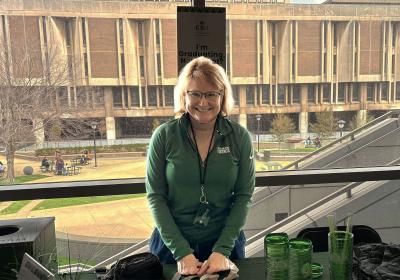
Cleveland State University students preparing to graduate gathered at the Student Center Innerlink April 14-16 for the "I'm Graduating, Now What?” event, hosted by Career Development and Exploration, to gain career guidance, resources and connections for life a
Kent State honors fashion icon, Fern Mallis shows what CSU could have

When fashion icon Fern Mallis is inducted into Kent State University’s School of Fashion Hall of Fame this May, students there won’t just be reading a
CSU students give the dining hall mixed reviews
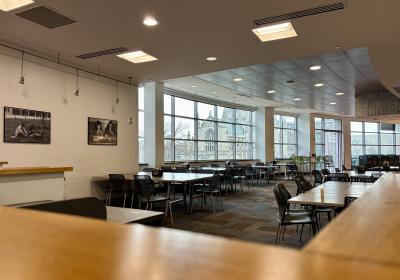 With the updates to the dining experience at Cleveland State over the past couple of years, especially the revamp of the dining hall, The Stater thought it was time for a restaurant review – and not everybody is happy.
CSU student films to show at this year’s CIFF
 Film and media arts students Elliot Lanzer and Malakee McGuire will see their student-produced works on the silver screen at this year's Cleveland International Film Festival, the 50th anniversary of the renowned regional showcase.
Cleveland Magazine staff share industry insights with CSU students
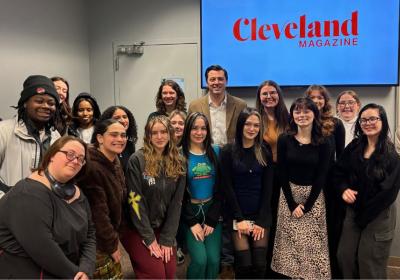
Cleveland State University students got an inside look at the evolving media landscape when staff members from Cleveland Magazine<
CSU hosts Special Olympics basketball event for local students
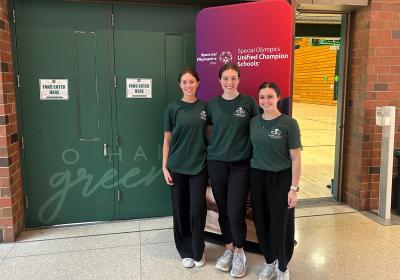 Volunteers and athletes connected through inclusive activities, building skills, confidence and community ahead of future events in Cleveland.
Rising student demand and the CSU Counseling Center
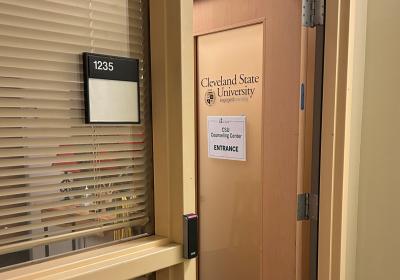 As mental health needs grow on campus, CSU officials outline how students are prioritized and connected to care.
CSU senior to host benefit show at Treelawn Social Club
 “This concert has become a way for all of us to come together for one night and carry on the music in their honor,” said Anna Skalicki, a senior CSU studio art major.
CSU graduate student’s research offers hope for blood disorder patients
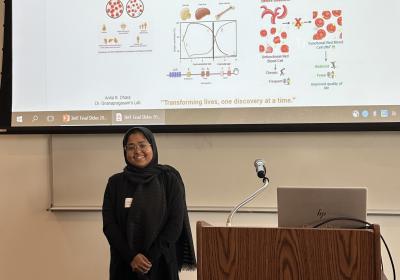 Ph.D. candidate Anita Dhara studies how molecules in red blood cells could help patients with sickle cell anemia and beta thalassemia breathe easier and reduce painful symptoms.
Commentary: Student rights and campus safety in the age of ICE
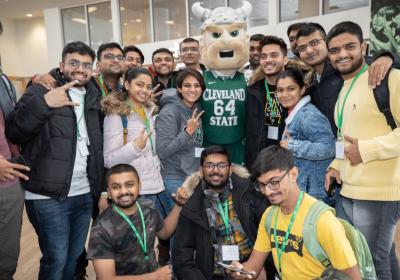 CSU students need clear information about their rights and safety as immigration enforcement in Ohio and nationwide raises concern, particularly for international and migrant students.
Building belonging: How one student athlete created a space for many
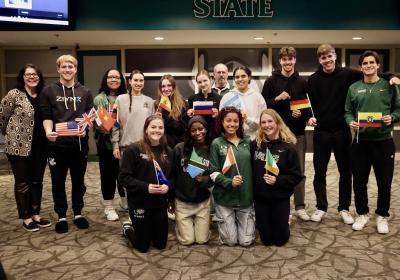 After navigating taxes, visas and internship barriers as an international student from Ireland, Ellie Mickibbin founded a dedicated support system to help future student-athletes adjust and succeed.
Greek letters signify Black excellence at CSU
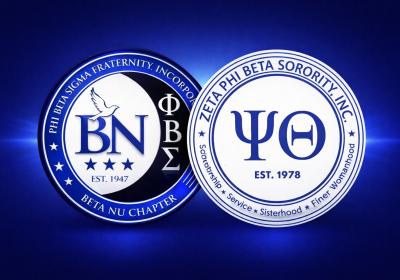 Sorority Zeta Phi Beta and fraternity Phi Beta Sigma are two organizations at Cleveland State which embody the achievements of Black students, highlighting the excellence that Black History Month honors every year.
Immigrant embraces the America that has embraced her
 Beloved Cleveland entertainer Bella Sin shares how living undocumented impacted their survival, self-identity, and quest for belonging in America. “Queer nightlife gave me a place to be fully myself, loved and accepted."