CSU graduate leads civic growth for Cleveland’s Latine community
Selina Pagan still laughs at the memories that defined her childhood, from family house parties on Cleveland’s East Side to songs her godfather would sing to her. But it was those early memories of family, community and culture that ultimately shaped the Cleveland State University graduate’s career path.
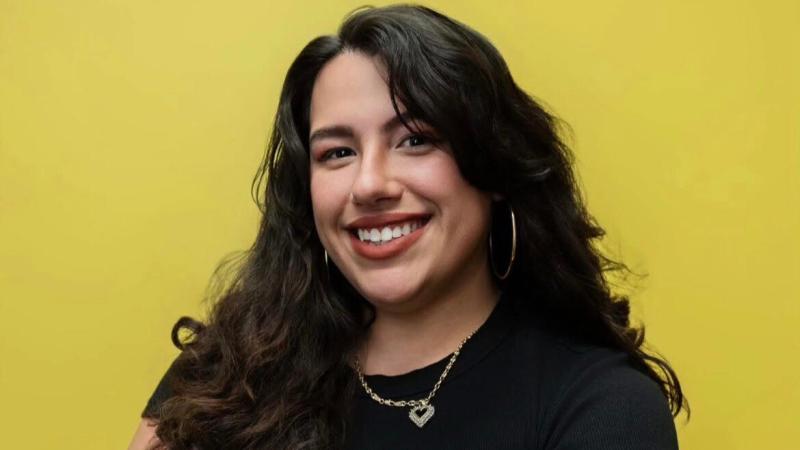
Pagan’s journey highlights her evolution from student to leader that is shaped by hands-on experience, risk-taking and a drive to create meaningful change. Today, Pagan, leads the Young Latino Network (YLN) as its first executive director.
Pagan’s development to nonprofit leadership began long before she enrolled at Cleveland State University.
Raised largely by her godparents, Pagan grew up deeply connected to her church community at La Sagrada Familia and to the neighborhoods around her. Whether cooking or singing together, Pagan discovered deep enjoyment in strengthening her connection to her Puerto Rican heritage.
“Till this day, my madrina will ask me if I want her to make me harina de maíz,” Pagan, 30, said.
Harina de maíz serves as a staple dish that reflects Puerto Rico’s agricultural heritage. It often involves communal cooking helping to foster social bonds while symbolizing unity and tradition.
After attending Cleveland Public Schools through eighth grade, Pagan enrolled at Saint Martin De Porres High School, where the school’s Corporate Work Study Program (CWSP) introduced her to professional environments at an early age.
Her first placement at a financial firm downtown was a culture shock.
“I didn’t know what a corporate environment looked like,” Pagan said. “I grew up in my dad’s jewelry store, so everything was different.”
Eventually, she transferred to a nonprofit placement with International Partners in Mission (IPM), an organization focused on international development and community partnerships. This experience proved to be transformative.
During her sophomore year of high school, Pagan traveled to El Salvador through the organization, learning about the country’s history and grassroots community projects.
“That’s when the bug kicked in,” she said. “I understood the impact of that work.”
In 2014, Pagan graduated from Saint Martin and enrolled at Cleveland State University. Like many first-generation college students, she entered without a clear academic direction.
While initially undecided, the courses within Cleveland State’s Levin College of Public Affairs and Education helped her discover a passion for urban studies and economic development. She later double majored in economic development, urban studies and public management, graduating in 2018.
While studying at CSU, Pagan balanced classes with a full-time work schedule, an experience that shaped how she approached both school and her career.
“I was a commuter and I was working all the time,” she said. “The point of school, for me, was to get my degree.”
Pagan built her professional experience through jobs in the nonprofit sector, including work with the Hispanic Alliance.
Her connections at Cleveland State became long-term professional relationships.
“Levin grads all end up in the community development space,” she said. “We still see each other around the city.”
After graduating from CSU in 2018 and returning with IPM, Pagan later joined the Metro West Community Development Organization. There, she worked in economic development, assisting small businesses in Cleveland’s Clark-Fulton and Stockyards neighborhoods.
Her role involved helping entrepreneurs access resources and build financial stability — work that became even more urgent once the COVID-19 pandemic began.
“We were problem solving during a global pandemic,” she said.
Many business owners struggled to qualify for federal relief programs such as Paycheck Protection Program loans because they lacked formal accounting systems or documentation, she explained.
Despite the challenges, the experience strengthened Pagan’s commitment to grassroots economic development and advocacy. At the same time, she remained active with the Young Latino Network (YLN), a Cleveland-based organization founded in 2002 to empower the next generation of Latine leaders.
Pagan joined the organization's board in 2017 while still working in community development.
During the coronavirus pandemic, YLN volunteers organized neighborhood caravans distributing COVID-19 testing information and vote-by-mail applications to residents across the region. The group also launched Avanzamos Unidos in 2020, a campaign aimed at expanding Latino voter participation in Ohio.
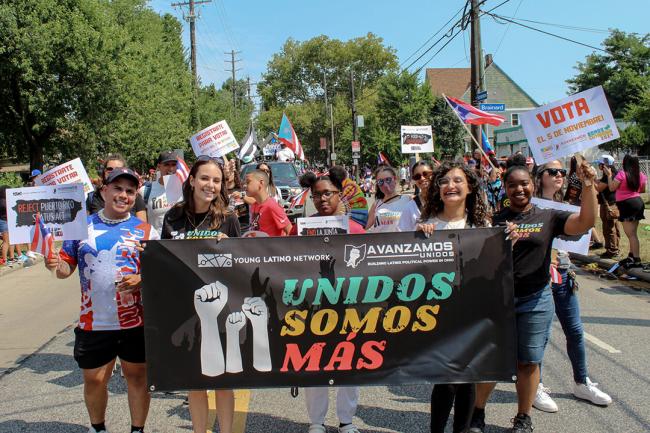
In 2021, Pagan stepped down from the board to become YLN’s first executive director, a decision that came with significant uncertainty.
“There was only enough money for maybe half a year of salary,” she said. “But I was willing to take the risk.”
Since then, Pagan has pioneered to transform the organization from an all-volunteer effort into a growing nonprofit with multiple staff members and expanded programming. Today, YLN employs several Latine individuals that share a passion for cultivating cultural education and civic engagement.
One program, Somos Cuyahoga, engages residents through door-to-door outreach, community dinners and neighborhood events designed to build trust and participation in local civic life.
Instead of contacting residents only during election seasons, Pagan said the organization focuses on year-round relationship building. “People have other needs besides just voting,” she said. “We want to build relationships first.”
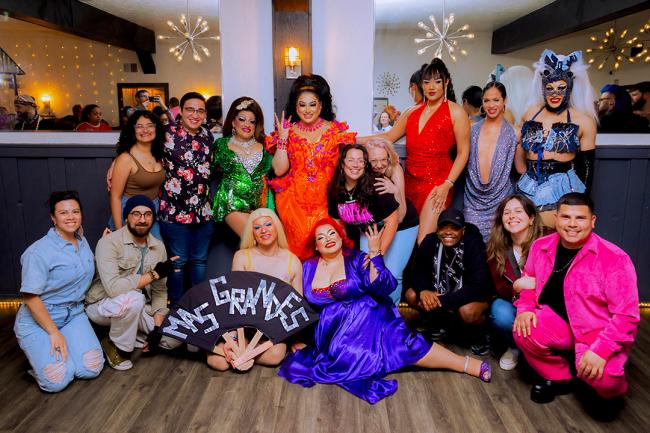
Under her leadership, YLN also sponsored events that celebrate diversity and inclusion, such as a local LGBTQ+ Latine-cast drag show at a local Puerto Rican restaurant, Rincon Criollo in June 2025.
Another initiative, Raices, creates space for community members to attend national gatherings such as GreenLatinos Summit, which Pagan said has already inspired local environmental initiatives led by Latina volunteers in Cleveland. YLN plans to launch heritage Spanish classes in April 2026 aimed at U.S-born Latine residents who grew up around Spanish but want to strengthen their fluency in supportive learning environments.
“A lot of families stopped teaching Spanish because of survival,” Pagan said. “Now we’re reclaiming that.”
Although YLN has grown rapidly under her leadership, Pagan said the role has required constant learning and adaptability. Over time, she helped to build the nonprofit’s infrastructure including a strategic plan to guide the organization’s long-term growth.
Still, nonprofit leadership can feel isolating.
“Leadership can feel very lonely,” she said.
When she does have free time, Pagan enjoys yoga, cooking, and listening to music. She also plays dominoes with her partner and friends and occasionally travels to Puerto Rico.
But her focus remains on building stronger community networks in Cleveland.
“I have circles of families now,” Pagan said. “And that’s really powerful.”
Looking back, she credits Cleveland State University with helping her to find the field that eventually shaped her career. The university’s focus on urban policy and community development introduced her to the systems that influence neighborhoods and local economies — knowledge she now applies daily in her work.
For Pagan, the path from CSU student to nonprofit leader reflects both persistence and community support.
“If we don’t do it," she said, "who is going to do it?”
Recent News
Students for a Just Society launches at CSU
 The new student organization aims to build student-led organizing, foster political education, and connect Cleveland State students with regional activism efforts.
CSU PRSSA dine-to-donate fundraiser at The Fruit Stand
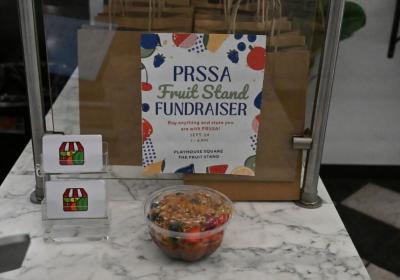
By KARINA TORRES – posted October 7, 2026
CSU PRSSA hosted a one-day fundraiser at The Fruit Stand to raise money for PRSSA's future events.
More than a major: Finding your voice in communications
 For students studying journalism, public relations and communications, there is more than one way to find their voice and build a career.
CSU and regional partners host 3rd annual College Fest
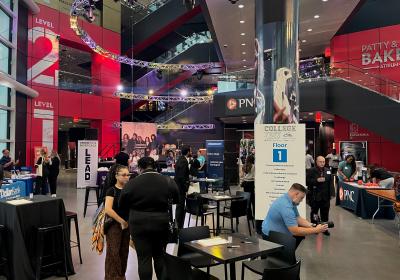
More than 900 students from 30 different regional institutions networked with around 80 employers at the 3rd annual College Fest, held at the Rock and Roll Hall of Fame, Sept. 9, 2026.

Rhode Tower library gets a facelift after flood
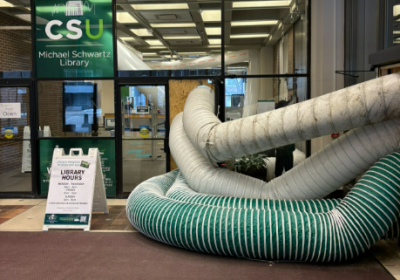 While access to the library remains temporarily restricted, multiple resources are still available to students as the semester winds down. The library thanks FAST and its own employees who worked so hard to restore the library to full functionality, which is expect by the start of the fall semester.
The Stater Scoop - Women's History Month
In this Women's History Month edition of The Stater Scoop, Cleveland Stater staff members Nicole, Kirsten and Morgan discussed how their identities as women have impacted their lives.
The Stater Scoop - Episode 1
We’re excited to announce a new podcast from The Cleveland Stater – The Stater Scoop! Each episode, we’ll welcome different guests from around campus to talk with members of our newsroom.
Cleveland’s best-kept cultural secret returns to the stage at CSU
 Cleveland State in April hosted for the 48th time the nation’s largest Carnatic music festival, one of the biggest gatherings of its kind in the world.
The Stater Scoop - FUBU: For us, by us
Built on the spirit of “For Us, By Us,” a phrase rooted in culture and legacy, this episode opens by honoring Queen Latifah’s powerful track 1993 anthem “U.N.I.T.Y.” Host Alexis Stradford welcomes reporters Aria Ruiz, Alonzo Anderson and Derek Williams to the podcast studio for a thoughtful conv
Don't miss the the student-run CSU Chamber Collective
 The concert March 6 in Drinko Recital Hall will showcase student initiative, creativity and collaboration across the School of Music.
CSU grad builds a brand and career in music marketing
 Alexis Figlar graduates from Cleveland State in 2023. Since then, she's turned internship connections, a self-made portfolio and a personal art business into a growing career in Cleveland’s music industry.
CSU graduate leads civic growth for Cleveland’s Latine community
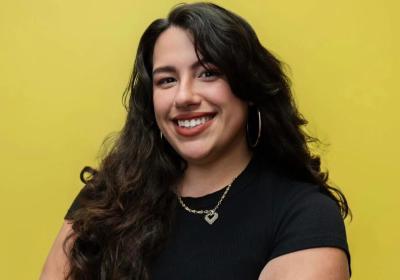 Cleveland State alumna Selina Pagan has transformed the volunteer-led Young Latino Network into a growing nonprofit while advancing civic engagement, cultural education and leadership opportunities for Latine residents.
Safety inside an urban university under scrutiny
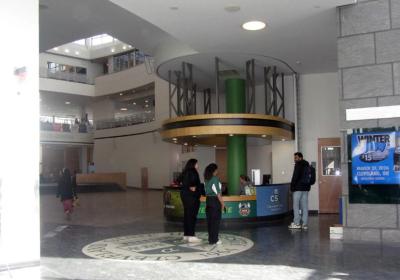 CSU’s open Student Center exposes contradictions between accessibility and security as students and the public share space on a downtown campus.
When the tennis gets petty, the petty turn pro

What do tennis players and their coaches make of the histrionics we see on court these days?
I’m graduating, now what?
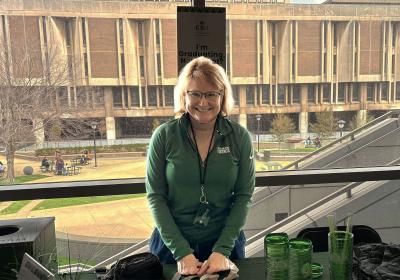
Cleveland State University students preparing to graduate gathered at the Student Center Innerlink April 14-16 for the "I'm Graduating, Now What?” event, hosted by Career Development and Exploration, to gain career guidance, resources and connections for life a
Kent State honors fashion icon, Fern Mallis shows what CSU could have

When fashion icon Fern Mallis is inducted into Kent State University’s School of Fashion Hall of Fame this May, students there won’t just be reading a
CSU students give the dining hall mixed reviews
 With the updates to the dining experience at Cleveland State over the past couple of years, especially the revamp of the dining hall, The Stater thought it was time for a restaurant review – and not everybody is happy.
CSU student films to show at this year’s CIFF
 Film and media arts students Elliot Lanzer and Malakee McGuire will see their student-produced works on the silver screen at this year's Cleveland International Film Festival, the 50th anniversary of the renowned regional showcase.
Cleveland Magazine staff share industry insights with CSU students
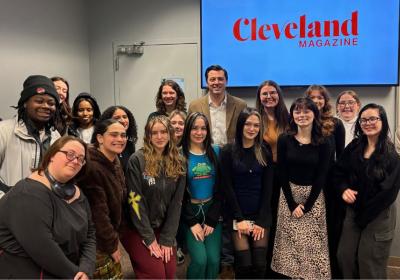
Cleveland State University students got an inside look at the evolving media landscape when staff members from Cleveland Magazine<
CSU hosts Special Olympics basketball event for local students
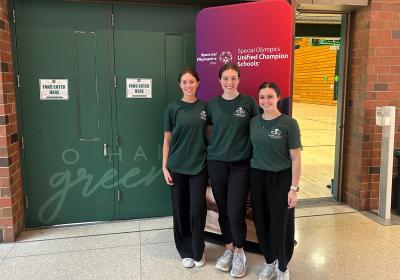 Volunteers and athletes connected through inclusive activities, building skills, confidence and community ahead of future events in Cleveland.
Rising student demand and the CSU Counseling Center
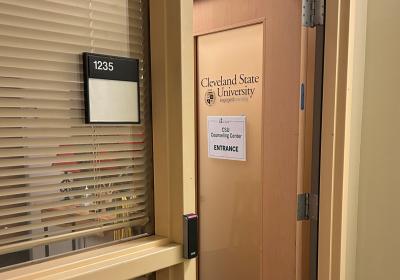 As mental health needs grow on campus, CSU officials outline how students are prioritized and connected to care.
CSU senior to host benefit show at Treelawn Social Club
 “This concert has become a way for all of us to come together for one night and carry on the music in their honor,” said Anna Skalicki, a senior CSU studio art major.
CSU graduate student’s research offers hope for blood disorder patients
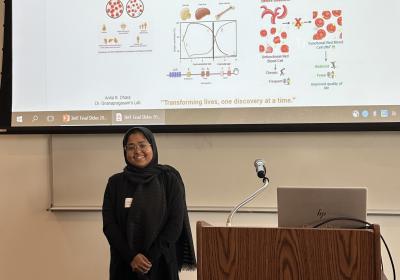 Ph.D. candidate Anita Dhara studies how molecules in red blood cells could help patients with sickle cell anemia and beta thalassemia breathe easier and reduce painful symptoms.
Commentary: Student rights and campus safety in the age of ICE
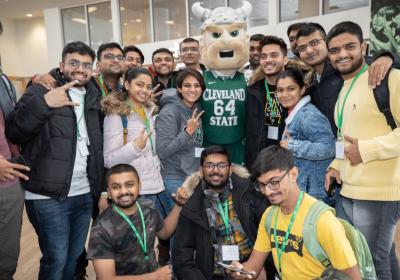 CSU students need clear information about their rights and safety as immigration enforcement in Ohio and nationwide raises concern, particularly for international and migrant students.
Building belonging: How one student athlete created a space for many
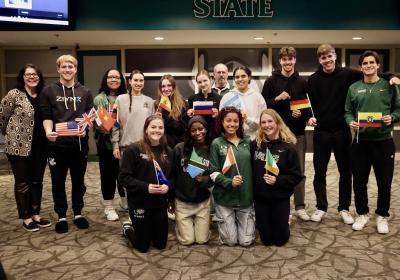 After navigating taxes, visas and internship barriers as an international student from Ireland, Ellie Mickibbin founded a dedicated support system to help future student-athletes adjust and succeed.
Greek letters signify Black excellence at CSU
 Sorority Zeta Phi Beta and fraternity Phi Beta Sigma are two organizations at Cleveland State which embody the achievements of Black students, highlighting the excellence that Black History Month honors every year.
Immigrant embraces the America that has embraced her
 Beloved Cleveland entertainer Bella Sin shares how living undocumented impacted their survival, self-identity, and quest for belonging in America. “Queer nightlife gave me a place to be fully myself, loved and accepted."